Newsroom
Russia Registers First Crypto Exchanges and Custodians Under New Digital Asset Rules
7 October, 2026 / News / AI / Tags: vtb, custodians, digital, registers, russia
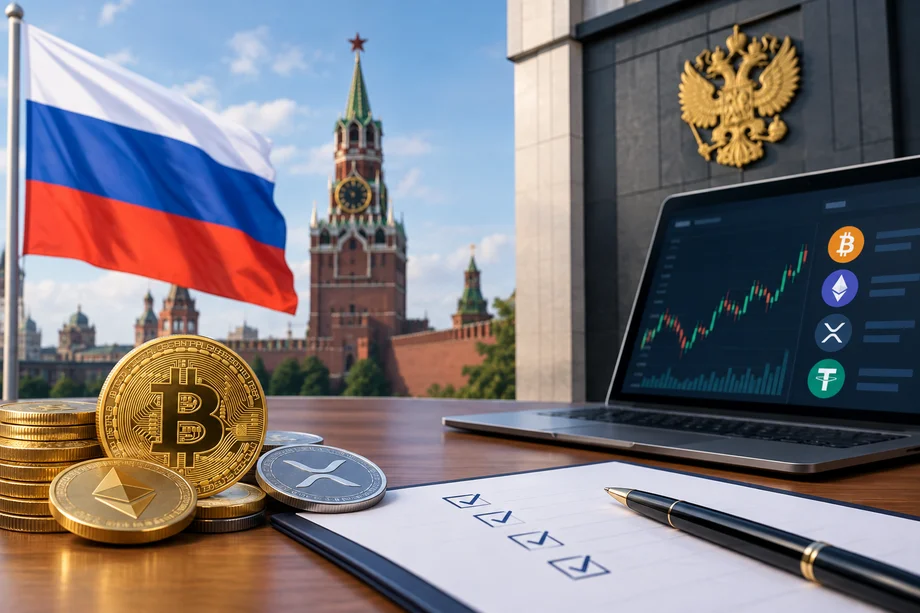
The Bank of Russia has admitted four exchange operators and five digital custodians to official registers, advancing the regulated market that opened on September 1
The Bank of Russia has entered the first group of companies into its registers of cryptocurrency exchange operators and digital custodians. Four organizations received authorization to act as exchange operators, while five were listed as digital custodians. The updates, dated October 6 and published the following day, mark the initial practical step under the digital currency and digital rights framework that took effect on September 1.
Russia’s largest bank, Sberbank, appears on the digital custodian register together with VTB Bank, Atomyze, Voltari and Cloud Infrastructure. The crypto exchange operator register includes VTB Bank, Zefir, Sistema Crypto and T Invest Lab. VTB is the only entity named on both lists.
Roles of Registered Firms
Digital custodians, also referred to as digital depositories, are permitted to record digital currencies and digital rights, process transfers and give customers access to the identifier addresses that hold their assets. Crypto exchange operators may buy and sell digital currencies in their own name and with their own funds outside organized trading venues.
Registration places the firms under immediate transaction and accounting rules set by the central bank. A transitional period allows them until September 1, 2027, to bring all remaining operations into full compliance with the law. Existing financial market participants may use a simplified admission process when seeking these roles.
Sberbank and VTB Launch Timelines
Sberbank has set a target of December 1 to begin offering crypto trading and custody services. The initial assets expected to be supported are Bitcoin, Ether and USDT. The bank intends to make the services available through its existing SberBank Online, SberInvestments and SberBusiness platforms.
VTB plans a staged rollout. Digital-currency trading through VTB My Investments is expected as early as November, with the bank’s own crypto exchange scheduled to follow in December. For non-qualified investors, access will be limited to Bitcoin, Ether and USDT, subject to an annual purchase ceiling of approximately $3,500 per intermediary after a suitability test.
Market Framework and Investor Limits
The underlying law, signed by President Vladimir Putin in August, places trading, custody and certain cross-border transactions under Bank of Russia supervision. Non-qualified investors may purchase eligible cryptocurrencies up to roughly $3,500 per year through each intermediary once they complete a suitability assessment. Qualified investors face no equivalent annual ceiling, though testing requirements still apply.
Bitcoin, Ether and USDT have been identified as assets that can meet liquidity and trading-history criteria for retail access. Domestic use of cryptocurrencies to pay for ordinary goods and services remains prohibited. Separate provisions allow regulated digital-currency settlements in certain cross-border trade operations.
Customers opening accounts with digital custodians must provide their individual taxpayer identification number. Transfers above specified thresholds require information on both payer and recipient, supporting transparency requirements administered in coordination with financial monitoring authorities.
Capital and Prudential Standards
Earlier draft operating rules set minimum equity for digital custodians in a range of approximately $585,000 to $2.9 million, depending on the services offered, including work with open distributed ledgers or post-trade settlement. The rules treat digital custodians in a manner comparable to traditional securities depositories, requiring records of assets and customer access information.
The central bank has also proposed prudential limits that would cap banks’ combined risk from cryptocurrencies and foreign digital instruments at 1 percent of capital. Crypto-related exposures would carry elevated risk weights, with related reporting obligations expected to begin in January 2027. Cryptocurrencies and foreign digital instruments would not qualify as collateral when banks calculate provisions for potential losses.
The first registrations establish the initial regulated infrastructure for digital-asset services in Russia. Firms now listed on the registers may begin operations under the transitional regime while preparing for full compliance by the September 2027 deadline.
Disclaimer
This article was generated by AI using information from multiple industry sources. It has not been reviewed or verified by a human editor and may contain inaccuracies, omissions, or misinformation. Readers are encouraged to independently verify any information before making decisions based on its content.Tired of the noise?
Let the bots trade for you.
Trade 24/7, without emotion, with data-driven strategies.
Associated articles

Sberbank Targets December 1 Launch for Crypto Trading and Digital Depository
Putin Signs Russia’s First Comprehensive Crypto Law, Opens Regulated Trading

Russia’s New Crypto Framework Takes Effect, Opening Regulated Trading in Bitcoin, Ethereum and USDT

Russia’s Central Bank Issues Draft Rules for Organized Crypto Trading Ahead of September Framework

Russia’s Alfa-Bank Prepares Regulated Crypto Custody and Trading Services
Latest articles

Circle and Tereina Integrate USDC and EURC Into SAP Enterprise Payment Systems

Tether Partners With Kazakhstan Central Bank on Tenge Stablecoin and Tokenization Study
Europol Warns Quantum Computers Pose Risk to Crypto Wallet Keys, Urges Early Industry Preparations

Cardano Deploys Programmable Token Standard Giving Issuers Freeze and Seizure Powers