Newsroom
Russia Extends Crypto Mining Restrictions to Moscow Through 2032
1 August, 2026 / News / AI / Tags: moscow, mining, electricity, grid, region
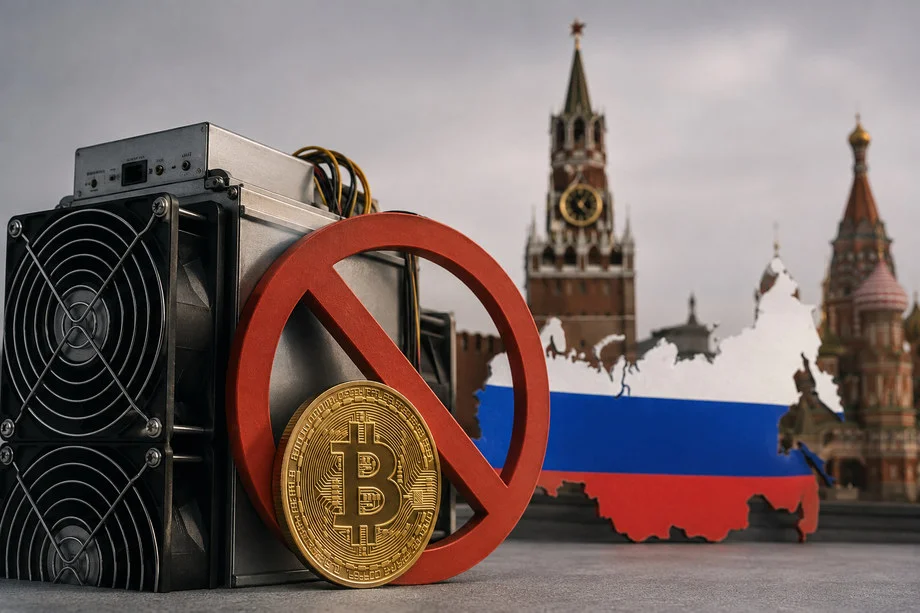
Government resolution adds capital region and Kursk areas to multi-year ban over electricity grid pressures, with earlier limits already active elsewhere
Russian authorities have broadened cryptocurrency mining prohibitions to include Moscow, the Moscow Region and selected territories in the Kursk Region. The measure takes effect on August 15, 2026, and remains in force until December 31, 2032.
The change comes through Resolution No. 936, signed by Prime Minister Mikhail Mishustin on July 25, 2026. Official records show the resolution amends an earlier mining restriction order issued in December 2024. It expands the list of areas where mining and related activities, including participation in mining pools, are limited because of concerns over electricity supply.
Scope of the New Restrictions
The updated rules apply to Moscow, the Moscow Region and eight municipal districts in the Kursk Region: Belovsky, Bolshesoldatsky, Glushkovsky, Korenevsky, Lgovsky, Rylsky, Sudzhansky and Khomutovsky, along with the city of Lgov. Operators in these locations face a multi-year compliance period during which new or continued mining operations must cease or relocate to avoid enforcement.
This expansion builds on prior regional limits. Restrictions already apply in parts of Buryatia and the Zabaykalsky Krai from April 1, 2026, through March 15, 2031. Additional prohibitions have been in place in other energy-constrained territories, including areas in the North Caucasus, newer regions and parts of Irkutsk.
Energy Demand and Data Center Pressures
Officials have linked the restrictions to rising electricity consumption and strain on the power grid. The Moscow Region’s Energy Ministry previously stated that a ban was required due to growing demand. Authorities estimated that Moscow and the Moscow Region host 65 data centers connected to the grid with a combined capacity of 734 megawatts. Of these, 19 facilities in the Moscow Region account for 233 megawatts.
Regional energy officials have noted that mining operations contribute substantially to load in the capital area, with some estimates placing related consumption near one gigawatt. The focus remains on protecting supply reliability for other consumers rather than on broader financial regulation of cryptocurrencies.
Impact on Mining Operations and Global Hash Rate
Russia accounts for approximately 17.2 percent of the global Bitcoin hash rate, placing it second behind the United States. The addition of major urban and surrounding territories to the restricted list is expected to prompt some mining capacity to move to unrestricted regions inside the country or to other nations.
Large operators that previously relied on lower-cost power in certain areas now face higher costs and new connection fees in remaining zones. Smaller ventures may find continued operations less viable. Network-wide effects could include temporary adjustments in mining difficulty if Russian activity declines, though past regional bans have not produced major sustained shifts in overall hash rate distribution.
Separately, authorities in Nizhny Novgorod uncovered a network of nine secret mining farms. Police seized 120 devices after investigating a 37-year-old entrepreneur. The operation involved tampered electricity meters and unauthorized grid access, with estimated losses of about 20 million rubles. Farms were found in locations including a garage, a car wash, residential basements and buried containers.
Policy Direction and Enforcement
The successive regional measures indicate a consistent approach that prioritizes grid stability in high-demand areas. Mining remains permitted in parts of the country that do not face comparable electricity constraints, and registration requirements continue to apply where activity is allowed.
Enforcement is expected to intensify as the August 15 start date approaches. Operators near the newly restricted boundaries will need to assess relocation options or compliance arrangements well in advance. The long duration of the Moscow-area ban through 2032 provides an extended planning horizon while reinforcing the energy-focused rationale behind the limits.
Authorities have not framed the measures as a complete prohibition on cryptocurrency activity. Trading, holding and related financial uses remain outside the scope of these regional mining restrictions.
Disclaimer
This article was generated by AI using information from multiple industry sources. It has not been reviewed or verified by a human editor and may contain inaccuracies, omissions, or misinformation. Readers are encouraged to independently verify any information before making decisions based on its content.Tired of the noise?
Let the bots trade for you.
Trade 24/7, without emotion, with data-driven strategies.
Associated articles

EU Adds 14 Crypto Platforms to Russia Sanctions Package

Mexico Authorities Dismantle Crypto Mining Operation Near Federal Hydroelectric Dam

Georgia Intensifies Crackdown on Illegal Crypto Mining Operations

Moscow Court Orders Pretrial Detention for BitRiver Founder in $12.5 Million Fraud Case

Japan Adds Garantex to Russia Sanctions List Over Ukraine War
Latest articles

SpaceX and Tesla Set Up Committees to Explore Merger That Would Combine Holdings of Over 30,000 Bitcoins

UK Banks Face Thousands of Complaints Over Crypto Transfer Restrictions

Ripple Backs SEC Proposed Crypto Asset Rules After $150 Million Legal Battle

Blockchain.com Introduces Options Trading on Seven Major Crypto Assets