Newsroom
Russia Enables First Digital Ruble Wages at Finance Ministry
4 October, 2026 / News / AI / Tags: ruble, ministry, rubles, budget, payroll
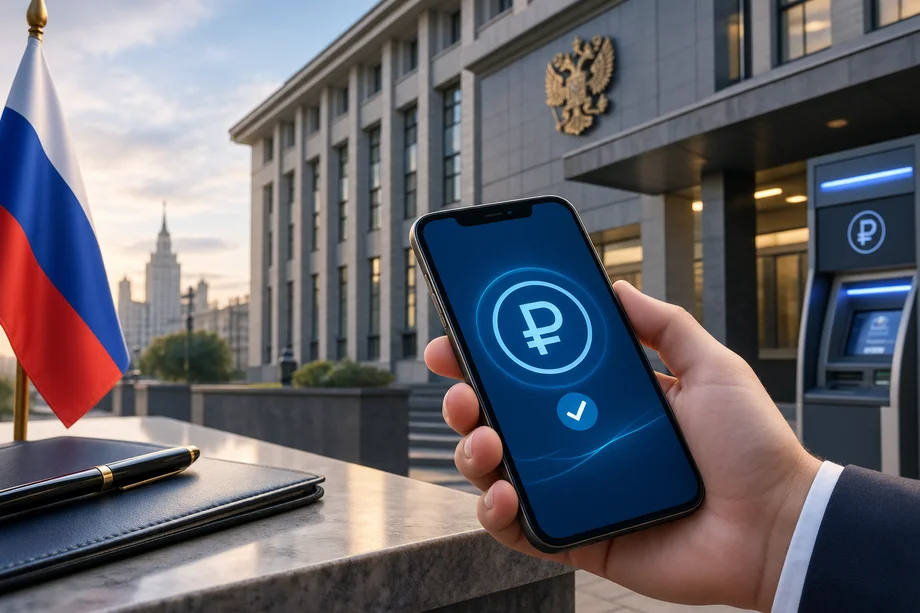
Russia's Finance Ministry has paid some employees in digital rubles for the first time, marking an initial step in integrating the central bank digital currency into official payroll processes
Ministry Launches Voluntary Digital Ruble Payroll
Russia's Ministry of Finance announced on Friday that certain employees received their salaries in digital rubles for the first time. The payments took place on October 1, when participating staff opened accounts on the Bank of Russia platform to receive funds through the central bank's digital currency.
This development represents the first routine use of the digital ruble in government payroll operations. The ministry stated that the approach builds directly on earlier federal budget trials conducted in 2025, during which approximately 16 million digital rubles circulated in public spending tests.
Participation remains entirely voluntary. Employees may continue receiving traditional ruble wages or bank transfers, while those selecting the digital option must initiate the account themselves through a participating bank application. The ministry provided no details on the exact number of participants or the total value of the payroll involved.
Integration with Broader Budget Rollout
Work on embedding the digital ruble into government finances is coordinated between the Bank of Russia and the Ministry of Finance. The central bank completed its 2025 pilot, which covered transfers between individuals and businesses, budget payments, and related smart contracts.
Budget access expanded in January 2026 for federal state-owned institutions, budget-funded entities, and autonomous bodies. Selected organizations can now accept service payments through the same system. Payroll transfers carry a zero platform fee until the end of 2026, with a standard compensation of 67 kopecks per completed instruction applied from January 2027 onward.
Digital Ruble Access Begins with Major Banks
The payroll milestone arrived shortly after the initial large-scale launch of digital ruble services. On September 1, major banks and large retailers opened their platforms to digital ruble transactions. Individuals can open accounts through participating bank mobile applications, while commercial lenders supply the user interface.
One digital ruble holds the same face value as a conventional cash or bank ruble. Monthly transfers into the digital account are capped at 300,000 rubles for consumers, though businesses face no such limit and existing holdings may be spent freely. Consumer payments and person-to-person transfers incur no platform fees in the initial phase.
The phased rollout continues through 2028. Starting in September 2027, banks holding universal licenses and qualifying merchants with revenue above 30 million rubles will join. A final stage in September 2028 will cover banks with basic licenses and additional retailers. Outlets with annual revenue below 5 million rubles or those lacking internet access are exempt from mandatory acceptance.
Planned ATM Cashouts and Future Expansion
State Duma Committee on the Financial Market head Anatoly Aksakov indicated that direct cash withdrawals from digital ruble accounts could become possible at ATMs next year.
The Bank of Russia has also advanced programmable budget features, allowing conditions to attach to transactions so funds release only for specific recipients or expenses. Cross-border settlement pilots, including discussions with Indian counterparts, remain under separate review. Domestic adoption focuses on payments, transfers, and government-linked operations.
Preemptive Sanctions and Ongoing Rollout
The digital ruble, developed since 2021, faces external restrictions. In April, the European Union adopted measures that prohibit support for its development, citing responses to broader geopolitical actions. Russia has proceeded with the domestic timetable despite these constraints, maintaining the September 1 launch and subsequent budget integrations.
With the Finance Ministry now handling digital ruble wages, the currency gains further operational confirmation within state processes. The Bank of Russia continues refining user interfaces and infrastructure to support wider participation.
Disclaimer
This article was generated by AI using information from multiple industry sources. It has not been reviewed or verified by a human editor and may contain inaccuracies, omissions, or misinformation. Readers are encouraged to independently verify any information before making decisions based on its content.Tired of the noise?
Let the bots trade for you.
Trade 24/7, without emotion, with data-driven strategies.
Associated articles

Russia Enacts Comprehensive Framework for Regulated Cryptocurrency Market

Russia’s New Crypto Framework Takes Effect, Opening Regulated Trading in Bitcoin, Ethereum and USDT

Russia’s Central Bank Issues Draft Rules for Organized Crypto Trading Ahead of September Framework
Russia Advances Landmark Crypto Regulation Bill Toward Final Approval

Russia Advances Revised Crypto Bill for Second Reading
Latest articles

Blockchain Association Presses Congress for Crypto Tax Overhaul Amid Stalled Market Structure Bill

New York AG Seeks $1.37 Billion From NovaTech Founders in Crypto Fraud Case

US Senator Seeks Records on Tether Payments to Firm Tied to Former White House Crypto Adviser

Bitcoin Core Revises Security Policy as AI Tools Simplify Bug Discovery