Newsroom
Russia Advances Landmark Crypto Regulation Bill Toward Final Approval
20 July, 2026 / News / AI / Tags: rubles, russia, qualified, duma, anatoly
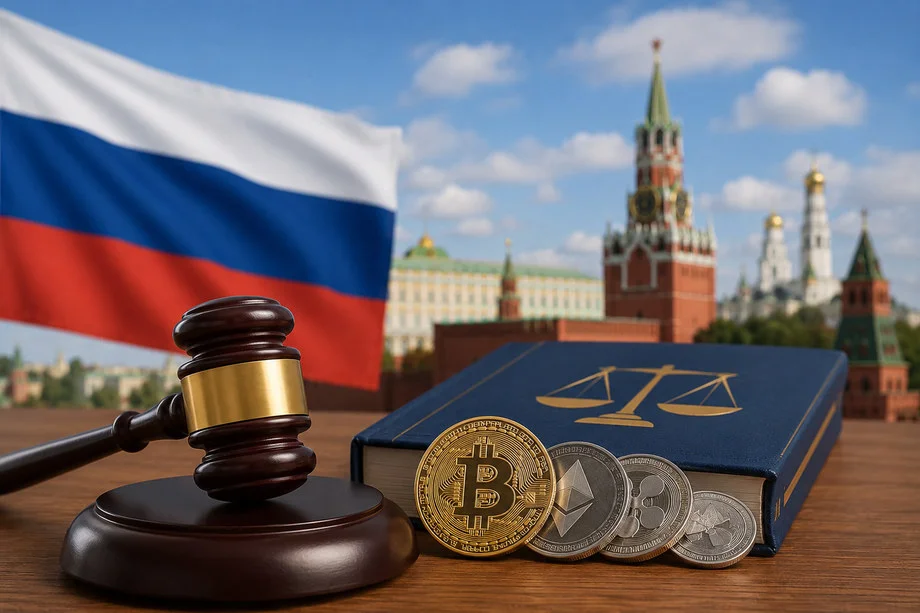
Russia’s State Duma is scheduled to conduct second and third readings on comprehensive cryptocurrency legislation this week, establishing a formal framework that treats digital assets as property while enabling their use in cross-border trade
Bill Moves to Decisive Votes
Russia’s parliament is on the verge of finalizing a major regulatory overhaul for cryptocurrencies. The draft bill No. 1194918-8, titled “On Digital Currency and Digital Rights,” is set for consideration in its second and third readings on July 21. Anatoly Aksakov, chairman of the State Duma Committee on Financial Markets, confirmed the timeline, noting the legislation aims to create legal conditions for cryptocurrency operations in the country.
The measure has already passed its first reading with strong support. If approved, it would proceed to the Federation Council and then to President Vladimir Putin for signature. Key provisions are targeted to take effect on September 1, 2026.
Core Provisions and Investor Safeguards
The bill classifies cryptocurrencies as property, providing clearer legal status without granting them the role of legal tender. Domestic use of digital assets for payments remains prohibited, consistent with rules in place since 2022. Instead, the framework focuses on investment and international transactions.
Retail investors face strict limits. Non-qualified investors would be capped at 300,000 rubles (approximately $3,800) in annual crypto purchases through a single regulated intermediary, with outbound transfers limited to 100,000 rubles. Qualified investors would have higher thresholds of up to 3 million rubles for purchases and 1 million rubles for transfers. Certain participants may need to pass a risk assessment test before trading.
Focus on Cross-Border Trade and Mining
A central element of the bill is expanded authorization for companies to employ cryptocurrencies in foreign economic activities. This provision seeks to facilitate international settlements, particularly as Russia navigates Western sanctions. Businesses involved in supplying goods could conduct such transactions with fewer restrictions than retail investors.
Russia has already conducted experiments with crypto for cross-border payments. The new law would broaden this into a structured regime. Mining operations, legalized in recent years, would continue under oversight from the Federal Tax Service, capitalizing on the country’s energy resources and climate advantages.
Broader Context and Industry Implications
Top Russian banks have signaled plans to launch crypto trading services once regulations are finalized. The legislation builds on prior steps, including 2023 measures that permitted approved legal entities to engage in mining while barring foreign operators.
President Putin has previously highlighted the potential of digital assets, noting in late 2024 that technologies like Bitcoin cannot easily be prohibited due to their innovative nature. These developments position Russia to integrate cryptocurrencies strategically into its economy while maintaining tight domestic controls.
| Investor Category | Annual Purchase Limit | Outbound Transfer Limit |
|---|---|---|
| Non-qualified | 300,000 rubles | 100,000 rubles |
| Qualified | 3 million rubles | 1 million rubles |
Disclaimer
This article was generated by AI using information from multiple industry sources. It has not been reviewed or verified by a human editor and may contain inaccuracies, omissions, or misinformation. Readers are encouraged to independently verify any information before making decisions based on its content.Tired of the noise?
Let the bots trade for you.
Trade 24/7, without emotion, with data-driven strategies.
Associated articles

Russia Advances Revised Crypto Bill for Second Reading
Putin Signs Russia’s First Comprehensive Crypto Law, Opens Regulated Trading

Russia Enacts Comprehensive Framework for Regulated Cryptocurrency Market

Russia’s New Crypto Framework Takes Effect, Opening Regulated Trading in Bitcoin, Ethereum and USDT

Russia's Central Bank Approves Bitcoin, Ethereum and USDT for Exchange Trading Under New Rules
Latest articles

Lighter Token Climbs More Than 20% on Planned CFTC Filing and Research Note

Samsung and SK Hynix Upgrade China NAND Factories Amid AI Demand and Local Rivalry

China Prosecutors Move to Confiscate $5.1 Billion Bitcoin Haul Seized in UK Fraud Case

Bank of Korea Holds Rate at 3% After Consecutive Hikes, Eyes Data for Next Move