Newsroom
RBI Governor Malhotra Backs Blockchain Technology While Cautioning on Cryptocurrencies
3 October, 2026 / News / AI / Tags: malhotra, sanjay, india, governor, yields
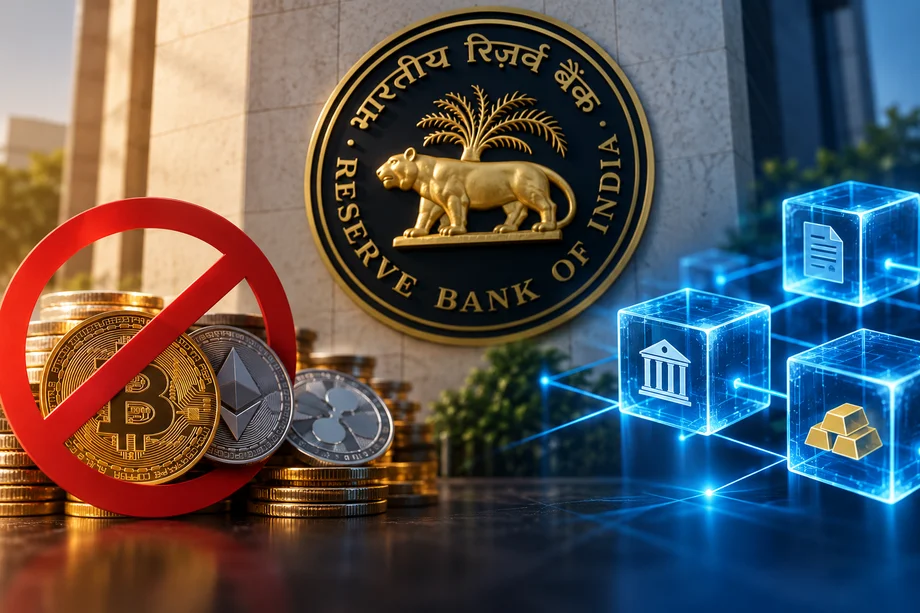
Sanjay Malhotra says India promotes distributed ledger and tokenisation but remains wary of crypto due to risks to monetary sovereignty and policy
Reserve Bank of India Governor Sanjay Malhotra on Saturday stated that the country continues to follow a cautious stance on cryptocurrencies while actively supporting the technologies that underpin them, including distributed ledger systems and tokenisation. Speaking at the Kautilya Economic Conclave, he outlined the central bank’s dual approach of encouraging technological innovation while guarding against potential risks to the financial system.
Support for Underlying Technologies
Malhotra said India backs innovation in the technologies associated with crypto assets. The Reserve Bank is already deploying some of these tools both within the central bank and through public-private partnership arrangements outside it. Tokenisation and distributed ledger technology are seen as areas with practical applications that can be advanced without adopting cryptocurrencies themselves.
Concerns Over Monetary Sovereignty and Policy
The governor linked the reservations about cryptocurrencies to the principle of the singleness of money and the possible effects on monetary policy. These issues are particularly relevant for emerging market economies that maintain capital flow restrictions. He noted that domestic payment systems in India and many other countries are already fast, inexpensive and convenient, so the primary challenge lies elsewhere.
Cross-border payments represent a more significant area of difficulty, according to Malhotra. He suggested that solutions such as central bank digital currencies could be examined as alternatives for improving those transactions.
Global Debt, Bond Yields and Monetary Policy
Turning to broader economic conditions, Malhotra addressed the rise in public debt and the hardening of bond yields worldwide. He attributed the movement in yields to basic demand-and-supply dynamics. Increased spending by both governments and private enterprises, driven in part by artificial intelligence, has made money scarcer and contributed to higher debt levels and yields.
The RBI’s monetary policy remains centred on domestic growth and inflation trends. At the same time, global interest rates influence real interest rates in India, a factor the central bank must monitor closely.
Call for Continued Vigilance on Financial Stability
Malhotra also stressed that the current resilience of the financial system should not lead to complacency. Healthy balance sheets at banks and non-banking financial companies provide a solid foundation today, yet past experience shows that stress can accumulate rapidly and require years to resolve. The cleanup of non-performing assets that built up in the early 2000s took nearly a decade.
He warned that the economic and financial costs of allowing vulnerabilities to grow are too high. Shocks, whether internal or external, remain inevitable. The goal, he said, must be to construct a financial system able to continue delivering essential services even under severe pressure. The Reserve Bank remains committed to monitoring emerging risks and maintaining a strong, resilient framework.
Disclaimer
This article was generated by AI using information from multiple industry sources. It has not been reviewed or verified by a human editor and may contain inaccuracies, omissions, or misinformation. Readers are encouraged to independently verify any information before making decisions based on its content.Tired of the noise?
Let the bots trade for you.
Trade 24/7, without emotion, with data-driven strategies.
Associated articles

BIS Warns $316 Billion Stablecoin Market Threatens Global Monetary System

ECB President Lagarde Rejects Euro Stablecoins, Pushes 'Fortress Europe' to Safeguard Monetary Control

Japan Advances Blockchain Plan for Instant Stock and Bond Settlement

ECB Official Calls for On-Chain Euro Reserves to Anchor Tokenized Markets

India's RBI Pushes to Keep Banks Away from Crypto
Latest articles

Singapore, Malaysia and Thailand Central Banks Expand BLOOM for Cross-Border Digital Money Settlement

Heatbit Launches $899 Bitcoin-Mining Water Heater Element for Existing Tanks

Underdog Partners With Zerohash for Crypto and Stablecoin Account Funding

Chainlink Teams With LG CNS to Advance Korean Stablecoins and Tokenization