Newsroom
Polygon Plans 100 Million POL Token Burn After Reporting $24.5 Million Revenue
20 September, 2026 / News / AI / Tags: nailwal, polygon, burn, million, sandeep

Foundation CEO Sandeep Nailwal details a community-triggered burn of 100 million POL tokens pending Security Council approval, citing year-to-date protocol revenue of $24.5 million
Polygon Foundation CEO Sandeep Nailwal announced that the network is preparing to permanently remove 100 million POL tokens from circulation. The move follows claims of strong protocol revenue and forms part of a broader plan to introduce regular supply reductions tied to network fees.
In a post on X, Nailwal stated that the necessary contracts are already live on testnet. Final signatures from the Polygon Security Council are required before the contracts can be deployed to mainnet. Once that step is complete, any community member will be able to initiate the first burn of 100 million POL.
Burn Mechanism and Collector Wallet
Network base fees currently accumulate in a collector wallet that holds approximately 121 million POL. The initial burn will draw 100 million tokens from this balance. After the first removal, community members will be able to trigger additional burns once per quarter using newly collected base fees.
Nailwal noted that POL has operated in a deflationary manner since January 2026 through the fee mechanism. At the same time, the token continues to follow a 2 percent annual emission schedule. The planned 100 million token burn represents roughly 1 percent of the original 10 billion token supply and about 0.93 percent of the current circulating supply of approximately 10.71 billion POL.
Revenue Figures and Network Comparisons
Alongside the burn announcement, Nailwal reported that Polygon generated $24.5 million in revenue year-to-date in 2026. He compared the figure with $8.41 million for Arbitrum, which included activity from the Robinhood chain, and $5.6 million for Near Protocol, which included Near Intents. The Polygon total was presented as roughly three times Arbitrum’s and several times Near’s.
These revenue numbers were described as coming from analysis performed with assistance from ChatGPT and have not been independently verified. Nailwal framed the comparison in the context of relative token performance while acknowledging the communities of the other networks.
| Network | 2026 YTD Revenue | Notes |
|---|---|---|
| Polygon | $24.5 million | Self-reported protocol total |
| Arbitrum | $8.41 million | Includes Robinhood chain |
| Near Protocol | $5.6 million | Includes Near Intents |
Network Capacity and Use Cases
Nailwal also highlighted that Polygon has increased its processing capacity tenfold to 5,000 transactions per second. The higher throughput supports activity in payments, trading, and consumer applications. The network has directed attention toward stablecoin transfers and real-world payment infrastructure, including partnerships that enable direct fiat transfers to banks and multi-chain routing features.
Earlier technical upgrades raised the block gas limit while keeping block times at 1.5 seconds, aiming to expand capacity without increasing transaction fees.
Price Action Around the Announcement
POL traded near $0.104 on September 19, 2026, according to market data. The token had recovered from levels near $0.09 earlier in the month and recorded gains of roughly 4 to 10 percent in the period surrounding the burn announcement. Weekly price recovery reached about 20 percent in some reports as Bitcoin moved higher.
Trading activity showed the token consolidating above the $0.09 area, which aligns with longer-term moving averages. Some large holders sold more than 30 million POL in the days following the mid-week rally. Volume rose alongside the price moves, with market capitalization reported near $1.11 billion.
The burn contracts remain subject to the final Security Council approvals and mainnet deployment. Until those steps occur, the 100 million token removal and subsequent quarterly burns stay pending.

Disclaimer
This article was generated by AI using information from multiple industry sources. It has not been reviewed or verified by a human editor and may contain inaccuracies, omissions, or misinformation. Readers are encouraged to independently verify any information before making decisions based on its content.Tired of the noise?
Let the bots trade for you.
Trade 24/7, without emotion, with data-driven strategies.
Associated articles
Robinhood Chain Hits $3B DEX Volume, Driving Record $1.15M UNI Burn
Uniswap Records $71.1 Billion in 30-Day DEX Volume, Widening Lead Over Rivals

Arbitrum Builds Strength Through Robinhood Chain Partnership and Fee Model Changes
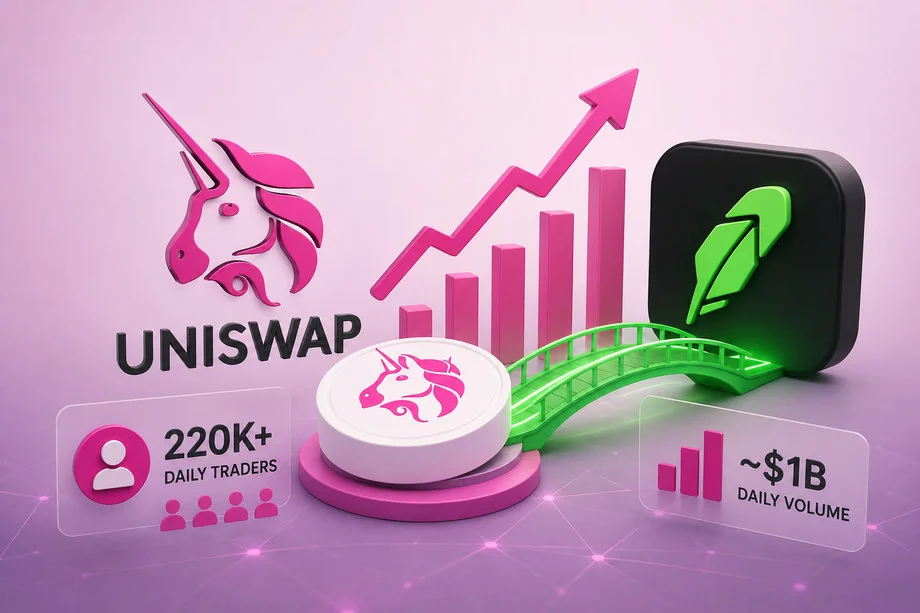
Uniswap Trader Activity Explodes to 220K on Robinhood Chain
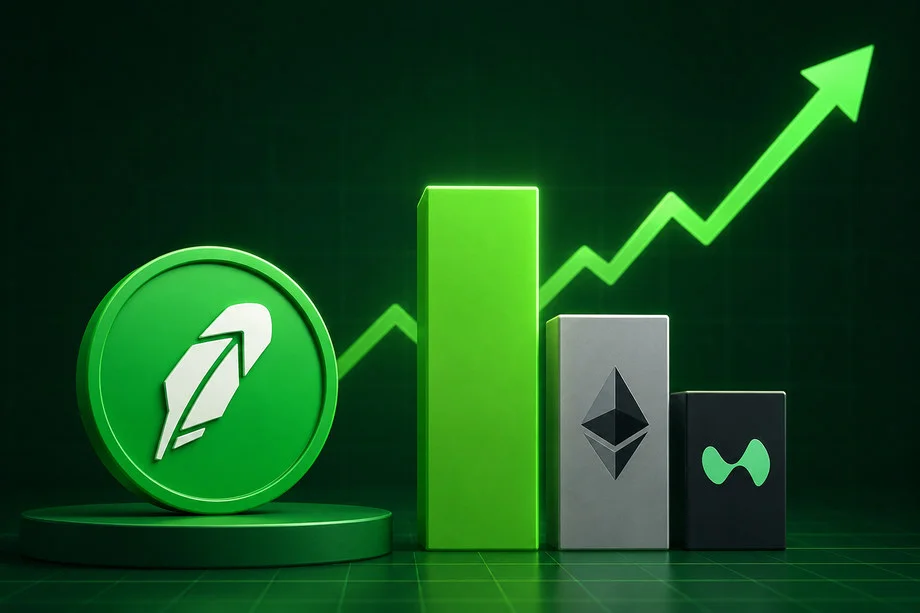
Robinhood Chain Posts $2.66 Million in Daily App Revenue, Surpassing Ethereum and Hyperliquid
Latest articles
Triple-A Breach Attacker Transfers $12.4 Million in Ether to Tornado Cash

KAIA Token Jumps Over 50% on Upbit Listing News
Tether Temporarily Freezes $1.45 Million USDT in THORChain Vaults on TRON

CFTC Proposes Treating Sports and Event Contracts as Swaps Amid Court Battles