Newsroom
Polygon Discloses Network Security Flaws Fixed Through Private Hard Forks
30 August, 2026 / News / AI / Tags: heimdall, polygon, nodes, vulnerabilities, validators
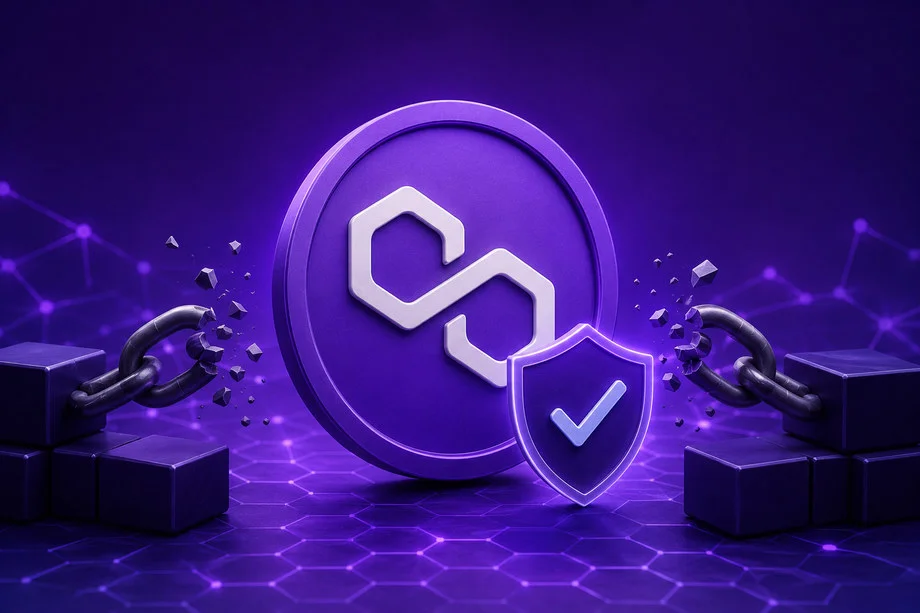
Polygon Labs detailed vulnerabilities in its Bor and Heimdall clients that risked disruption, after deploying Austin and Kyoto upgrades on mainnet with no exploitation observed
Disclosure of Bor and Heimdall Vulnerabilities
Polygon Labs has publicly detailed multiple security vulnerabilities that could have affected the reliability of its proof-of-stake network. The issues involved the Bor and Heimdall clients and included denial-of-service risks, potential validator resource exhaustion, and problems related to checkpoint and milestone processing.
According to a disclosure from Polygon Labs’ Validators Support Team, the most severe flaw existed in Heimdall. A specially crafted transaction could compel validators to carry out excessive processing work, creating a realistic chance of network disruption. For the Bor client, two separate denial-of-service risks were identified. These could have slowed block processing or caused nodes to crash, reducing throughput and availability.
The company stated that none of the vulnerabilities had been observed being exploited on the mainnet. The disclosure framed the fixes as a proactive step taken before the technical details became public.
Private Hard Forks and Client Upgrades
The vulnerabilities were addressed through two hard forks: Austin for the Bor client and Kyoto for Heimdall. Polygon said the updates were first deployed privately, tested thoroughly, and then activated on the mainnet prior to any public announcement. This sequence was designed to close the window for potential attackers.
Nodes running older client versions past the hard fork activation heights have already fallen out of consensus with the canonical network. To remain compatible, all Polygon proof-of-stake nodes must use Bor version 2.10.0. Validators and full nodes must run Heimdall version 0.11.0. Both upgrades are already live on mainnet, requiring operators who have not yet updated to do so promptly.
Operational Implications for Network Participants
In a proof-of-stake environment, resource pressure and processing bottlenecks can degrade performance even when core consensus rules remain intact. The Heimdall issue showed how an adversary might target compute limits rather than attempt to alter consensus control directly. The Bor denial-of-service risks similarly illustrated that operational stability depends on more than validator correctness alone.
For validators and infrastructure providers, keeping client software current is now a requirement for continued participation. Outdated nodes are cut off from the main chain after the activation heights. For users, the primary effects of such issues, had they been left unpatched, would have appeared as delays or reduced reliability in transaction confirmation.
Token Market Context
At the time of the disclosure, Polygon’s native token POL, formerly known as MATIC, was trading near $0.10. Data indicated a decline of about 4 percent over the preceding week, a gain of 44 percent over the past month, and a 2.3 percent rise year to date.
Network operators are expected to confirm that post-fork upgrades remain stable across the system, particularly given the nature of the resource-exhaustion and processing-path issues that were corrected.

Disclaimer
This article was generated by AI using information from multiple industry sources. It has not been reviewed or verified by a human editor and may contain inaccuracies, omissions, or misinformation. Readers are encouraged to independently verify any information before making decisions based on its content.Tired of the noise?
Let the bots trade for you.
Trade 24/7, without emotion, with data-driven strategies.
Associated articles

Lido Starts Consolidating $16.5 Billion in Staked Ether to Slash Ethereum Validator Count by One-Third

Sui Network Suffers Second Major Outage as SUI Token Falls 20%
Solana Targets 150-Millisecond Finality With Alpenglow Consensus Upgrade on October 21

BNB Chain Prepares Pasteur Hard Fork for August 25 Activation

BNB Chain Activates Pasteur Hard Fork on BSC Mainnet
Latest articles

SkyAI Exits Solana Holdings Completely, Launches $201 Million Share Buyback

Strategy Buys 267 Bitcoin and Raises Preferred Share Buyback Cap to $3 Billion

Dormant 2013 Bitcoin Wallets Shift Over $67 Million After More Than a Decade

Binance Rolls Out AI Pro Tool for Chat-Based Automated Trading Strategies