Newsroom
Paraguay President Resigns as Ueno Bank Collapse Triggers Impeachment and Currency Turmoil
6 November, 2026 / News / AI / Tags: ueno, guaran, paraguay, impeachment, bank

Paraguay’s leader stepped down amid the fallout from a digital lender’s failure that froze accounts for millions and sparked political turmoil
President Steps Down to Safeguard Stability
Paraguayan President Santiago Peña announced his resignation on November 5, citing the need to preserve national stability, social peace, and democratic institutions. In a video message posted to X, he stated that his priority was protecting citizens who had placed their savings in the financial system. Peña, who was serving a five-year term that ends in 2028, made the move as lawmakers debated impeachment proceedings related to his past business connections and the banking crisis.
The decision came after the Central Bank of Paraguay initiated resolution proceedings for Ueno Bank on November 2. The lender’s solvency ratio had dropped to 5.56 percent, well below the required minimum of 12 percent, prompting authorities to suspend operations and restrict customer access to deposits. Peña had previously acknowledged his role as a business partner in Grupo Vázquez, the conglomerate that controls Ueno, until March 2025. He denied any wrongdoing, arguing the matter began as a regulatory issue.
Ueno Bank Serves Millions Before Collapse
Ueno Bank had expanded rapidly since 2021 to become one of Paraguay’s largest financial institutions, serving more than 3 million customers in a country of roughly 6.5 million people. On November 3, eight executives, including Grupo Vázquez president Miguel Vázquez and Ueno Bank president Juan Manuel Gustale, were detained. A court later ordered six executives held in pretrial detention and placed two others under house arrest.
The collapse triggered widespread protests in Asunción, where depositors, pensioners, and workers gathered to demand the return of their savings and accountability from officials. Prosecutors have charged 27 bank officials and associates with offenses including breach of trust and misconduct during a crisis.
Depositors Begin Receiving Guaranteed Payments
The Central Bank of Paraguay announced the start of deposit guarantee payments on November 5. Eligible clients with balances of up to 10 million guaraníes, who had no outstanding debts to Ueno and held accounts at other financial institutions, began receiving their funds. The statutory insurance limit stands at 228.3 million guaraníes per depositor per institution, covering combined deposits.
Payments are fixed in guaraníes, and the central bank has set up an official channel for depositors to verify eligibility. Larger balances and public funds, such as those from the Social Security Institute and the national power utility, face longer resolution processes through asset auctions.
| Depositor Category | Guaranteed Amount | Notes |
|---|---|---|
| Eligible retail clients | Up to 10 million guaraníes | Payouts began November 5; no outstanding debts required |
| All insured deposits | Up to 228.3 million guaraníes | Per depositor per institution |
Crypto Users Seek Liquidity as Banking Access Tightens
As traditional bank deposits became inaccessible, Paraguayan users turned to digital assets. David Eisenmann, founder and CEO of the local crypto exchange X4T, reported that customers were converting holdings into guaraníes or dollars to pay salaries and settle debts. Some were also acquiring stablecoins for quicker settlement.
“Customers are turning to their crypto holdings and converting them into guaraníes or dollars to make payments they couldn’t make with their bank deposits,” Eisenmann said. On X4T, prices for USDT and USDC rose about 8 percent in recent weeks, though the movement also reflected broader dollar strength against the guaraní.
Paolo Ardoino, CEO of Tether, described the stablecoin as “a lifeline for hundreds millions of people in the world.” One early listing on Bybit’s Paraguay peer-to-peer marketplace offered USDT at 6,942 guaraníes, roughly 13 percent above the central bank’s reference rate of 6,144 guaraníes per dollar, but the gap narrowed quickly as the official rate moved.
Congress Votes to Impeach as Succession Unclear
After Peña submitted his resignation, Congress declined to accept it, viewing the move as potentially allowing him to retain a lifetime Senate seat that would shield him from criminal liability. On November 6, the lower house voted unanimously to impeach the president, moving the case to the Senate for further proceedings.
Vice President Pedro Alliana is positioned to assume the presidency for the remainder of the term if Congress accepts the resignation. The impeachment filing accuses Peña of poor performance of duties and raises questions about his personal assets and potential conflict of interest tied to Ueno.
Former central bank president Carlos Carvallo, who had chaired Ueno’s predecessor, also resigned amid the scrutiny. Peña stated he would cooperate fully with investigations to clarify responsibilities and ensure affected families receive their payments.
Guaraní Declines as Crisis Deepens
The guaraní lost about 4 percent against the dollar on November 5, the day of the resignation announcement. The currency’s slide erased a previously visible premium on USDT and reduced the dollar value of insured deposits. Insured payouts, fixed in guaraníes, now carry less purchasing power for savers.
Public deposits held by Ueno, including approximately $850 million in government-related funds, add further complexity to the resolution. The central bank continues to examine the bank’s financial position and preserve assets while advancing the statutory resolution process.
Disclaimer
This article was generated by AI using information from multiple industry sources. It has not been reviewed or verified by a human editor and may contain inaccuracies, omissions, or misinformation. Readers are encouraged to independently verify any information before making decisions based on its content.Tired of the noise?
Let the bots trade for you.
Trade 24/7, without emotion, with data-driven strategies.
Associated articles
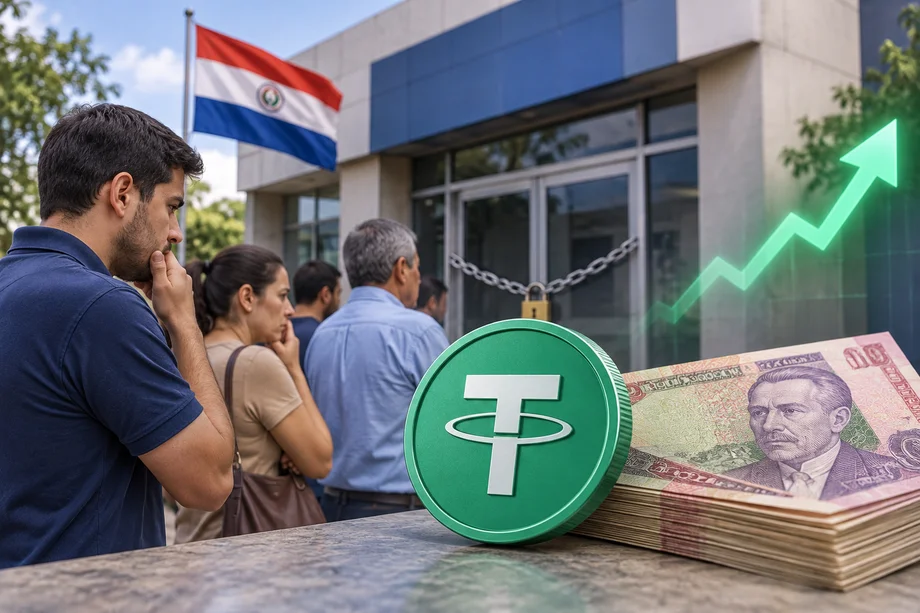
Paraguay Bank Resolution Sparks USDT Premium and Flight to Stablecoins

South Korea’s Largest Bank Prepares Blockchain Cross-Border Payments on Kinexys

US Slaps 25% Tariffs on Brazil Targeting Pix Payment System

UK Government Plans Secondary Bank of England Mandate for Stablecoin and Digital Payments Innovation
Alex Jones Warns of Potential Asset Seizures in Financial Crisis, Drawing Pushback from XRP Community
Latest articles

Greece Passes 10% Crypto Gains Tax With €500 Annual Exemption

GOPAX Halts All Services After Hack Threat, Moves Assets to Cold Storage

Keel Infrastructure Dumps Entire Bitcoin Treasury for $192 Million as It Shifts to AI

Hyperliquid Strategies Applies for U.S. Futures Broker License to Access Onchain Perpetual Markets