Newsroom
EU Proposes Country-Wide Ban on Kyrgyz Crypto Exchanges in New Russia Sanctions Package
26 November, 2026 / News / AI / Tags: kyrgyzstan, kyrgyz, sanctions, garantex, evasion

The European Commission seeks to restrict EU firms from dealing with all crypto platforms based in Kyrgyzstan as part of measures targeting sanctions evasion
The European Commission has put forward a proposal that could prevent European brokers and financial firms from conducting transactions with any crypto exchanges registered in Kyrgyzstan. The measure forms part of the bloc’s 22nd package of sanctions against Russia and would mark the first use of a country-level tool introduced earlier this year.
Commission President Ursula von der Leyen outlined the plan on November 23, 2026. It targets crypto and payment networks both in Russia and in third countries that facilitate the circumvention of existing restrictions. For the proposal to take effect, all 27 EU member states must give their unanimous approval.
New Sanctions Mechanism Targets Entire Jurisdictions
The legal basis stems from the EU’s 21st sanctions package, adopted in July 2026. That package created a provision allowing the Council to impose wholesale bans on direct and indirect transactions with crypto-asset service providers or platforms established in a listed third country. The relevant annex was left empty at the time of adoption.
Under the rule, the Council must determine that a country has systematically and persistently failed to stop its crypto services from undermining EU sanctions. Once a country is listed, the restriction applies on the basis of where the provider is established rather than through individual designations. Indirect routing of transactions through intermediaries would also fall within the ban’s scope.
An exception exists for certain transactions involving EU nationals who were already residing in the listed country before a specified date. The main prohibition, however, hinges on the establishment of the crypto provider itself.
Background of Sanctions Evasion Concerns
The focus on Kyrgyzstan follows the disruption of the Russian exchange Garantex in March 2025. According to the US Treasury, former Garantex staff established Grinex, a platform registered in Kyrgyzstan, and transferred customer deposits there. The EU listed both Grinex and the Kyrgyz firm Old Vector, issuer of the ruble-backed stablecoin A7A5, in October 2025. Transactions involving A7A5 were separately prohibited.
A7A5 had processed more than $100 billion in transactions by February 2026 after operations shifted from Garantex. Kyrgyzstan hosts approximately 200 registered crypto exchanges. European officials have expressed frustration that earlier measures against specific entities proved insufficient to address the broader pattern of activity.
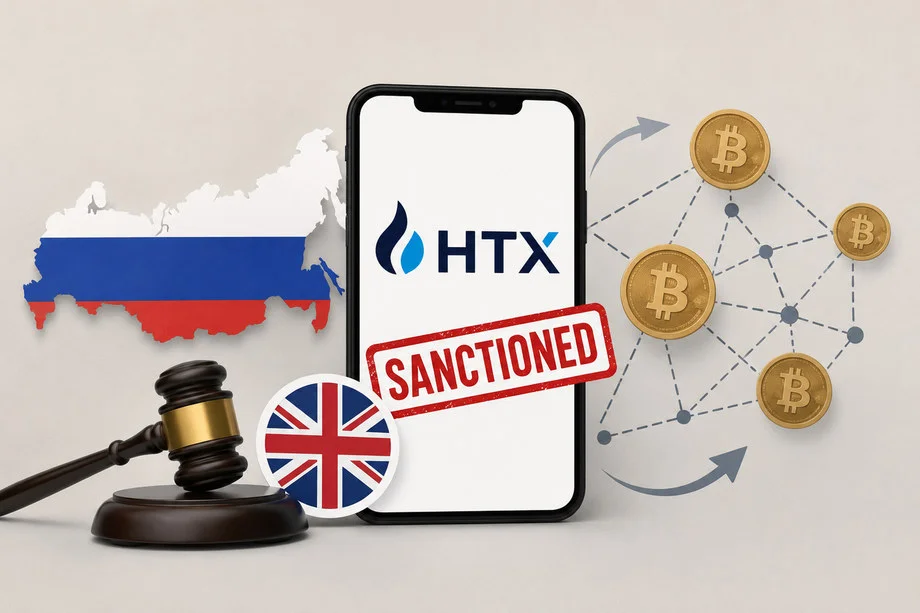
The United Kingdom has taken parallel steps against individual platforms. In October 2026 it sanctioned Bishkek-based TokenSpot, citing links to Russia’s financial services sector. Blockchain analysis by TRM Labs estimated that TokenSpot transferred more than $950 million in total to A7, Garantex and Grinex, with the largest portion directed to A7.
Regulatory Responses and Potential Effects
Kyrgyz authorities have introduced tighter rules for virtual asset service providers, strengthened compliance requirements and deployed national monitoring tools in response to international pressure. Whether these changes meet the EU’s threshold for systematic prevention of sanctions evasion remains an open question, as the current proposal indicates dissatisfaction with results so far.
If the ban is activated, European brokers would lose the ability to use Kyrgyz-registered platforms for settlement or client services. Research supporting the proposal points to possible fragmentation of liquidity, particularly in assets connected to ruble-backed tokens or entities previously linked to evasion.
A country-level restriction would apply uniformly to all platforms established in Kyrgyzstan, covering both those tied to prior sanctioned operations and those with no such connections. Adoption still depends on consensus among the 27 member states. Any single government can delay or modify the package, leaving the outcome uncertain until formal agreement is reached.
Attention now centers on whether the Kyrgyz measure survives intact in the final text, whether local enforcement against platforms associated with evasion becomes more visible, and whether trading activity migrates to other jurisdictions once the vote approaches.
Disclaimer
This article was generated by AI using information from multiple industry sources. It has not been reviewed or verified by a human editor and may contain inaccuracies, omissions, or misinformation. Readers are encouraged to independently verify any information before making decisions based on its content.Tired of the noise?
Let the bots trade for you.
Trade 24/7, without emotion, with data-driven strategies.
Associated articles

EU Imposes Sweeping 21st Sanctions Package Targeting Russian Banks and Crypto Operators

UK Sanctions Crypto Platforms Linked to Russian Sanctions Evasion Networks

US Treasury Designates Russian A7 Network Transnational Criminal Group Over Iran Sanctions Evasion

Binance Restricts Transactions With HTX, EXMO and 14 Other Crypto Platforms Over Sanctions Compliance
HTX Rejects UK Sanctions Over Alleged Russia Shadow Network Ties
Latest articles

Telegram Cuts Gift Resale Fees to 2% and Moves Trading Onchain

Bitcoin Core Wallet Rebroadcast Feature Can Link Addresses to Nodes

Switzerland's First Spot Bitcoin ETF Starts Trading on SIX Exchange

Braiins Warns of BGP Hijacks Diverting Bitcoin Hashrate From Over 1,000 Sites