Newsroom
Pando Finance Set to List Hong Kong’s Second Spot Solana ETF on October 13
12 October, 2026 / News / AI / Tags: kong, pando, hong, solana, etf
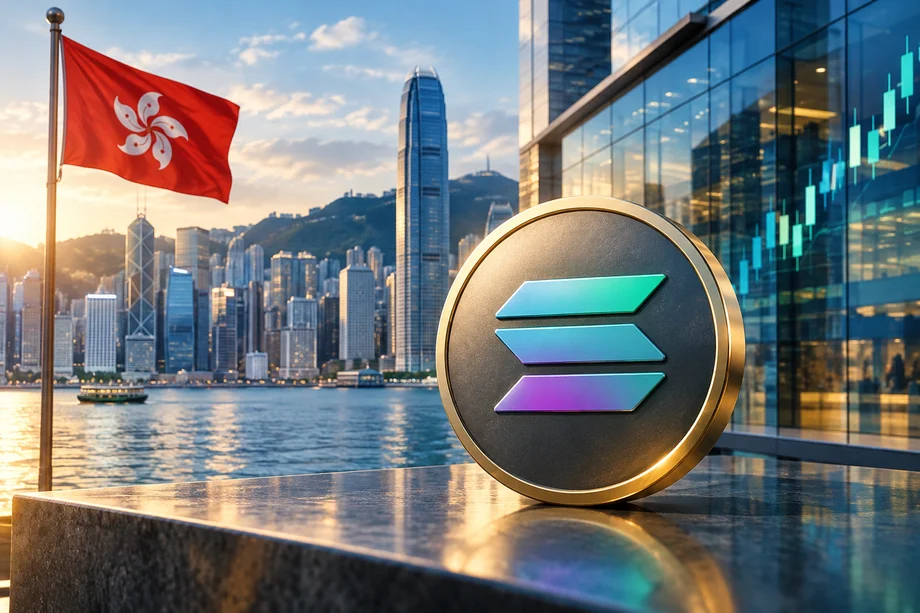
Pando’s new Solana ETF will trade under stock code 02831 with a 0.6% management fee, undercutting the city’s existing product while offering pure price exposure without staking
Pando Finance Limited is preparing to launch Hong Kong’s second spot Solana exchange-traded fund on October 13, 2026, expanding regulated access to the cryptocurrency for local investors. The product, trading under stock code 02831, will provide direct exposure to SOL price movements through shares listed on the Hong Kong Stock Exchange.
Subscription applications ran from October 6 to October 12 at an indicative price of approximately $1.00 to $1.03 per share. Investors could apply in minimum lots of 100 shares, placing the initial outlay near $100 to $103 before brokerage and other charges. Although the fund’s accounting base is the US dollar, its shares will trade in Hong Kong dollars.
Lower Fees Than the City’s First Solana Fund
Pando has set an annual management fee of 0.6 percent and estimated annual ongoing charges of 1.6 percent. These figures sit 0.39 percentage points below the corresponding costs of ChinaAMC’s Solana ETF, which carries a 0.99 percent management fee and 1.99 percent ongoing charges. ChinaAMC’s product, listed under stock code 03460, became Hong Kong’s first spot Solana ETF after regulatory approval in October 2025 and began trading later that month.
The new fund extends Pando’s existing lineup of spot Bitcoin and Ethereum ETFs, making Solana its third cryptocurrency product in the city. Hong Kong’s first spot Bitcoin and Ethereum ETFs started trading in April 2024.
Structure and Custody Arrangements
The passive fund will buy and hold SOL through virtual-asset trading platforms licensed by the Securities and Futures Commission. It may allocate up to 100 percent of net asset value to the token. Performance will be measured against the Asia Pacific closing price of the CME CF Solana Dollar Reference Rate, though fees and operating costs can cause returns to diverge from the benchmark.
The fund will not stake its SOL holdings with network validators, so shareholders receive only price exposure and no staking rewards. Derivatives and leverage are prohibited. Cash retained for expenses and redemptions is capped at 3 percent of net asset value, and the product does not plan to distribute dividends.
HashKey Exchange will execute the fund’s SOL trades, while HashKey Custody Services will hold the underlying assets. Investors will own ETF shares rather than the cryptocurrency itself.
Global Context and Local Regulatory Backdrop
An official Solana statement cited worldwide spot Solana ETF net assets of about $1.9 billion and cumulative net inflows of roughly $1.61 billion. The Hong Kong listing adds another regulated vehicle in Asia as the city continues to develop its digital-asset framework.
Hong Kong’s September 2026 Policy Address outlined plans to expand regulated stablecoin trading and tokenized assets on licensed platforms, including stablecoin-based settlement for tokenized money-market funds, tokenized gold and other eligible real-world assets. The Hong Kong Monetary Authority is preparing central-bank digital currency settlement and round-the-clock operations under EnsembleTX around the end of 2026. The Securities and Futures Commission has scheduled digital-asset custody surveillance measures for the second half of 2026, with additional market monitoring and anti-money-laundering oversight planned for 2027.
Volatility Warnings in Product Documents
Despite the regulated structure, the ETF remains fully exposed to SOL’s market-price swings. Product documents note that Solana recorded a maximum single-day decline of more than 42 percent during 2022 and caution that a comparable move could produce substantial losses for shareholders. Investors are warned they could lose their entire investment.
Solana itself launched in 2020 and underpins decentralized-finance applications, blockchain gaming and non-fungible tokens. Its native token is used for transaction fees, staking and other network functions. Eligible retail investors in Hong Kong can already trade SOL directly on licensed platforms such as HashKey Exchange, which is authorized to offer the token alongside Bitcoin, Ethereum, Avalanche and Chainlink.

Disclaimer
This article was generated by AI using information from multiple industry sources. It has not been reviewed or verified by a human editor and may contain inaccuracies, omissions, or misinformation. Readers are encouraged to independently verify any information before making decisions based on its content.Tired of the noise?
Let the bots trade for you.
Trade 24/7, without emotion, with data-driven strategies.
Associated articles
T. Rowe Price Launches First Actively Managed Multi-Token Crypto ETF

Hong Kong Exchange Opens Retail XRP Trading on Licensed Platform
Morgan Stanley Debuts Ether and Solana ETPs at Market-Low 0.14% Fee With Staking

Franklin Templeton Partners with HashKey to Offer Tokenized U.S. Money Fund in Asia

Franklin Templeton Enables $687 Million Tokenized Fund as Collateral on Bybit
Latest articles

Australia Proposes Extending CFD Rules to Crypto-Settled Derivatives

FSB Flags Untested Stablecoin Risks and Calls for Cross-Border Crisis Planning Ahead of G20
Ripple Criticized Over $250,000 Bounty for Critical XRP Ledger Flaw

Meta Expands AI Agent with Frontier Coding Models and Major Spending Forecast