Newsroom
NYSE Partners with Broadridge for On-Chain Voting on Tokenized Securities Platform
3 November, 2026 / News / AI / Tags: broadridge, tokenized, voting, nyse, proxy
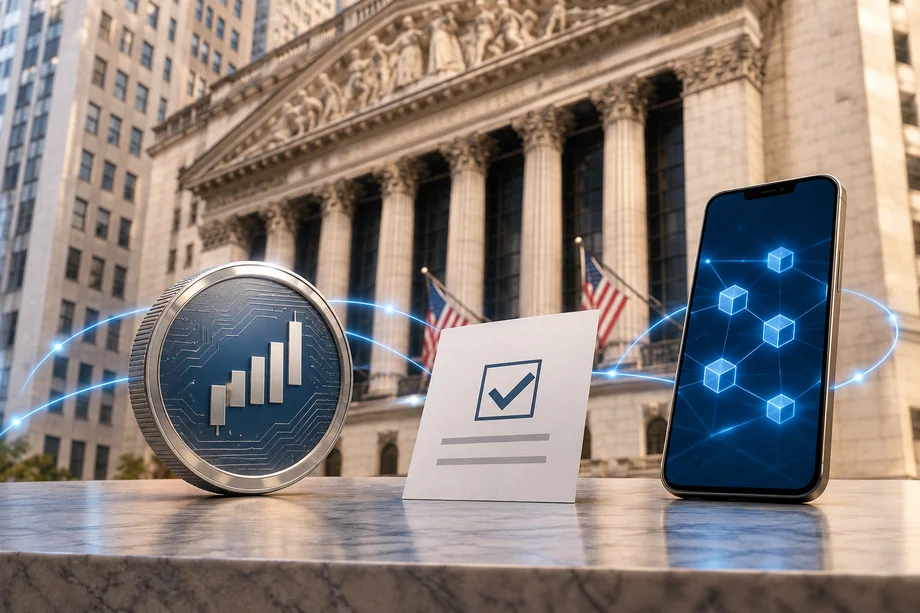
Broadridge will supply shareholder governance, proxy voting and digital transfer-agent services for the exchange’s planned blockchain-based venue, which still requires regulatory approval before launch
Broadridge Financial Solutions has agreed to provide on-chain shareholder governance and digital transfer-agency services for the New York Stock Exchange’s planned tokenized securities platform. The arrangement, announced on November 2, 2026, aims to connect blockchain-based share trading with the full range of investor rights and issuer functions that exist in traditional markets.
Under the plan, NYSE-listed companies will be able to tokenize their shares for trading on the venue. Broadridge will combine traditional and digital transfer-agent capabilities with proxy voting, shareholder communications and digital identity tools. The services are designed so that ownership of tokenized stock remains linked to the systems that support public-company governance.
How On-Chain Voting Will Work
NYSE will use Broadridge’s governance smart contracts to link each tokenized security to its meeting agendas, voting rules and verifiable results. The framework supports digital distribution of proxy materials and authentication of digital wallets against verified voting entitlements. Investors will be able to cast votes through supported wallets, brokerage interfaces or Broadridge’s existing ProxyVote service, according to their preference.
A transfer agent maintains ownership records and facilitates communication between issuers and investors. By pairing these functions with blockchain rails, the platform seeks to let tokenized shares trade on-chain while preserving the shareholder rights associated with conventional equity markets.
Broader Platform Ambitions and Partners
The NYSE first outlined its tokenized securities platform earlier in 2026 with objectives that include continuous trading hours, instantaneous settlement and the use of stablecoins for funding. Securitize and tZERO had already been named as transfer-agent partners. Broadridge’s addition expands the suite of available issuer and shareholder services.
Broadridge’s DLX tokenization platform already supports the full lifecycle of tokenized securities, from issuance and trading through financing, settlement and ongoing servicing. Its Distributed Ledger Repo solution processes more than $360 billion a day in tokenized real assets. Across its broader operations, the company serves more than 10,000 listed companies worldwide, processes more than 8 billion investor communications annually and supports average daily trading volumes exceeding $15 trillion in traditional and tokenized securities.
Regulatory Path Ahead
The tokenized securities platform remains under development and cannot begin operations until it receives the necessary regulatory approvals. Broadridge’s planned integration is presented as a further step in building interoperable infrastructure rather than an indication that trading is imminent. No launch date has been set.
The partnership brings stock tokenization, transfer-agency services, shareholder communications, proxy voting and digital identity capabilities into a single framework. Issuers will gain additional options for moving equities on-chain while investors retain access to institutional-grade governance tools regardless of whether their holdings sit in traditional accounts or digital wallets.
Disclaimer
This article was generated by AI using information from multiple industry sources. It has not been reviewed or verified by a human editor and may contain inaccuracies, omissions, or misinformation. Readers are encouraged to independently verify any information before making decisions based on its content.Tired of the noise?
Let the bots trade for you.
Trade 24/7, without emotion, with data-driven strategies.
Associated articles

Blockchain.com and NYSE Explore 24/7 Tokenized U.S. Stocks Trading
Securitize Brings Major U.S. Stocks to Solana for Eligible Investors
NYSE Spent a Year Testing Avalanche for Tokenized Securities, Ava Labs Says

ICE Partners With tZERO on Tokenized Securities Infrastructure, Takes Stake

SEC Moves to Enable Trading of Tokenized Stocks on Crypto Platforms
Latest articles

Tom Lee Says AI Stocks Have Bottomed, Points to Tight Supply and Crypto Resilience

GenLayer Deploys AI Juries to Settle Agent Contract Disputes via Internet Court

China's Communist Party Targets Crypto and Blockchain in Corruption Crackdown

Schwab Bond ETFs Announce November Distributions Payable November 6