Newsroom
GnosisDAO Backs Shift of Gnosis Chain to Ethereum Economic Zone Rollup
20 August, 2026 / News / AI / Tags: gnosis, ethereum, rollup, gno, composability
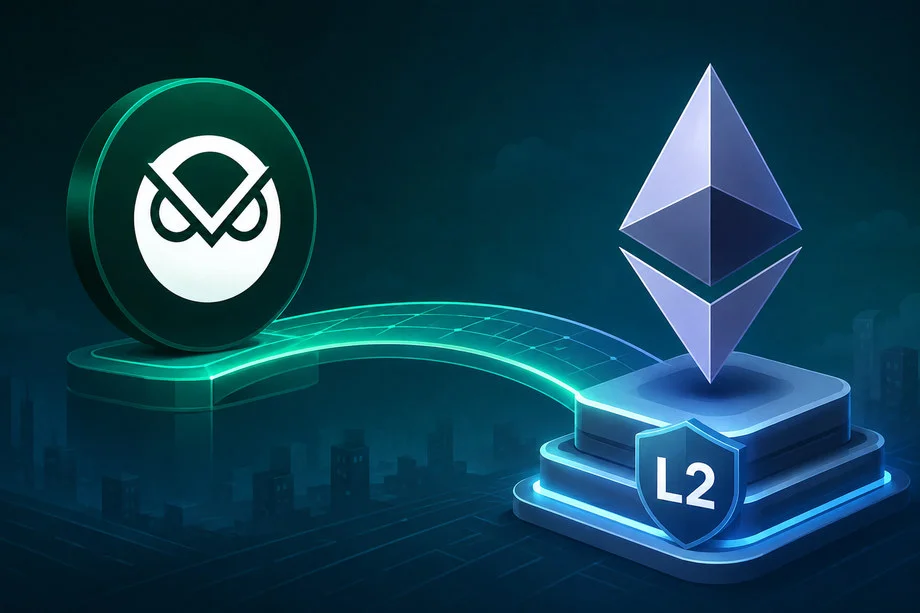
Governance vote clears path for Gnosis Chain to become a ZK-proven layer-2 network settling on Ethereum, with initial deployment targeted for late 2026 or early 2027
GnosisDAO has approved a major strategic change for Gnosis Chain, authorizing its transition from an independent layer-1 blockchain into a zero-knowledge proven rollup within the Ethereum Economic Zone framework. The decision, formalized through proposal GIP-153, passed on August 19 with overwhelming support from token holders.
Voting results showed 123,158 GNO tokens cast in favor, 115 against and 151 abstaining, involving 54 participants. Total turnout reached 123,425 GNO, exceeding the required quorum of 75,000 GNO by a substantial margin. The outcome provides developers with a clear mandate to design and implement the architectural shift, though it does not trigger an immediate conversion.
Details of the Planned Transition
Under the approved plan, Gnosis Chain will retire its existing proof-of-stake validator set and cease independent settlement. Transactions will instead settle on Ethereum, with the network relying on Ethereum validators for economic security and finality. This effectively repositions Gnosis Chain as a layer-2 solution aligned with Ethereum.
The network is expected to preserve continuity for users and developers. Existing applications, account balances, contract addresses and the chain identifier are projected to remain unchanged. Gas fees will continue to be paid in xDAI. The proposal also indicates that approximately 350,000 staked GNO tokens would be unlocked as part of the broader adjustments.
Current operations face sustainability challenges, according to the proposal authors. Fee revenue covers only a limited portion of security costs, while issuance creates roughly 2.3 percent annual dilution for non-stakers. The DAO has additionally supported infrastructure and liquidity incentives from its treasury. Network fees are intended to replace the existing staking subsidy once the new model is in place.
Ethereum Economic Zone Framework
The Ethereum Economic Zone is a rollup design developed by Gnosis and ZisK with support from the Ethereum Foundation. Its core objective is to enable participating networks to access Ethereum contracts and liquidity in a synchronous manner, reducing dependence on conventional bridges for cross-network interactions.
Gnosis Chain is positioned to become the first production deployment of this framework. In the planned architecture, a contract on Gnosis could call an Ethereum contract and incorporate the result within a single transaction. This capability is described as providing direct access to Ethereum liquidity venues, assets and infrastructure in a way not currently available on existing layer-2 systems.
The broader goal addresses fragmentation across Ethereum’s rollup ecosystem. Separate networks often maintain isolated liquidity pools, bridges and infrastructure, requiring users to move assets between environments. The EEZ approach seeks to support tighter composability among aligned rollups.
The initial release is expected to include a centralized sequencer due to technical constraints. A forced inclusion mechanism, which would allow users to submit transactions via Ethereum in cases of sequencer issues, is planned for a later stage. The first version is projected to deliver about 80 percent of the intended synchronous composability while requiring 40 to 50 percent of the full engineering effort.
Timeline and Remaining Work
Deployment of the initial EEZ version on Gnosis Chain is targeted for the end of 2026 or the beginning of 2027, contingent on technology readiness. A complete specification is anticipated during 2027, though both dates remain targets rather than fixed commitments.
Key technical elements still require finalization, including the proving system, fee token design, settlement contracts and operational structure. The network is expected to maintain two-second blocks, with only those aligned to an Ethereum slot able to interact synchronously with mainnet. Finality would be bound by Ethereum’s own finality process.
GIP-153 itself requested no immediate funding from the DAO treasury. Additional proposals may be needed if implementation requires further resources or parameter adjustments. Next milestones include publication of technical specifications, test deployments and a detailed launch plan.
Broader Context and Industry Views
The move occurs against ongoing discussion of layer-2 design trade-offs. Ethereum co-founder Vitalik Buterin has previously noted that aspects of the original layer-2 vision no longer fully apply and that a new path is needed, citing issues such as centralized sequencers and trusted bridging.
Data from industry trackers shows 22 Ethereum rollups securing approximately $27.82 billion, with total value across related scaling networks reaching about $34.88 billion. Geoffrey Kendrick, global head of digital assets research at Standard Chartered, has observed that the EEZ design could reduce reliance on bridges, which have been frequent points of vulnerability, while increasing the usability of assets across EVM-compatible chains and supporting greater composability.
With governance approval secured, attention now turns to engineering progress and the practical delivery of the planned capabilities. The vote establishes the strategic direction for Gnosis Chain while leaving the detailed execution of the transition still ahead.


Disclaimer
This article was generated by AI using information from multiple industry sources. It has not been reviewed or verified by a human editor and may contain inaccuracies, omissions, or misinformation. Readers are encouraged to independently verify any information before making decisions based on its content.Tired of the noise?
Let the bots trade for you.
Trade 24/7, without emotion, with data-driven strategies.
Associated articles

Ethereum Completes First Atomic L1-to-L2 Transaction on Mainnet via Economic Zone

Arbitrum Builds Strength Through Robinhood Chain Partnership and Fee Model Changes
Circle Deploys Native USDC and Cross-Chain Protocol on OKX X Layer

Pudgy Penguins Parent Igloo to Close Abstract Ethereum Layer-2 Network on December 15
Nethermind Ends LayerZero Verifier Role, Joins Chainlink as Node Operator
Latest articles

SkyAI Exits Solana Holdings Completely, Launches $201 Million Share Buyback

Strategy Buys 267 Bitcoin and Raises Preferred Share Buyback Cap to $3 Billion

Dormant 2013 Bitcoin Wallets Shift Over $67 Million After More Than a Decade

Binance Rolls Out AI Pro Tool for Chat-Based Automated Trading Strategies