Newsroom
Ethiopia Slashes Power to Bitcoin Miners as Drought Hits Hydropower
17 September, 2026 / News / AI / Tags: ethiopian, ethiopia, hydropower, mining, power
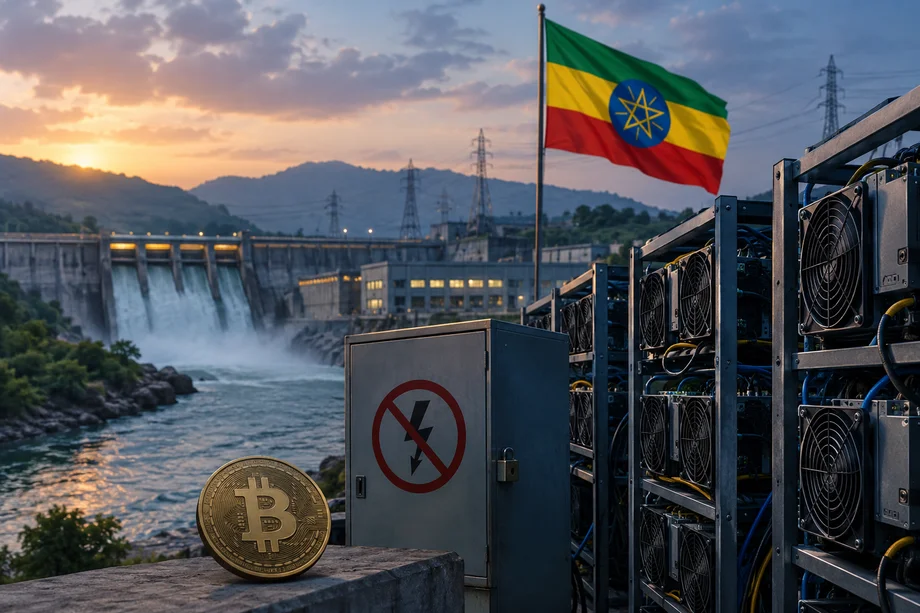
State utility reduces deliveries to 23% of contracted levels after a 20% drop in reservoir inflows linked to El Niño, prioritizing households and industry
Ethiopia has sharply curtailed electricity supplies to Bitcoin mining operations after dry weather tied to El Niño reduced water inflows into its reservoirs by 20%. State-owned Ethiopian Electric Power cut deliveries to 23% of contracted amounts, according to company leadership, as hydropower generation came under strain.
The utility initially lowered supplies to 75% of contracted levels, then to 50%, before reaching the current 23% figure. Ethiopian Electric Power chief executive Ashebir Balcha said the steps were taken to protect power for households and manufacturers. The company plans to review reservoir and supply conditions in October. Further reductions remain possible if water levels do not recover, and the utility could also limit electricity exports to neighboring countries if domestic pressure intensifies.
Mining Sector’s Large Share of Power and Revenue
Bitcoin miners have become a major consumer of Ethiopia’s electricity and a significant revenue source for the state utility. Operators accounted for nearly one-third of national electricity output and generated 35% of Ethiopian Electric Power’s revenue in the previous fiscal year. Low-cost hydropower has drawn international mining firms to the country in recent years.
Installed generation capacity stood around 5,200 megawatts as of late 2024, with hydropower providing the bulk of supply and wind and thermal sources making up the rest. Miners were already drawing roughly 600 megawatts at that time. Capacity has continued to grow. Abu Dhabi-listed Phoenix Group raised its Ethiopian mining capacity to 132 megawatts in April 2025 after adding a 52-megawatt facility.
The latest restrictions therefore hit a customer base that has grown both operationally and financially important to the national power system. Hydropower remains the foundation of Ethiopia’s generation mix, supported by large projects such as the Grand Ethiopian Renaissance Dam, yet weather-driven shortfalls can quickly constrain available supply.
Broader Pressure on Mining Economics
The Ethiopian cuts arrive against a backdrop of tighter conditions for Bitcoin mining worldwide. The April 2024 halving reduced the block subsidy from 6.25 BTC to 3.125 BTC. Economist and author Saifedean Ammous has argued that global Bitcoin mining electricity consumption and capital spending may have peaked during 2024 and 2025.
Ammous calculated that Bitcoin’s price would need to rise by more than 18.92% annually just to keep the dollar value of newly mined coins increasing, before accounting for any decline in the purchasing power of the dollar. Bitcoin has instead fallen more than 35% over the past 12 months.
Public miners have already adjusted by selling significant volumes of Bitcoin and directing capital toward alternative uses for their power and data-center infrastructure. Artificial intelligence and high-performance computing contracts have become a growing focus. By mid-2026, publicly traded miners had secured more than $70 billion in such agreements. An industry estimate placed the capital required for planned AI infrastructure at around $50 billion.
Some operators continue to run both Bitcoin and AI workloads. CleanSpark, for example, reported a substantial net loss in its most recent fiscal quarter even as it secured a long-term lease for an AI data center expected to generate multi-billion-dollar revenue over 20 years. Nine public miners spent $5.11 billion on capital assets in the first half of 2026 while recording $341.2 million in AI and high-performance computing revenue, with the second-quarter figure rising 52% from the prior three months.
Outlook for Ethiopian Operations
Ethiopian Electric Power will reassess conditions next month. Miners with long-term power contracts face lower operating rates until reservoir inflows improve. The country’s reliance on hydropower means weather patterns will continue to shape available capacity for both domestic users and export markets.
Ammous described his view on a possible peak in mining electricity demand as a testable hypothesis. A sustained recovery in consumption above previous highs or a sharp rise in transaction fees could alter the picture. For now, Ethiopia’s staged reductions illustrate how national energy constraints can rapidly limit mining activity even in markets previously viewed as attractive for low-cost power.

Disclaimer
This article was generated by AI using information from multiple industry sources. It has not been reviewed or verified by a human editor and may contain inaccuracies, omissions, or misinformation. Readers are encouraged to independently verify any information before making decisions based on its content.Tired of the noise?
Let the bots trade for you.
Trade 24/7, without emotion, with data-driven strategies.
Associated articles
Microsoft Withdraws From Nscale’s Essex AI Data Center Over Grid Delays Into 2030s

Hyperscale Data Halts Michigan Bitcoin Mining for AI Data Center Shift

Bitcoin Enters First Hashrate Bear Market as Miners Pivot to AI

Bitcoin Miners Turn to AI as Capital Flows Shift Away From Crypto

Bitcoin Miners Invest Billions in AI Infrastructure as Returns Trail Spending
Latest articles

Zcash Co-Founder Proposes Redirecting 8% of Block Subsidies to Network Reserve

Bitcoin Monte Carlo Simulations Point to Median Value of $1.03 Million in 2033

S&P Global Completes Acquisition of OpenZeppelin Smart Contract Security Firm

Franklin Templeton Files Two ETFs to Convert US Stock Dividends into Bitcoin