Newsroom
Ethena Expands USDe Strategy Into Equity Perpetuals for Higher Yields
29 August, 2026 / News / AI / Tags: usde, funding, ethena, equity, perpetual

Protocol shifts basis trade beyond crypto as equity perpetual open interest hits $6.2 billion and funding rates far outpace bitcoin
Ethena, the protocol behind the synthetic dollar USDe, plans to extend its core basis-trading approach into equity perpetual futures. The move comes as crypto funding rates have declined sharply and USDe supply has contracted from earlier peaks.
Equity perpetual open interest across major venues reached $6.2 billion by mid-August, a tenfold rise from less than $1 billion in March. Contracts first appeared on Hyperliquid in December 2025 with roughly $90 million in open interest. Binance followed in January 2026 with a Tesla contract of about $11 million. The market has since expanded to around 200 contracts, with memory and AI hardware-related instruments accounting for roughly half the open interest.
Higher and More Stable Funding Rates
Funding rates on equity perpetuals have substantially exceeded those available in crypto markets. From late May to mid-August, open-interest-weighted funding averaged 14 percent annualized on Hyperliquid and 17.5 percent on Binance. Bitcoin funding averaged 4.1 percent over the same window. Median equity funding stood at 13.9 percent versus 3.9 percent for bitcoin. Funding remained positive on 94 percent of trading days on Hyperliquid and 97 percent on Binance once the markets reached meaningful scale.
Bitcoin funding has steadily weakened. It averaged 11 percent annualized in 2024, 4.9 percent in 2025, and just 2.2 percent year-to-date through August 11. Daily correlation between equity perpetual funding and bitcoin funding was low, at 0.08 on Hyperliquid and 0.14 on Binance.
Young noted that equities have historically trended higher over long periods, supporting persistent demand for leveraged long positions and keeping funding rates positive more consistently than in crypto markets, where rates can compress or turn negative in downturns.
Scale of the Opportunity
Global equity market capitalization stood at approximately $166.5 trillion in July, compared with roughly $2.2 trillion for crypto. Crypto perpetual open interest currently sits near $94 billion. Ethena estimates that a 2.5 percent open-interest penetration rate applied to equities could imply potential equity perpetual open interest of about $4 trillion, nearly 40 times crypto’s previous peak.
The protocol intends to apply the same delta-neutral structure it already uses for bitcoin, ether and solana: maintain exposure to the underlying asset while shorting the corresponding perpetual and collecting funding paid by leveraged longs. First partner exchange deployments for the equity strategy are expected to be announced in the coming weeks. Ethena anticipates that real-world asset perpetuals could eventually surpass crypto derivatives as a source of USDe backing within 12 to 24 months.
Context of USDe Reserves and Supply
USDe supply has declined to around $4 billion from a peak near $14 billion to $15 billion earlier. Transparency data show roughly $4.6 billion in backing assets. Perpetual futures funding, once the dominant reserve engine, now accounts for only about 11 percent of backing. The remainder includes institutional lending arrangements, real-world assets such as collateralized loan obligations and investment-grade corporate bonds, stablecoin and DeFi positions, and prime lending.
Ethena has processed more than $30 billion in mint and redeem flows without losses affecting the protocol while managing multi-billion-dollar hedged books and using off-exchange custody. The equity expansion follows recent steps that include a $1 billion facility with FalconX for overcollateralized institutional loans and updates to ENA tokenomics that eliminate monthly venture-capital unlocks and consider revenue-funded buybacks.
The protocol frames the shift as a way to diversify yield sources and access a larger addressable market while maintaining the basis-trade model that has underpinned USDe since launch.

Disclaimer
This article was generated by AI using information from multiple industry sources. It has not been reviewed or verified by a human editor and may contain inaccuracies, omissions, or misinformation. Readers are encouraged to independently verify any information before making decisions based on its content.Tired of the noise?
Let the bots trade for you.
Trade 24/7, without emotion, with data-driven strategies.
Associated articles

Ethena Adds Tokenized U.S. Equities to USDe Backing via Binance bStocks and Perpetuals

Standard Chartered Initiates Ethena Coverage With $2 ENA Target by 2028
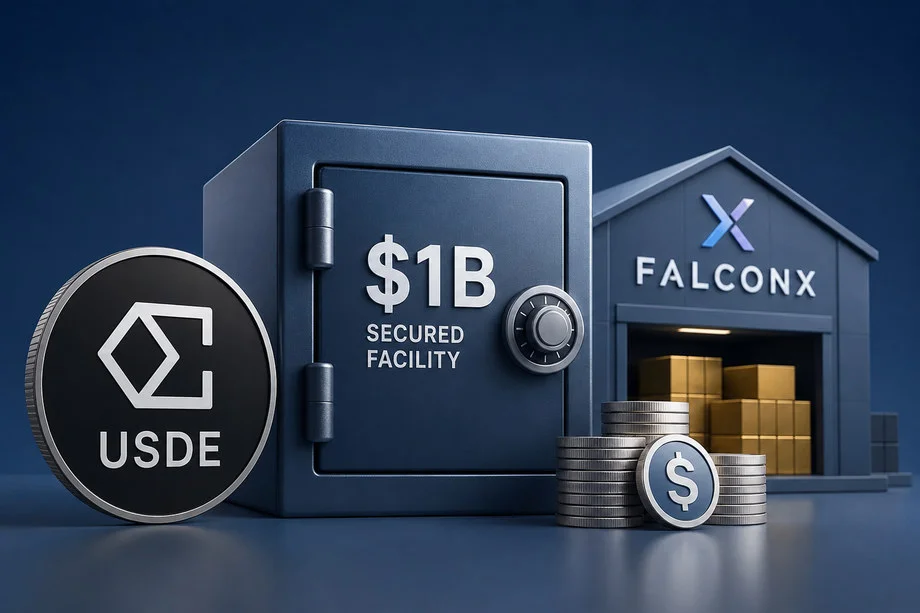
Ethena and FalconX Launch $1 Billion Secured Facility for USDe Assets
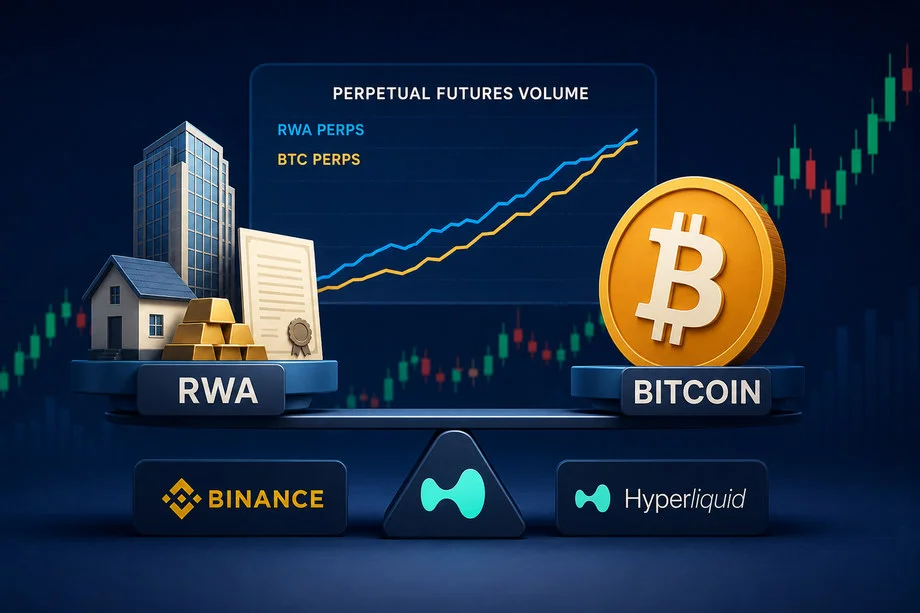
RWA Perpetual Futures Approach Bitcoin Trading Volumes on Major Platforms

Bitway Token Climbs Sharply on Binance Wallet Rewards and Short Covering
Latest articles

SkyAI Exits Solana Holdings Completely, Launches $201 Million Share Buyback

Strategy Buys 267 Bitcoin and Raises Preferred Share Buyback Cap to $3 Billion

Dormant 2013 Bitcoin Wallets Shift Over $67 Million After More Than a Decade

Binance Rolls Out AI Pro Tool for Chat-Based Automated Trading Strategies