Newsroom
ECB President Christine Lagarde to Step Down February 7, 2027, Months Ahead of Term End
29 October, 2026 / News / AI / Tags: lagarde, ecb, christine, council, bank
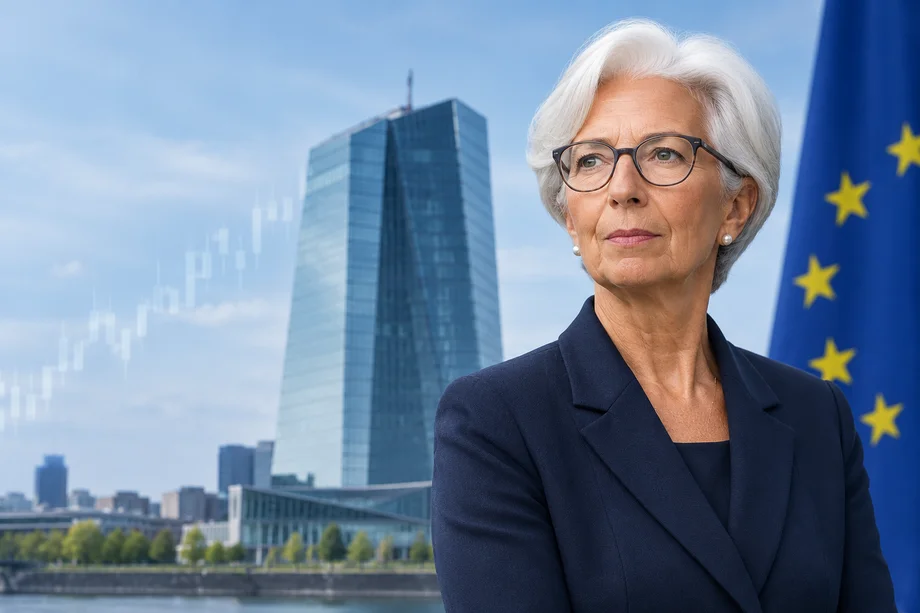
Christine Lagarde will leave the European Central Bank presidency on February 7, 2027, nearly nine months before her eight-year term expires in October 2027
European Central Bank President Christine Lagarde announced on Thursday that she will step down from her post on February 7, 2027. The move brings forward a leadership transition at the institution that sets monetary policy for the euro area, cutting short a term originally scheduled to run until October 2027.
Lagarde informed the ECB Governing Council and European Council President António Costa of her decision. She has led the central bank since November 2019 after earlier serving as France’s finance minister and as managing director of the International Monetary Fund from 2011 to 2019. A lawyer by training, she guided the eurozone through the Covid-19 pandemic, Russia’s invasion of Ukraine and the ensuing energy crisis.
Succession Process Begins
The European Council will appoint Lagarde’s successor under Article 283 of the Treaty on the Functioning of the European Union. The process requires a recommendation from the Council after consulting the European Parliament and the ECB itself. Costa indicated that the selection would begin immediately. No official candidate has been named, though former Dutch central bank head Klaas Knot and Spain’s Pablo Hernández de Cos, who previously led the Bank of Spain and now heads the Bank for International Settlements, have been mentioned as potential contenders. ECB Chief Economist Philip Lane and Executive Board member Isabel Schnabel are also due to leave next year.
The new president will oversee interest-rate policy for the euro area’s 21 member countries, a bloc of more than 350 million people. Lagarde is the ECB’s fourth president and the second from France. The Governing Council gave her a standing ovation upon learning of the decision.
Rate Decision and Economic Context
The announcement came on the same day the ECB held its latest policy meeting. The bank left its three main interest rates unchanged, keeping the deposit facility rate at 2.50 percent. Officials pointed to rising energy prices as an upside risk to inflation and a downside risk to economic growth. Euro area inflation had reached a three-year high in September.
Digital Finance Initiatives and Crypto Stance
During Lagarde’s tenure the ECB advanced work on a digital euro intended for everyday payments. In September the bank launched Pontes, a system that lets financial institutions settle wholesale tokenized asset transactions in central bank money, offering a regulated alternative to stablecoins.
Lagarde has consistently expressed skepticism toward cryptocurrencies. She has described Bitcoin as highly speculative and, on separate occasions, said cryptocurrencies hold no fundamental value and lack underlying assets that could protect investors. In January 2025 she rejected any suggestion of adding Bitcoin to central bank reserves, stating that reserves must remain liquid, secure and stable. She has also warned about the potential use of digital assets in illicit activity and called for coordinated global regulation.
Following the announcement, Tyler Winklevoss, co-founder of the cryptocurrency exchange Gemini, publicly criticized Lagarde’s approach to digital assets, saying her legacy would be defined by efforts to oppose cryptocurrencies.
Reports that Lagarde might leave early first surfaced in February 2026. She has also been linked in media accounts as a possible candidate to chair the World Economic Forum. Her departure after roughly seven years and three months in office will open a new chapter for the ECB’s leadership and its approach to monetary policy, digital currencies and financial stability across the euro area.
Disclaimer
This article was generated by AI using information from multiple industry sources. It has not been reviewed or verified by a human editor and may contain inaccuracies, omissions, or misinformation. Readers are encouraged to independently verify any information before making decisions based on its content.Tired of the noise?
Let the bots trade for you.
Trade 24/7, without emotion, with data-driven strategies.
Associated articles

ECB Invites Online Merchants for Digital Euro Pilot Starting 2027

ECB President Lagarde Rejects Euro Stablecoins, Pushes 'Fortress Europe' to Safeguard Monetary Control

ECB Official Calls for On-Chain Euro Reserves to Anchor Tokenized Markets

ECB Official Positions Digital Euro as Tool for European Payments Sovereignty

Goldman Sachs’ Kaplan Backs Fed’s July Rate Hold, Calls for Data-Driven Flexibility Ahead of September
Latest articles

Polymarket Halts International Trading After Third-Party Breach Drains User Funds

$11 Billion Bitcoin Options Expire as Price Hovers Near $80,000

Canton Strategic Holdings Plans Tokenized Share Trading on Blockchain as Early as Nov. 2

Solflare to Cover Missed Staking Rewards After Validator Key Loss