Newsroom
ECB Invites Online Merchants for Digital Euro Pilot Starting 2027
16 September, 2026 / News / AI / Tags: euro, ecb, pilot, merchants, commerce
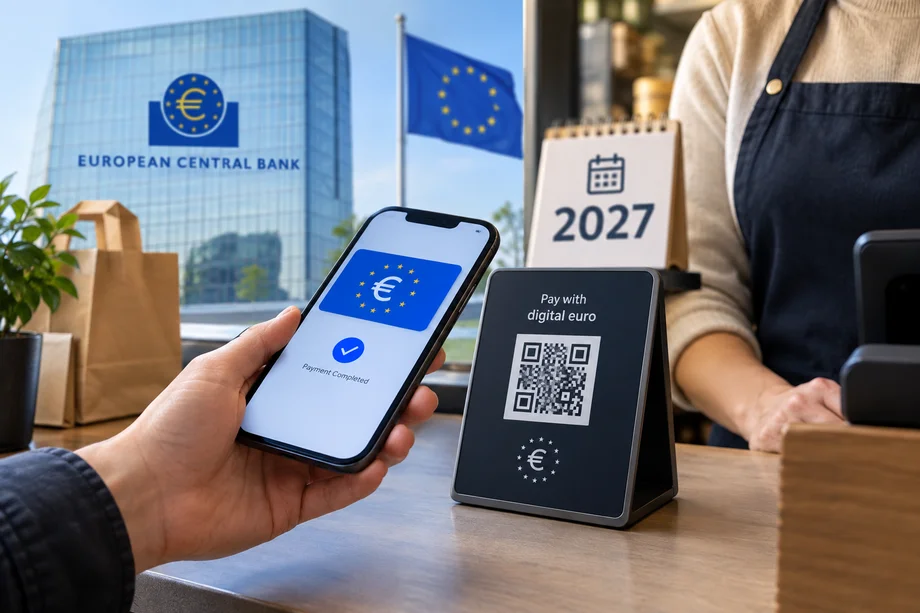
Euro-area e-commerce and mobile businesses can apply by late October to test beta digital euro payments in a year-long trial
The European Central Bank has opened applications for euro-area online and mobile-commerce merchants to join a controlled pilot of the digital euro. Businesses have until 17:00 CET on October 27, 2026, to submit applications for participation in the 12-month programme scheduled to begin in the second half of 2027.
Selected merchants will integrate beta digital euro payments into their remote checkout processes. The trial focuses on person-to-business transactions in e-commerce and mobile environments, allowing the Eurosystem to examine technical performance, operational requirements and user experience ahead of any potential wider rollout.
Pilot Structure and Requirements
The beta digital euro used in the test will closely match the design outlined in draft European Union legislation. It will not carry legal tender status during the pilot period. Participation is voluntary and unpaid. Applicants will be evaluated on market reach, operational readiness and overall suitability. Successful merchants must also establish or adapt a working relationship with one of the payment service providers already selected for the programme.
In July, the ECB chose 36 payment service providers from more than 50 applicants. The group includes Revolut, Stripe, Deutsche Bank and UniCredit. These firms will support user access, merchant acceptance or both. The pilot will also involve the ECB itself and the 19 national central banks of the euro area, with central bank staff acting as users to test both online and offline transfers.
Path Toward Possible Issuance
A final decision on issuing a digital euro will occur only after the relevant EU legislation is adopted. The central bank has indicated that issuance could take place in 2029 if the legislative process concludes and the pilot yields satisfactory results. The current merchant recruitment follows the earlier selection of payment infrastructure providers and shifts the focus toward real-world acceptance at the checkout stage.
Applications require a completed questionnaire, a formal declaration and supporting documentation. The process is designed as a structured selection rather than an open consumer launch. The pilot remains limited to controlled remote-commerce settings and does not extend to a full public deployment across all payment channels.
Context of Stablecoin Developments
The digital euro initiative continues amid ongoing discussion among European policymakers about the role of privately issued stablecoins. Officials have noted that the global stablecoin market has reached approximately $300 billion, with dollar-backed tokens accounting for the large majority of that total. Euro-denominated stablecoins compliant with the Markets in Crypto-Assets framework remain a small fraction of the overall market, even after recent growth from a low base.
ECB Executive Board member Isabel Schnabel has observed that dollar stablecoins reinforce the international position of the US dollar while euro alternatives stay comparatively limited. ECB President Christine Lagarde has repeatedly cautioned that private stablecoins could affect financial stability and the transmission of monetary policy, arguing that Europe should avoid simply copying existing dollar-based models.
Commercial adoption has been identified as a significant challenge. Lower fees charged by payment service providers to merchants have been suggested as one potential incentive to encourage broader participation. The digital euro is intended to provide a high degree of privacy for users, according to information released by the central bank.
Progress on the project remains tied to the completion of EU legislation. The European Parliament’s Economic and Monetary Affairs Committee advanced its position in June, though further steps in the legislative process are still pending.
Disclaimer
This article was generated by AI using information from multiple industry sources. It has not been reviewed or verified by a human editor and may contain inaccuracies, omissions, or misinformation. Readers are encouraged to independently verify any information before making decisions based on its content.Tired of the noise?
Let the bots trade for you.
Trade 24/7, without emotion, with data-driven strategies.
Associated articles

ECB Survey Shows Crypto Payments Near Absent Among Euro Area Merchants

ECB Official Positions Digital Euro as Tool for European Payments Sovereignty

ECB Official Calls for On-Chain Euro Reserves to Anchor Tokenized Markets

ECB President Lagarde Rejects Euro Stablecoins, Pushes 'Fortress Europe' to Safeguard Monetary Control

South Korea’s NHN KCP Launches Stablecoin Payment Pilot on Avalanche
Latest articles

Zcash Co-Founder Proposes Redirecting 8% of Block Subsidies to Network Reserve

Bitcoin Monte Carlo Simulations Point to Median Value of $1.03 Million in 2033

S&P Global Completes Acquisition of OpenZeppelin Smart Contract Security Firm

Franklin Templeton Files Two ETFs to Convert US Stock Dividends into Bitcoin