Newsroom
DOJ and Industry Groups Challenge Illinois Digital Asset Tax Over Enforcement and Federal Conflicts
13 November, 2026 / News / AI / Tags: illinois, tax, coalition, federal, who
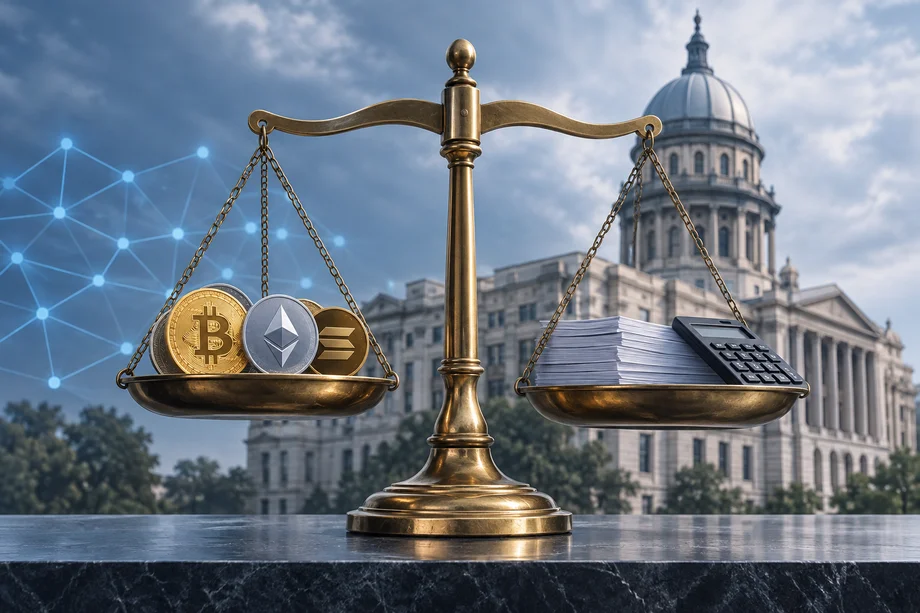
Federal officials, business associations and DeFi firms have filed court briefs arguing Illinois’ 0.2% crypto tax is unenforceable, discriminatory and at odds with national policy, as the levy faces delay until mid-2027
A growing coalition of federal authorities, traditional finance groups and decentralized finance organizations has joined legal challenges against Illinois’ digital asset tax, contending the measure cannot be administered as written and conflicts with broader U.S. efforts to foster cryptocurrency innovation.
The law, known as the Digital Asset Tax Act, imposes a 0.2% levy on the value of digital assets that are exchanged, transferred or stored through covered activity involving Illinois customers. It applies regardless of whether a transaction produces a profit or results in any change in beneficial ownership. Illinois officials had projected the tax would generate about $60 million in revenue for fiscal year 2027.
Originally set to take effect on January 1, 2027, the tax’s start date was postponed until July 1, 2027 after the state agreed to a temporary injunction while court proceedings continue. Plaintiffs have requested a ruling by March 1, 2027 under a proposed schedule still subject to court approval.
Industry Lawsuits and Expanding Opposition
Two separate lawsuits are pending in Sangamon County. The Digital Chamber and the Illinois Blockchain Industry Association filed the first action in July against Attorney General Kwame Raoul and a state revenue official. The Blockchain Association and the Crypto Council for Innovation followed with a second suit in August.
Over the past week, the opposition expanded significantly. The U.S. Department of Justice submitted a statement of interest. The U.S. Chamber of Commerce and the Securities Industry and Financial Markets Association filed a joint amicus brief. A separate coalition of 18 crypto-focused entities, including venture firms Andreessen Horowitz and Paradigm, protocols such as Uniswap and Aave Labs, Chainlink Labs, Phantom Technologies, the DeFi Education Fund and Stand With Crypto, also filed supporting briefs.
Business groups warned that the tax would force banks, broker-dealers, custodians, advisers and asset managers nationwide to build new systems for identifying Illinois customers, valuing digital assets and determining which transactions are taxable. They noted the risk of criminal penalties for noncompliance and argued the measure discriminates against digital asset services because comparable transactions in traditional assets are not taxed the same way. The groups said this approach may violate federal protections related to internet taxation, interstate commerce and uniform taxation.
DeFi Firms Cite Practical Impossibility
The DeFi coalition focused on the law’s definitions of “digital asset business activity” and who qualifies as a broker. Members argued the statute is unconstitutionally vague and would sweep in software developers and other network participants who lack customer relationships, custody of user funds or the technical ability to collect taxes or determine a user’s location.
The brief maintained that the tax would treat people who merely write software used by others to transact as if they were traditional intermediaries, even though those developers have no practical means to comply.
Federal Policy Concerns
In its filing, the Justice Department stated that Illinois’ tax undermines federal initiatives designed to promote cryptocurrency innovation and maintain U.S. leadership in the sector. Officials pointed to the creation of a Strategic Bitcoin Reserve and the GENIUS Act, which established federal rules for stablecoins. Less favorable state-level tax treatment of digital assets, the department argued, could conflict with those national policies.
Illinois House Speaker Emanuel “Chris” Welch had previously described the measure as part of an affordability agenda aimed at closing corporate loopholes and ensuring large technology and crypto participants contribute more. Lawmakers who advanced the legislation and the governor’s office did not respond to media inquiries on the recent filings.
The cases remain before the Sangamon County court as the parties await a decision on the proposed schedule and the substantive challenges to the tax’s validity and enforceability.
Disclaimer
This article was generated by AI using information from multiple industry sources. It has not been reviewed or verified by a human editor and may contain inaccuracies, omissions, or misinformation. Readers are encouraged to independently verify any information before making decisions based on its content.Tired of the noise?
Let the bots trade for you.
Trade 24/7, without emotion, with data-driven strategies.
Associated articles
Illinois Agrees to Delay 0.2% Crypto Tax to July 2027 Amid Court Challenges

Crypto Trade Groups Sue Illinois Over 0.2% Digital Asset Tax Set for 2027

Digital Chamber Sues Illinois Over 0.2% Digital Asset Transaction Tax

Crypto Groups Seek Court Order to Halt Illinois 0.2% Digital Asset Tax
House Unveils Digital Asset Tax Certainty Act Ahead of Committee Markup
Latest articles

Upbit Suspends OSMO Deposits and Withdrawals After Osmosis Network Halts Block Production
DOJ and CFTC Sue Arkansas to Halt Enforcement Against Kalshi Prediction Markets

Two 2010 Bitcoin Mining Wallets Move 100 BTC Worth $6.9 Million After 16 Years

Nvidia Board Contacts Arm CEO Rene Haas in Search for Permanent Leader