Newsroom
DogeOS Launches Public Testnet to Bring Smart Contracts to Dogecoin
1 October, 2026 / News / AI / Tags: dogeos, dogecoin, testnet, doge, applications
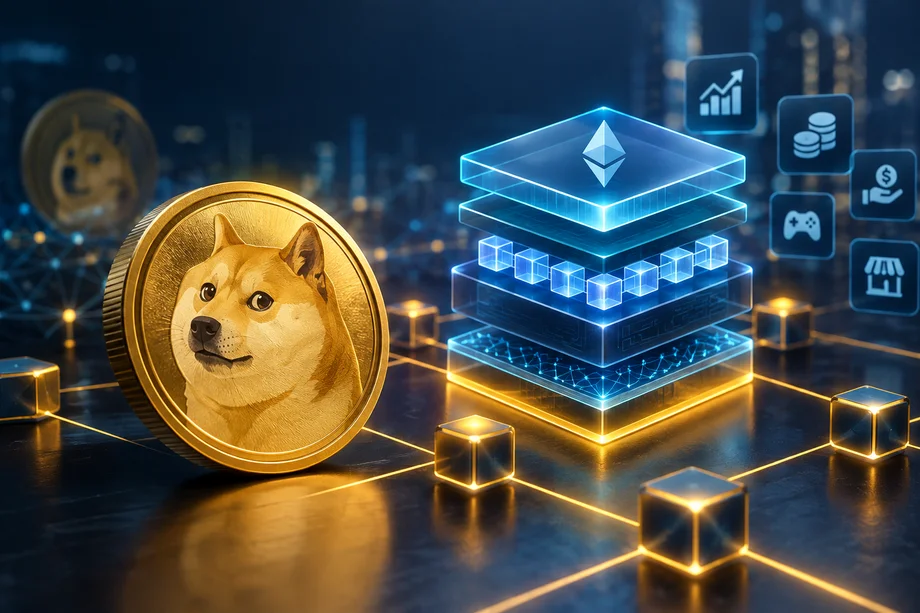
DogeOS opened its Chikyū public testnet on September 30, adding an EVM-compatible zero-knowledge rollup layer that lets developers build applications with DOGE as the fee token while leaving the base Dogecoin chain unchanged
DogeOS, developed by the team behind the MyDoge wallet, activated its public testnet on September 30, 2026. The network, named Chikyū, functions as an Ethereum Virtual Machine-compatible zero-knowledge rollup designed to support smart contracts and decentralized applications that settle state back to Dogecoin.
Transaction fees on the testnet are paid in DOGE. Developers can deploy Solidity-based contracts using familiar Ethereum tools such as Hardhat and Foundry. The testnet carries chain ID 6281971 and targets roughly 300 transactions per second, with blocks produced about every three seconds, compared with approximately 30 transactions per second and one-minute block times on Dogecoin’s base layer.
Application Focus and Early Projects
The testnet is intended to support trading platforms, lending protocols, stablecoins, prediction markets, gaming and consumer applications. Several teams have already begun building on the network.
Barkswap is developing a liquidity engine. Superposition Finance is working on a Dogecoin lending protocol. Derps is constructing a perpetual exchange. Split Markets is preparing non-liquidatable options. USDoge is building a collateralized debt position stablecoin. Snag is creating a prediction-market aggregator. Launchpads from Anoncoin and Starbase, along with games and consumer products from Doge Escape, PlaysOut and DogeFundMe, are also listed. Availability of individual applications depends on each team’s development schedule.
A faucet distributes 42.069 test DOGE per day to developers. The project’s documentation currently lists featured applications as “coming soon,” indicating the public testnet remains primarily a development and validation environment.
Current Security Model and Future Upgrade Path
In its present form, DogeOS does not rely on Dogecoin miners to verify zero-knowledge proofs. Bridge state transitions require valid cryptographic proofs, signatures from a majority of the validator set, and a signer operating inside a trusted execution environment. The network also uses a permissioned sequencer.
The DogeOS team proposed an upgrade to Dogecoin Core in July 2025 that would enable native verification of zero-knowledge proofs on the base chain. That change has not been implemented. Until such an upgrade is activated and adopted, the security model continues to depend on the current combination of validators, the trusted execution environment and the permissioned sequencer.
Funding, Backing and Broader Context
DogeOS raised $6.9 million in a May 2025 funding round led by Polychain Capital. The capital was earmarked for platform launch, developer tools and partnerships across decentralized finance, gaming and related categories.
Timothy Stebbing, director of the Dogecoin Foundation, expressed support for the effort while stressing the importance of preserving the base ledger.
He added that he hopes the network becomes a springboard for new utility engineering and a gateway for additional startups building on Dogecoin.
Dogecoin itself continues to function solely as a peer-to-peer payments network. The DogeOS layer sits above it and does not alter the base protocol. Market data around the launch showed DOGE trading near $0.094 to $0.096 with a market capitalization of approximately $14.7 billion. No immediate material price reaction was attributed to the testnet opening.
No mainnet launch date has been announced. The public testnet is positioned as a period for developers to build, test and validate applications while the network itself undergoes further scrutiny.

Disclaimer
This article was generated by AI using information from multiple industry sources. It has not been reviewed or verified by a human editor and may contain inaccuracies, omissions, or misinformation. Readers are encouraged to independently verify any information before making decisions based on its content.Tired of the noise?
Let the bots trade for you.
Trade 24/7, without emotion, with data-driven strategies.
Associated articles

Base Blockchain Recovers After Two-Hour Outage Disrupting Block Production
Stellar Prepares Protocol 28 Adapter Upgrade for Smarter Contracts and Stronger Consensus

Ethereum Foundation Warns Wallets and Tools Risk Failure in Glamsterdam Upgrade

Base Activates Azul Upgrade: Major Step Toward Faster Withdrawals and Decentralization
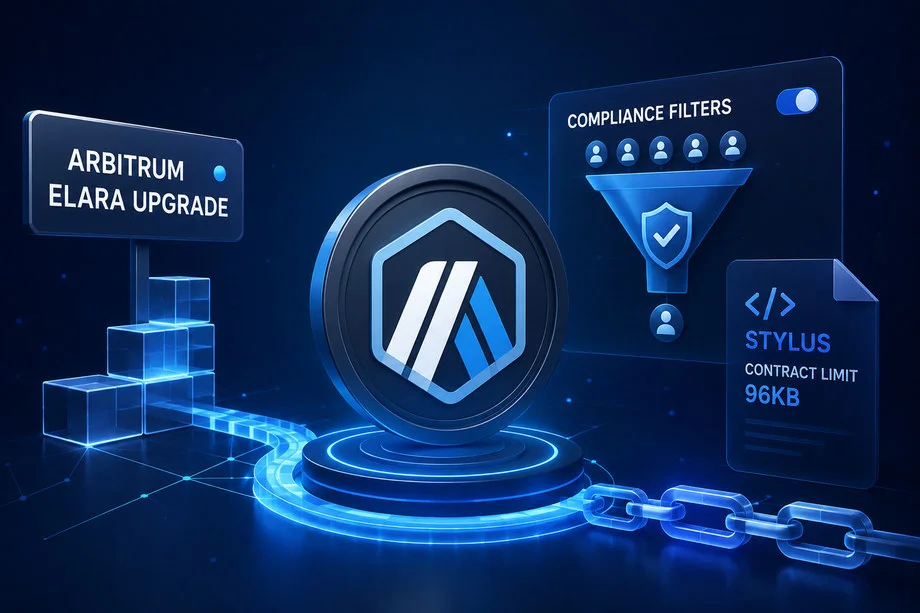
Arbitrum Activates ArbOS 61 Elara Upgrade Expanding Orbit Tools and Stylus Capacity
Latest articles

SpaceX and Tesla Set Up Committees to Explore Merger That Would Combine Holdings of Over 30,000 Bitcoins

UK Banks Face Thousands of Complaints Over Crypto Transfer Restrictions

Ripple Backs SEC Proposed Crypto Asset Rules After $150 Million Legal Battle

Blockchain.com Introduces Options Trading on Seven Major Crypto Assets
