Newsroom
CFTC Seeks Dismissal of CME Lawsuit Over Bitcoin Perpetual Futures
20 October, 2026 / News / AI / Tags: cme, perpetual, cftc, futures, contracts
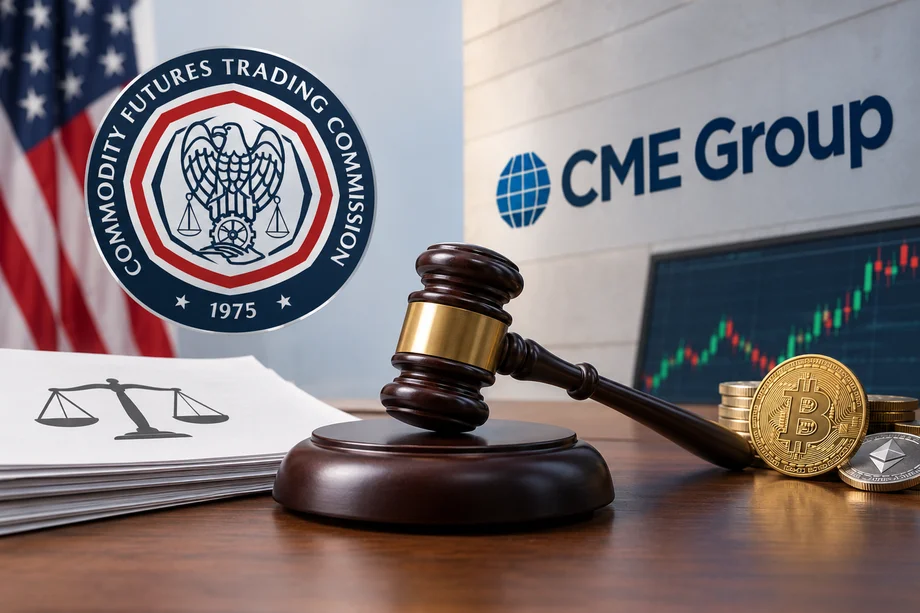
The regulator argues that CME Group has not shown any competitive harm from approving a first-of-its-kind Bitcoin perpetual contract, while the exchange claims such products should be regulated as swaps under different rules
CFTC Files Motion to Dismiss CME Challenge
On October 16, 2026, the Commodity Futures Trading Commission submitted a formal request to a federal court for dismissal of Chicago Mercantile Exchange Group’s lawsuit. The filing supports an earlier motion from September 2 and centers on the regulator’s position that CME has failed to demonstrate any real or imminent financial injury from the policy change.
CME had filed its suit on June 18 after the CFTC approved KalshiEX’s Bitcoin perpetual futures contract, known as BTCPERP, on May 29. The product tracks Bitcoin’s spot price and features no expiration date, with long and short positions settled through periodic funding payments to maintain alignment with the underlying asset.
In its court papers, the CFTC stated that CME must plausibly allege an actual or imminent increase in competition to pursue legal action, something the exchange has not accomplished. The regulator pointed to CME Group’s cryptocurrency futures trading activity, which rose rather than declined following the policy shift.
CME’s Core Arguments on Contract Classification
CME maintains that perpetual futures without fixed expiration dates qualify as swaps rather than futures under the Dodd-Frank Act and Commodity Exchange Act. The exchange contends this distinction affects margin requirements, registration obligations, and tax treatment. It also questioned the approval process for the Kalshi contract, which occurred without a public comment period before competitors gained permission to introduce similar products through self-certification.
The lawsuit targets both the specific approval and the accompanying CFTC policy statement. That statement outlines a case-by-case review for perpetual contracts tied to other digital assets and notes it creates no binding precedent.
Trading Volumes Reflect Growing Market Importance
CME reported average daily cryptocurrency trading volume of 174,000 contracts in September 2026, valued at $8.6 billion. This figure comes amid broader industry expansion, with perpetual contracts representing a significant share of overall crypto derivatives activity.
Analysts have observed that these products now account for the majority of trading on many platforms, underscoring their role in hedging and speculation. The CFTC has approved additional contracts on an individual basis while continuing to evaluate the classification implications for the broader market.
Key Figures and Public Statements
CME Group Chairman Terence Duffy addressed the issue in prepared remarks on July 22, 2026, during the exchange’s earnings call. He noted that client feedback indicated limited demand for perpetual contracts and questioned their effectiveness as hedging tools for institutional participants.
The CFTC countered this position in its filings, arguing that CME cannot present conflicting views to the court and the investing public. Commissioner Michael Selig previously dismissed the exchange’s objections as typical pushback from an incumbent player in a changing market.
Legal and Market Implications
If the court dismisses the case on standing grounds, the question of whether perpetual contracts are futures or swaps would remain open. This could allow the CFTC to maintain its case-by-case approach without a definitive judicial precedent. A ruling favoring CME would potentially disrupt the expansion of U.S. perpetual futures trading.
TD Cowen analyst Jaret Seiberg highlighted risks associated with rising perpetual volumes. He noted that expansion in this area could create significant challenges if CME prevails and market participants must adjust.
| Exchange | Perpetual Volume (2025) | Daily Average Volume (Sep 2026) |
|---|---|---|
| CME Group | Not stated | 174,000 contracts ($8.6 billion) |
| Binance | $25 trillion | Not stated |
These volumes illustrate the scale of interest in perpetual futures, which make up between 70% and 90% of total crypto trading activity on major platforms. The dispute extends beyond CME’s interests, as accurate classification directly influences risk oversight and regulatory supervision in a fast-evolving derivatives landscape.

Disclaimer
This article was generated by AI using information from multiple industry sources. It has not been reviewed or verified by a human editor and may contain inaccuracies, omissions, or misinformation. Readers are encouraged to independently verify any information before making decisions based on its content.Tired of the noise?
Let the bots trade for you.
Trade 24/7, without emotion, with data-driven strategies.
Associated articles

CFTC Moves to Dismiss CME Suit Over Crypto Perpetual Futures Approval

Kalshi Expands U.S. Crypto Perpetual Futures With BNB, Cardano, Aave and AI Tokens

Kalshi Files for Gold and Silver Perpetual Futures with CFTC

Hyperliquid Policy Center Calls for Unified U.S. Rules on Perpetual Contracts

Kalshi Seeks CFTC Nod for Perpetual Futures on US Stock Index and Copper
Latest articles

Blockchain Association Urges Clarity on DeFi and Stablecoin Rules Under GENIUS Act

XRP Launches Official X Account, Jointly Managed by Ripple and XRPL Foundation

ESMA Expands MiCA Register to 375 Providers as BingX, YouHodler and Openbank Join

France Narrowly Approves Crypto-to-Stablecoin Tax from 2027