Newsroom
CFTC Moves to Dismiss CME Suit Over Crypto Perpetual Futures Approval
3 September, 2026 / News / AI / Tags: cme, cftc, injury, perpetual, futures
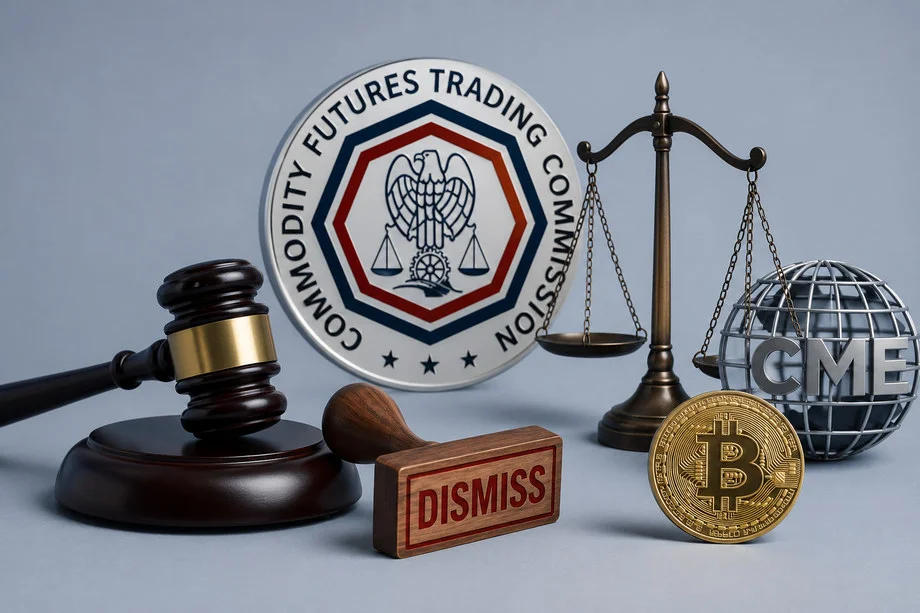
The Commodity Futures Trading Commission argues CME Group lacks standing and has shown no concrete competitive harm from Kalshi’s bitcoin perpetual contracts
The U.S. Commodity Futures Trading Commission has asked a federal judge to throw out a lawsuit brought by CME Group challenging the agency’s approval of cryptocurrency perpetual futures. In a motion filed this week in Washington, D.C., the regulator described the dispute as “much ado about nothing” and contended that the derivatives exchange cannot demonstrate the concrete financial injury required for constitutional standing.
Background of the Dispute
CME Group filed suit in June after the CFTC approved Kalshi’s BTCPERP contract on May 29. The cash-settled product tracks the CF Benchmarks Bitcoin Real Time Index, trades in units of one-ten-thousandth of a bitcoin, operates without an expiration date, and uses periodic funding payments between long and short positions to keep its price aligned with the spot market. Trading in the bitcoin contract began on June 3, followed by an ether version the next day. Early volume exceeded $100 million on the first day for bitcoin and surpassed $1 billion in notional value within a week.
The same May order covers similarly structured perpetual contracts linked to other digital commodities that have deep, active and continuous spot markets. Perpetuals tied to additional asset classes remain subject to individual review under a related policy statement.
CFTC’s Arguments for Dismissal
In its roughly 30-page filing, the commission stated that CME has not alleged the agency lacks jurisdiction over perpetual futures or the authority to approve the contract. Instead, the exchange claims the products should be treated as swaps under the Commodity Exchange Act rather than futures. The CFTC rejected that reclassification would cure any alleged competitive injury, noting that Kalshi and other designated contract markets could continue offering the contracts as swaps.
The regulator further argued that the challenged order permits any registered designated contract market, including CME itself, to list comparable products. CME has publicly indicated its customers have not requested perpetual futures, making any competitive disadvantage self-inflicted, according to the filing. The commission also pointed out that CME’s own cryptocurrency futures volume has continued to grow since the approval.
The agency maintained that CME’s effort to shield itself from competition falls outside the interests the Commodity Exchange Act is intended to protect, which center on market development, customer protection, innovation and oversight.
CME’s Position and Next Steps
CME contends that contracts lacking an expiration date or delivery obligation and featuring funding payments between traders meet the statutory definition of swaps. The exchange has also asserted that the CFTC failed to adequately explain any departure from earlier enforcement actions in which similar crypto products were treated as swaps.
U.S. District Judge Colleen Kollar-Kotelly last week denied the CFTC’s request to withhold the administrative record until the dismissal motion is resolved, stating the material could contain evidence relevant to CME’s claims of competitive injury. The parties were directed to propose a combined briefing schedule by September 4. CME’s opposition is expected in early October.
A decision on the motion will determine whether the case proceeds and could influence how perpetual contracts on digital assets are classified and offered on U.S. regulated markets.
Disclaimer
This article was generated by AI using information from multiple industry sources. It has not been reviewed or verified by a human editor and may contain inaccuracies, omissions, or misinformation. Readers are encouraged to independently verify any information before making decisions based on its content.Tired of the noise?
Let the bots trade for you.
Trade 24/7, without emotion, with data-driven strategies.
Associated articles

Kalshi Seeks CFTC Nod for Perpetual Futures on US Stock Index and Copper

Kalshi Files for Gold and Silver Perpetual Futures with CFTC

Kalshi Expands U.S. Crypto Perpetual Futures With BNB, Cardano, Aave and AI Tokens

CFTC Greenlights Crypto Perps: Coinbase Opens Global Derivatives to US Traders

CFTC Orders Kalshi to Keep Trading After New York Seeks $36 Billion Shutdown
Latest articles

SkyAI Exits Solana Holdings Completely, Launches $201 Million Share Buyback

Strategy Buys 267 Bitcoin and Raises Preferred Share Buyback Cap to $3 Billion

Dormant 2013 Bitcoin Wallets Shift Over $67 Million After More Than a Decade

Binance Rolls Out AI Pro Tool for Chat-Based Automated Trading Strategies