Newsroom
CFTC Clears Path for Tokenized Investments and Blockchain Records in Derivatives Markets
25 September, 2026 / News / AI / Tags: cftc, tokenized, records, staff, recordkeeping
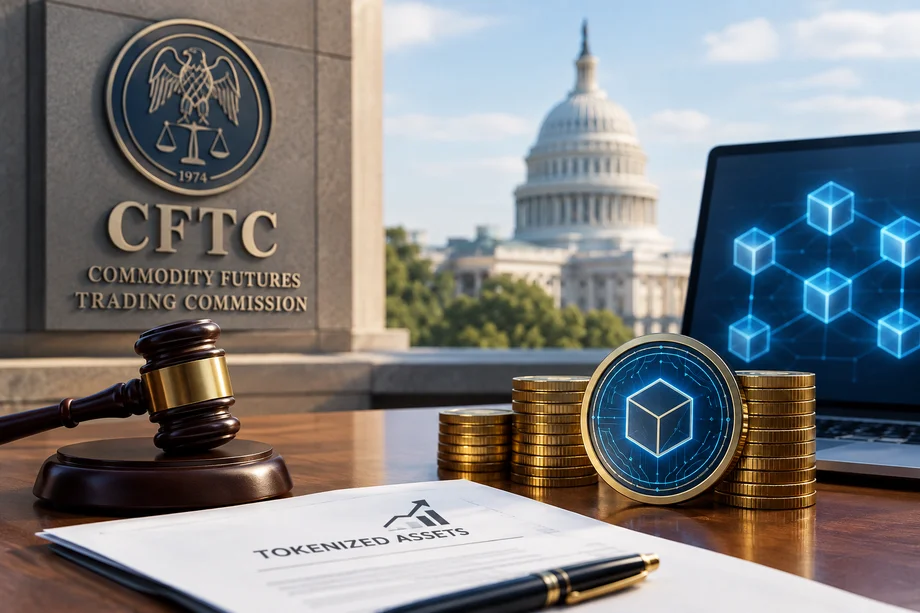
U.S. commodities regulator updates staff guidance allowing registered firms to place customer funds in tokenized permitted assets and maintain official records on distributed ledgers
The Commodity Futures Trading Commission staff released updated frequently asked questions on Thursday addressing how registered firms may handle tokenized assets and blockchain-based recordkeeping. The revisions expand on guidance first issued in March and form part of the agency’s broader effort to clarify the treatment of crypto-related activities under existing rules.
Three CFTC divisions—the Market Participants Division, the Division of Market Oversight, and the Division of Clearing and Risk—jointly issued the updates. They focus on two areas: the investment of customer funds in tokenized versions of already permitted assets, and the use of blockchain or distributed ledger technology to meet regulatory recordkeeping obligations.
Tokenized Forms of Permitted Investments
Under the revised guidance, futures commission merchants and derivatives clearing organizations may invest customer funds in tokenized versions of assets that already qualify as permitted investments. Eligible underlying assets include U.S. Treasury and agency securities, corporate bonds, money-market fund shares, and equities.
The tokenized form must grant the holder legal and economic rights that are the same as, or functionally equivalent to, those associated with the traditional form of the asset. Existing requirements covering custody, segregation, control, valuation, haircuts, liquidity, concentration, maturity, and operational risk continue to apply. The guidance does not permit direct investment of customer funds in payment stablecoins.
These clarifications build on earlier staff letters addressing tokenized collateral and the acceptance of certain digital assets as margin. The updates do not create new binding rules or amend existing regulations. They represent the views of the issuing divisions and aim to reduce uncertainty for market participants operating under CFTC oversight.
Blockchain Technology for Official Records
Staff also confirmed that CFTC recordkeeping requirements are technology-neutral. Registered entities may create and maintain required records on blockchain or distributed ledger systems without objection, provided the records meet standards of authenticity, reliability, accessibility, and producibility.
Firms are not required to maintain a separate off-chain copy solely because records exist on a distributed ledger. Entities using public permissionless blockchains must still ensure they can retrieve and produce records even during network outages or disruptions to block explorers. The same principles apply to swap-data records maintained by swap execution facilities, designated contract markets, clearing organizations, swap dealers, and other covered entities.
Context of Broader Regulatory Activity
The updated FAQs arrive days after the U.S. Senate failed to advance the Digital Asset Market Clarity Act. That legislation sought to delineate the respective roles of the CFTC and the Securities and Exchange Commission in overseeing digital assets. With the cloture vote unsuccessful, market participants and analysts anticipate that comprehensive congressional action on crypto market structure is unlikely before 2027.
In the interim, both the CFTC and the SEC have indicated they will continue developing policy through existing authorities. The CFTC has already submitted a crypto market regulation plan for White House review. The SEC has signaled readiness to propose rules covering certain investment contracts involving crypto assets and has established temporary frameworks related to tokenized securities trading.
Industry groups have generally supported clearer federal rules, arguing that regulatory certainty would encourage broader institutional participation. Some state attorneys general have expressed concern that expanded federal oversight could limit state enforcement authority over securities markets, while others maintain that federal standards are better suited to national capital markets.
The latest staff guidance remains limited to activities within the CFTC’s jurisdiction over derivatives markets. It does not alter the fundamental legal status of the underlying assets or create new categories of permitted investments. Market participants must continue to ensure full compliance with all applicable custody, segregation, and risk-management requirements when utilizing tokenized instruments or on-chain recordkeeping systems.
Disclaimer
This article was generated by AI using information from multiple industry sources. It has not been reviewed or verified by a human editor and may contain inaccuracies, omissions, or misinformation. Readers are encouraged to independently verify any information before making decisions based on its content.Tired of the noise?
Let the bots trade for you.
Trade 24/7, without emotion, with data-driven strategies.
Associated articles

CFTC Sets First Innovation Committee Meeting on Crypto Rules Amid Stalled Legislation

SEC Proposes Major Update to Transfer Agent Rules for Blockchain and Tokenized Securities

CFTC Expands No-Action Relief for Passive Software Linking Users to Regulated Derivatives

Franklin Templeton Seeks SEC Relief for Blockchain Trading of Tokenized Funds

SEC Moves to Enable Trading of Tokenized Stocks on Crypto Platforms
Latest articles

Babylon Labs Advances Proposal for Native Bitcoin Lending on Aave V4

TSMC Posts Record Q3 Profit Surge on AI Chip Demand, Lifts Full-Year Outlook
ASIC Opens Consultation on Capital and Custody Rules for Digital Asset Platforms

GTA 6 Leaker Cyberleek Drops Full Build Plan After Memecoin Collapse, Activates Dead Man’s Switch Threat