Newsroom
CFTC Chair Calls for Market Readiness Ahead of Mass Tokenization Era
23 September, 2026 / News / AI / Tags: selig, tokenization, cftc, trading, clearinghouses
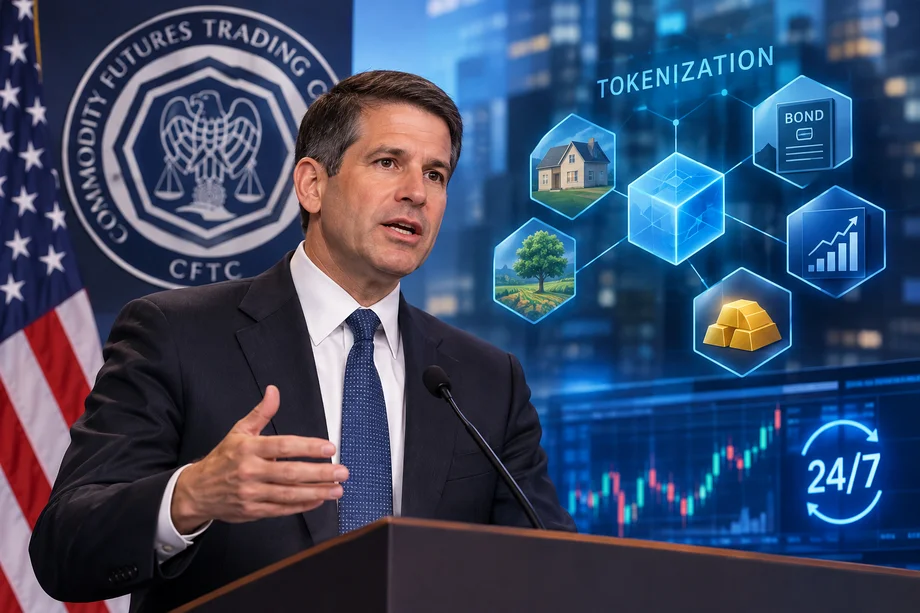
Michael Selig tells Treasury conference the next decade of tokenization, onchain finance and continuous trading will transform U.S. markets faster than decades of prior change
Commodity Futures Trading Commission Chair Michael Selig said U.S. financial markets must prepare for mass tokenization of real-world assets, the growth of onchain finance and the expansion of round-the-clock trading. Speaking Tuesday at the U.S. Treasury Market Conference hosted by the Federal Reserve Bank of New York, Selig described the scale of anticipated change as greater than anything seen in the previous several decades combined.
He framed tokenization as a structural shift capable of delivering near-instant settlement and real-time movement of collateral among clearinghouses, intermediaries and end users. The remarks come as both the CFTC and the Securities and Exchange Commission advance discrete measures on digital assets even after broader legislative efforts stalled.
Tokenization as the Next Market Infrastructure Shift
Selig compared the potential impact of tokenization to earlier modernization of trading floors. He said converting traditional assets into blockchain-based tokens could form the foundation of a more efficient system across asset classes.
He added that the CFTC intends to apply principles-based rules as tokenization and onchain activity evolve, aiming to support growth while maintaining market integrity. High-quality tokenized collateral, he noted, can make liquidity more dynamic and markets more resilient.
Selig also stated that the United States is positioned to remain a global leader by continuing to embrace innovation, encourage competition, right-size regulation and preserve the trust that distinguishes American markets.
Selective Approach to 24/7 Trading
On continuous trading, the CFTC chair rejected a uniform policy. He indicated that crypto assets and precious metals may already be suitable for 24-hour markets, while agricultural products, energy contracts and certain financial instruments may not yet be ready.
The agency has already issued guidance on 24/7 trading considerations for energy derivatives and has sought public comment on extending continuous trading, clearing and settlement more broadly. Staff advisories have outlined regulatory factors that would need to be addressed for such an expansion.
Stablecoin Collateral and Parallel SEC Steps
Earlier this year the CFTC expanded the list of eligible collateral to include certain payment stablecoins issued by national trust banks. Selig said the commission will continue examining additional ways to support responsible use of stablecoins by market participants, exchanges and clearinghouses.
Separately, the SEC granted a temporary innovation exemption in mid-September that permits limited trading of tokenized versions of U.S.-listed stocks under specified conditions. SEC Division of Trading and Markets Director Jamie Selway has described tokenization and crypto as functions that should not be treated as inherently political and that merit bipartisan support for market development.
Regulatory Path After Legislative Setback
The Senate failed to advance the CLARITY Act on September 15. Selig had previously indicated that the CFTC would proceed with crypto-related rules under its existing authority if Congress did not enact comprehensive legislation. On September 17 the agency submitted a regulatory action covering crypto asset transactions and markets for White House review; the filing remains at the prerule stage and does not yet detail specific requirements.
These steps occur against a backdrop of continued growth in Treasury-related derivatives markets. Selig cited sharp increases over roughly two decades in daily Treasury futures turnover, short-term rate futures volume, open interest and interest-rate swap activity as context for the need to modernize market infrastructure.
Both agencies continue to adapt existing frameworks rather than await new legislation, focusing on practical measures that allow tokenized assets and continuous trading to operate within established oversight structures.
Disclaimer
This article was generated by AI using information from multiple industry sources. It has not been reviewed or verified by a human editor and may contain inaccuracies, omissions, or misinformation. Readers are encouraged to independently verify any information before making decisions based on its content.Tired of the noise?
Let the bots trade for you.
Trade 24/7, without emotion, with data-driven strategies.
Associated articles

CFTC Sets First Innovation Committee Meeting on Crypto Rules Amid Stalled Legislation

CFTC Prepares Independent Crypto Market Rules as Clarity Act Faces Senate Hurdle

CFTC Greenlights Crypto Perps: Coinbase Opens Global Derivatives to US Traders

SEC Delays Tokenization Exemption and Cancels Crypto Rules Meeting Amid CLARITY Act Talks
Blockchain.com Seeks CFTC Approval to Launch U.S. Event Contracts and Crypto Derivatives
Latest articles

Bumble Agrees to $1.3 Billion Take-Private Deal with Ithaca Holdings

Interactive Brokers Launches Ethereum Staking to Boost Client Rewards on Holdings

Sberbank Receives Approval to Trade Bitcoin and Ether

S&P Dow Jones Executes First On-Chain OTC Swap Referencing Tokenized Index on Canton