Newsroom
BNY and Citadel Securities Complete First Tokenized Treasury Triparty Repo
14 October, 2026 / News / AI / Tags: bny, triparty, citadel, settlement, tokenized
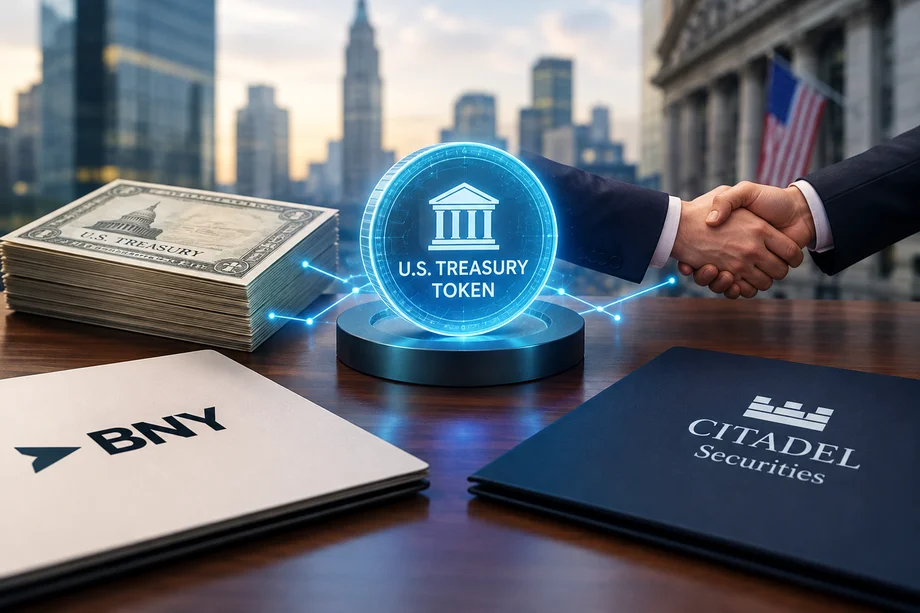
BNY and Citadel Securities settled a tokenized 2-year U.S. Treasury in minutes and used it as collateral in an overnight triparty repo, marking a first for a major platform
BNY and Citadel Securities have completed a landmark financing transaction that moved a U.S. Treasury security from trade execution through settlement and into short-term collateral use in a single workflow. The deal used a tokenized representation of a two-year note on BNY’s private digital ledger and settled within minutes rather than the conventional next-day cycle.
Citadel Securities purchased the two-year Treasury note through BNY on the Tradeweb platform. BNY then recorded a digital representation of the security on its private ledger. Settlement occurred in minutes, after which Citadel Securities pledged the tokenized note as collateral for an overnight triparty repurchase agreement. BNY supplied the cash against the collateral while acting as the triparty agent.
Transaction Details and Market Context
The arrangement covered the full cycle of execution, settlement and financing without requiring the security to pass through the standard T+1 settlement process. BNY described the transaction as the first use of tokenized assets on a major triparty repo platform. The bank did not disclose the size of the trade, the financing rate or the amount of cash advanced.
Triparty repo structures rely on a third-party agent to manage collateral and settlement between the cash provider and the securities borrower. BNY already serves as a leading settlement agent and collateral manager for U.S. Treasuries, allowing the tokenized instrument to operate inside existing institutional infrastructure.
Dan Doherty, digital assets operations lead at Citadel Securities, said efficient movement of high-quality collateral remains fundamental to well-functioning markets. He noted that the collaboration showed how tokenized Treasuries can shift from settlement into financing with fewer operational delays.
Private Ledger Versus Public Networks
BNY recorded the tokenized Treasury on its own private digital ledger rather than a public blockchain. The approach keeps the instrument within the bank’s controlled environment while still delivering near-instant settlement and subsequent collateral use.
The transaction forms part of a broader set of digital-asset initiatives at BNY. Earlier in the year the bank introduced blockchain-based transfer agency services for institutional funds and partnered on institutional staking capabilities. It has also developed tokenized deposit products that represent existing client claims while remaining recorded in traditional banking systems.
Next Steps for Settlement Hours and Digital Cash
Following the transaction, BNY outlined plans to introduce digital cash and tokenized deposit services that would support settlement and financing conducted through digital infrastructure. The bank also intends to lengthen the operating hours of its conventional platforms for Federal Reserve-eligible securities and U.S. triparty transactions.
Under the current timetable, those extended hours would reach European and Asian trading sessions next year. BNY executives have stated that digital ledger capabilities and longer settlement windows are expected to develop in parallel as market activity moves closer to continuous operation.
Brian Ruane, BNY’s global head of clearance and collateral management, has said financial infrastructure must keep pace with Treasury trading that is becoming more continuous. Tokenized collateral, he noted, can reduce friction while preserving the market structures institutions already rely on.
The completed workflow demonstrates that a tokenized U.S. Treasury can move from purchase through near-instant settlement and into overnight financing on an established triparty platform. Volumes, additional client participation and the launch schedule for digital cash tools remain points of further development.
Disclaimer
This article was generated by AI using information from multiple industry sources. It has not been reviewed or verified by a human editor and may contain inaccuracies, omissions, or misinformation. Readers are encouraged to independently verify any information before making decisions based on its content.Tired of the noise?
Let the bots trade for you.
Trade 24/7, without emotion, with data-driven strategies.
Associated articles

Virtu, Tradeweb Complete First Onchain Repo Using Marshall Islands Digital Bond

BNY Launches Blockchain Platform for $8.6 Trillion Transfer Agency Records
Interstice Digital Rolls Out Non-Custodial Swap Engine Linking Canton to Ethereum, Solana and Robinhood Chain

BlackRock BUIDL Reclaims Lead in Tokenized US Treasuries at $2.8 Billion

Hana Bank Issues $100 Million Five-Year Digital Bond on Euroclear Platform
Latest articles

TSMC Posts Record Q3 Profit Surge on AI Chip Demand, Lifts Full-Year Outlook
ASIC Opens Consultation on Capital and Custody Rules for Digital Asset Platforms

GTA 6 Leaker Cyberleek Drops Full Build Plan After Memecoin Collapse, Activates Dead Man’s Switch Threat
EBA Designates USDC as First Significant E-Money Token Under MiCA Rules