Newsroom
BlackRock BUIDL Reclaims Lead in Tokenized US Treasuries at $2.8 Billion
31 August, 2026 / News / AI / Tags: buidl, tzero, tokenized, usyc, blackrock
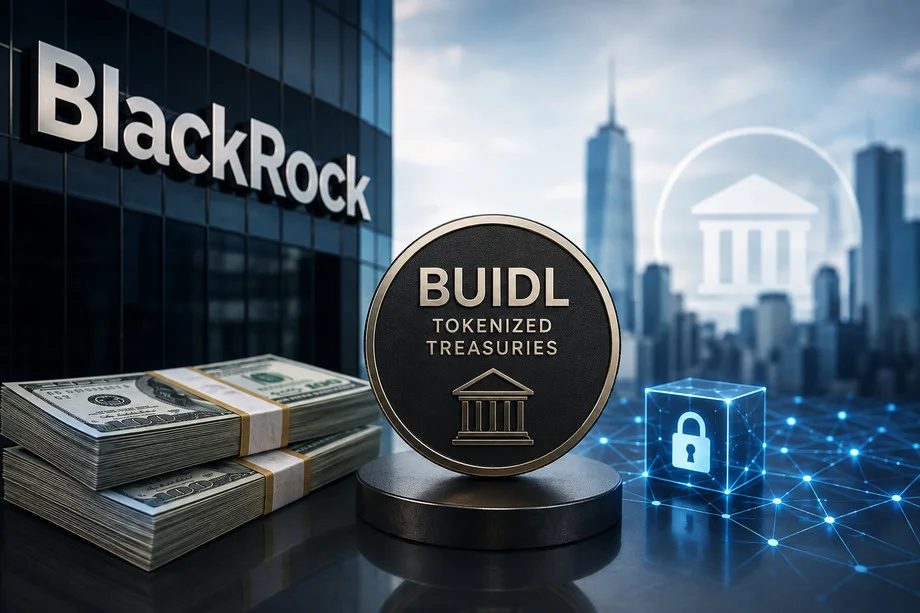
BlackRock’s BUIDL fund has returned to the top of the tokenized US Treasury market with roughly $2.8 billion in assets, surpassing Circle’s USYC amid rising institutional demand
BlackRock’s USD Institutional Digital Liquidity Fund, known as BUIDL, has regained its position as the largest tokenized US Treasury product. The fund now holds approximately $2.8 billion in assets, accounting for about 18.5 percent of a market valued at $15.1 billion. Some recent figures place the overall tokenized Treasury sector closer to $16 billion following increased institutional activity in recent weeks.
BUIDL overtook Circle’s USYC after the latter briefly held the lead earlier in 2026. USYC had expanded significantly over the prior year before yielding the top rank again by late August. The shift illustrates active competition among issuers as institutions compare products for on-chain exposure to short-term US government debt.
Fund Structure and Multi-Chain Reach
BUIDL launched in March 2024 as BlackRock’s first tokenized fund. Securitize administers the product and now supports it across eight blockchain networks, including Ethereum, Solana, Aptos and BNB Chain. Each token targets a stable $1 net asset value and accrues yield daily through a rebase mechanism. Underlying holdings consist of cash, short-term US Treasury bills and repurchase agreements.
The fund received a top AAA-mf rating from Moody’s earlier this year. Securitize reported record first-quarter 2026 revenue driven largely by asset-servicing fees linked to BUIDL and has completed its own listing on the New York Stock Exchange.
Broader Market Expansion
Tokenized Treasuries allow institutions to hold short-term government debt on blockchain rails, enabling around-the-clock settlement instead of traditional multi-day cycles. The structure has attracted capital seeking yield-bearing collateral or a place to park idle cash. Newer participants such as Franklin Templeton and Ondo Finance have added to overall market growth.
The category remains concentrated in government securities even as the wider real-world asset sector expands. Competition between leading products signals that the segment is maturing beyond early dominance by a single issuer.
DTCC Advances Tokenization Service
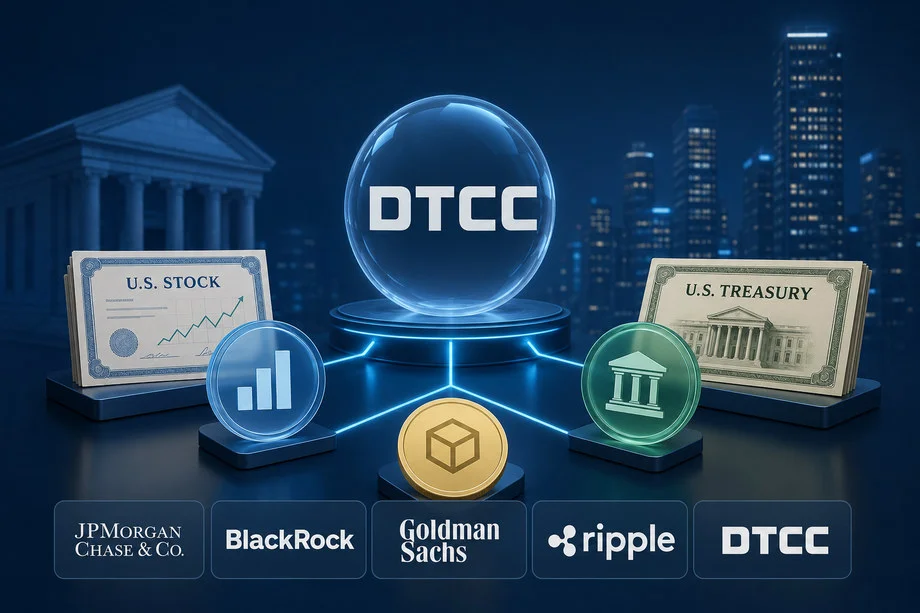
The Depository Trust & Clearing Corporation plans to launch its DTC tokenization service commercially in October 2026. The move follows successful production trades completed on July 15 that tested collateral pledges, securities lending, Treasury and repo settlement, and central counterparty margin workflows across the Canton Network and Hyperledger Besu.
In December 2025 the US Securities and Exchange Commission issued a no-action letter permitting DTC to operate the service for three years on pre-approved blockchains. DTCC’s Industry Working Group now includes more than 50 participants, among them BlackRock, JPMorgan, Goldman Sachs, the New York Stock Exchange, Nasdaq, Circle and Ondo.
DTCC estimates that $300 trillion in high-quality liquid assets exist globally, yet only 10 to 11 percent currently serve as collateral in financial markets. The new platform seeks to improve utilization of those assets.
ICE and tZERO Partnership
On August 31, tZERO signed a memorandum of understanding with Intercontinental Exchange, owner of the New York Stock Exchange. Under the agreement, tZERO will help design digital transfer agent and broker-dealer systems for ICE’s planned NYSE-affiliated Digital Trading Platform.
ICE will participate in tZERO’s latest funding round and license its blockchain patent portfolio, which covers 23 patent families and 103 patents. The firms also plan to evaluate the use of tZERO tokenized assets as eligible collateral at ICE’s clearing houses as they develop digital securities infrastructure.
These parallel developments by major market infrastructure providers coincide with BUIDL’s return to the top of the tokenized Treasury rankings and underscore ongoing efforts to integrate traditional securities with blockchain settlement systems.
Disclaimer
This article was generated by AI using information from multiple industry sources. It has not been reviewed or verified by a human editor and may contain inaccuracies, omissions, or misinformation. Readers are encouraged to independently verify any information before making decisions based on its content.Tired of the noise?
Let the bots trade for you.
Trade 24/7, without emotion, with data-driven strategies.
Associated articles
DTCC Prepares October Launch of Tokenization Service Covering $30 Trillion in Assets
Securitize Capital Secures SEC Investment Adviser Registration to Broaden Tokenized Asset Services
Franklin Templeton Partners with HashKey to Offer Tokenized U.S. Money Fund in Asia

HashKey Becomes First Asian Digital Asset Firm in DTCC Tokenization Working Group
DTCC Launches Live Tokenized Trading of Major Stocks and Treasuries
Latest articles

SpaceX and Tesla Set Up Committees to Explore Merger That Would Combine Holdings of Over 30,000 Bitcoins

UK Banks Face Thousands of Complaints Over Crypto Transfer Restrictions

Ripple Backs SEC Proposed Crypto Asset Rules After $150 Million Legal Battle

Blockchain.com Introduces Options Trading on Seven Major Crypto Assets
