Newsroom
Bank of Japan Lifts Rate to 1.25%, Highest in 31 Years, as Bitcoin Holds Above $77,000
18 September, 2026 / News / AI / Tags: yen, japan, bank, inflation, japanese
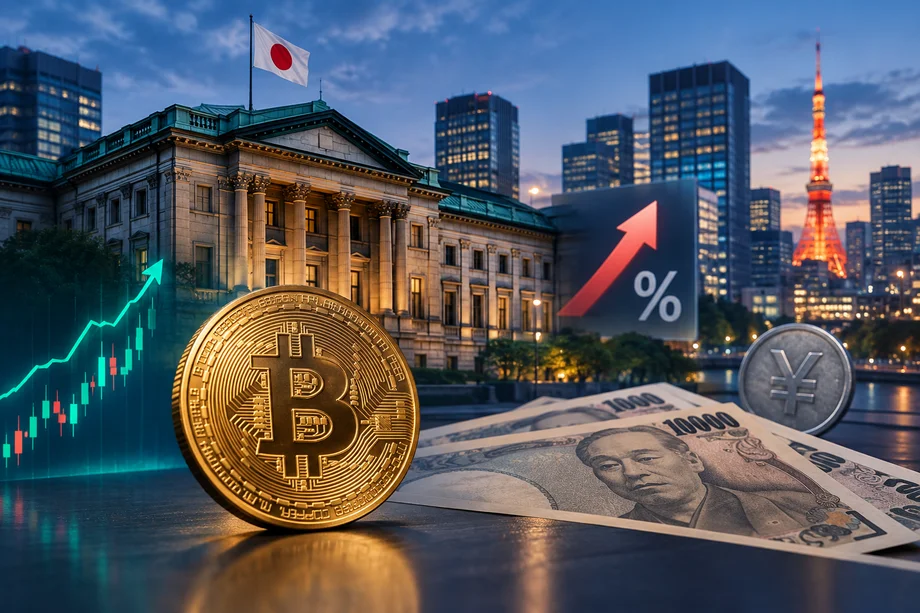
Japan’s central bank raises its policy rate by 25 basis points amid inflation pressures and a weak yen, while Bitcoin recovers and the yen slips further against the dollar
The Bank of Japan raised its benchmark interest rate by 25 basis points to 1.25% on Friday, marking the highest level in 31 years and the second increase in three months. The decision, approved by a 7-2 vote of the policy board, came as officials cited risks that inflation could remain above the central bank’s 2% target due to elevated import costs, energy prices and other factors.
Board members Toichiro Asada and Ayano Sato opposed the move. The shorter interval between hikes, down from previous six-month gaps, signals a continued shift away from the ultra-low borrowing costs that defined Japanese monetary policy for decades.
Policy Drivers and Global Context
Policymakers pointed to a moderately recovering economy alongside persistent price pressures. Core consumer inflation stood at 1.7% year-over-year in August. A weak yen, higher oil costs and strong demand linked to artificial intelligence investments have contributed to upward pressure on prices. The bank expects consumer prices to rise clearly above 2% from the second half of fiscal 2026.
The move followed recent rate increases by other major central banks. The U.S. Federal Reserve raised its benchmark rate by 25 basis points earlier in the week to a target range of 3.75%–4.00%, its first hike since 2023. The European Central Bank also tightened policy earlier in September.
U.S. Treasury Secretary Scott Bessent had publicly urged faster tightening by Japan to help stabilize the yen. He has argued that orderly currency markets support U.S. Treasury market stability.
Japan and the United States conducted a rare joint intervention in recent weeks to support the yen after it approached a 40-year low. Japanese authorities spent roughly $96.5 billion between late July and late August on currency support operations.
Yen Weakens Despite Higher Rates
Contrary to the typical effect of a rate increase, the Japanese yen depreciated against the U.S. dollar. USD/JPY rose to approximately 156.70 from around 156.20, with some readings showing the pair reaching as high as 157.145. The decline of nearly 0.8% in the yen reflected market focus on the two dissenting votes and the central bank’s cautious guidance on future moves.
Japan’s interest rates remain well below those in the United States, preserving a sizable yield differential. This gap has long supported yen-funded carry trades, in which investors borrow in yen to invest in higher-yielding assets abroad. Concerns about potential unwinding of such positions have periodically weighed on risk assets, including cryptocurrencies, as seen during market turbulence in August 2024. Markets showed no immediate broad sell-off linked to carry-trade reversals after Friday’s decision.
Bitcoin and Crypto Markets Hold Firm
Bitcoin responded positively in the hours after the announcement. The cryptocurrency’s dollar price climbed to around $77,400, recovering from an overnight low near $76,200. On the Tokyo-based bitFlyer exchange, the BTC/JPY pair gained about 0.5% to reach 12.06 million yen.
The broader cryptocurrency market remained steady. Global crypto market capitalization stood near $2.73 trillion to $2.75 trillion, with daily trading volume around $85 billion in some readings. Bitcoin dominance hovered near 56.5%. U.S. spot Bitcoin exchange-traded funds recorded approximately $159 million in net inflows on September 17, providing additional support ahead of the Bank of Japan decision.
Japan’s equity market also advanced, with the Nikkei 225 rising about 2% and adding roughly ¥23.6 trillion, or $150 billion, in market value following the rate announcement.
Inflation Outlook and Future Policy Path
The Bank of Japan has noted that artificial intelligence-related capital spending is currently adding to demand and price pressures. Higher costs for items such as memory chips and copper wiring linked to global supply conditions are contributing further. While the bank expects AI to eventually boost productivity and exert a deflationary influence over the medium to long term, near-term effects are seen as inflationary.
Financial conditions in Japan remain accommodative even after the latest increase. Future rate decisions will depend on economic data, price trends and financial market developments. Governor Kazuo Ueda’s forthcoming comments are expected to provide further signals on the pace of any additional tightening.
Households in Japan hold substantial deposits relative to debt, positioning many to benefit from higher interest rates on savings. The central bank continues to monitor the balance between supporting economic recovery and containing inflation risks stemming from the weak yen and external cost pressures.
Disclaimer
This article was generated by AI using information from multiple industry sources. It has not been reviewed or verified by a human editor and may contain inaccuracies, omissions, or misinformation. Readers are encouraged to independently verify any information before making decisions based on its content.Tired of the noise?
Let the bots trade for you.
Trade 24/7, without emotion, with data-driven strategies.
Associated articles

Bitcoin Drops as US-Japan Yen Intervention Stirs Carry Trade Concerns

BOJ Raises Rates to 1% Highest Since 1995 Sparking Bitcoin Liquidity Risks

Bitcoin Trades Near $78,000 as US and Japanese Bond Yields Climb Toward Multi-Decade Highs

Bitcoin Climbs Toward $85,500 as Softer August PCE Data Eases Rate-Hike Pressure

US National Debt Surpasses $40 Trillion, Raising Fiscal and Market Concerns
Latest articles

YieldMax Option Income ETFs Declare Weekly Distributions for October 9

Stablecoins Expand as Core Tools for SaaS and Ecommerce Operations

Crypto Experts Warn of AI Threat to Blockchain Encryption, Urge 'Bunker Mode'

Polkadot Launches DAO-Governed dotUSD Stablecoin as DOT Tests $1 Support