Newsroom
Australia Passes Digital Duty of Care Law Allowing Lawsuits Against AI Chatbot Providers
27 November, 2026 / News / AI / Tags: duty, safety, assent, royal, legislation
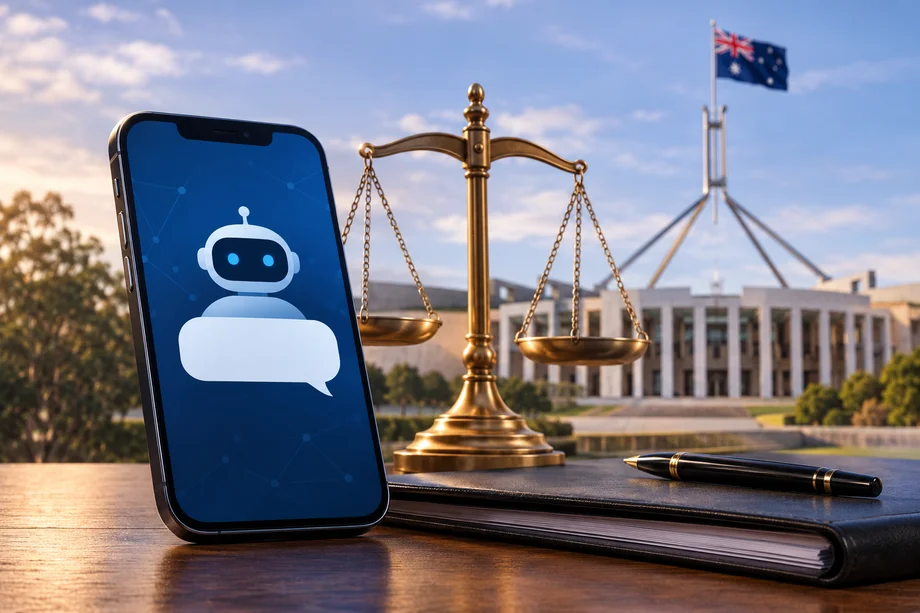
Parliament approves legislation creating a private right of action for harm linked to safety duty breaches by covered AI services, effective 12 months after Royal Assent
Australia’s Parliament has passed the Online Safety Amendment (Digital Duty of Care) Bill 2026, establishing a new legal pathway for individuals to pursue claims against providers of AI chatbots and related services. The legislation creates a private right of action tied to breaches of a mandatory online safety duty. Both the duty and the associated court remedy are scheduled to begin 12 months after the bill receives Royal Assent.
The bill completed its passage through Parliament on November 25, 2026, following consideration of Senate amendments by the House of Representatives. Schedule 2 of the legislation contains the core provisions on the safety duty and the private right of action. A separate schedule expands regulatory powers for the eSafety Commissioner, particularly concerning applications and websites used to generate non-consensual intimate imagery, and that schedule is set to commence the day after Royal Assent.
Scope of the New Safety Duty
The duty applies to providers of services that use an internet carriage service to generate material with artificial intelligence. This includes covered AI chatbots as well as social media services, relevant electronic services, and designated internet services. Providers must take appropriate safety measures. These include effective steps to address risks identified through their own assessments.
A harmful interaction with a service does not automatically constitute a breach. Courts will examine whether the provider responded adequately to reasonably foreseeable risks, including whether it implemented and maintained effective safeguards.
Requirements for a Successful Claim
To succeed in a claim, an individual must demonstrate that the provider failed to comply with its safety duty and that the failure caused loss or damage. The legislation treats the causal connection as established if the breach substantially contributed to the harm suffered.
Available remedies include an award of damages, which may cover emotional distress, an injunction, or an order requiring the provider to issue an apology. Courts retain discretion to select the remedy that fits the circumstances of each case.
For adults aged 21 or older at the time of the harm, the six-year period applies. For those who experience loss or damage while under 21, the 21st birthday may extend the filing window depending on the exact timing of the incident.
Commencement Timeline
Royal Assent had not yet been granted as of late November 2026. Once granted, the expanded eSafety Commissioner powers take effect almost immediately, while the digital duty of care and the private right to sue activate one year later. This staggered approach allows time for providers to prepare compliance systems before individuals gain the ability to file claims in court.
The legislation marks a significant expansion of individual legal recourse in Australia’s online safety framework, placing direct accountability on AI service providers for failures to manage foreseeable risks associated with their systems.
Disclaimer
This article was generated by AI using information from multiple industry sources. It has not been reviewed or verified by a human editor and may contain inaccuracies, omissions, or misinformation. Readers are encouraged to independently verify any information before making decisions based on its content.Tired of the noise?
Let the bots trade for you.
Trade 24/7, without emotion, with data-driven strategies.
Associated articles
Latest articles

Binance Hackers Route Over $600 Million Through THORChain as Laundering Efforts Widen

Binance Auto-Closes WLFI Futures as Open Interest Drops 77% in 90 Minutes

Binance Founder Zhao Weighs Legal Action Over Netflix's Portrayal of Him in FTX Drama
Bybit Withholds Full Postmortem of $1.4 Billion February 2025 Hack