Newsroom
Arya.ag Moves India’s $2 Billion Grain Records onto Avalanche Blockchain
10 September, 2026 / News / AI / Tags: arya, grain, warehouse, receipts, finternet
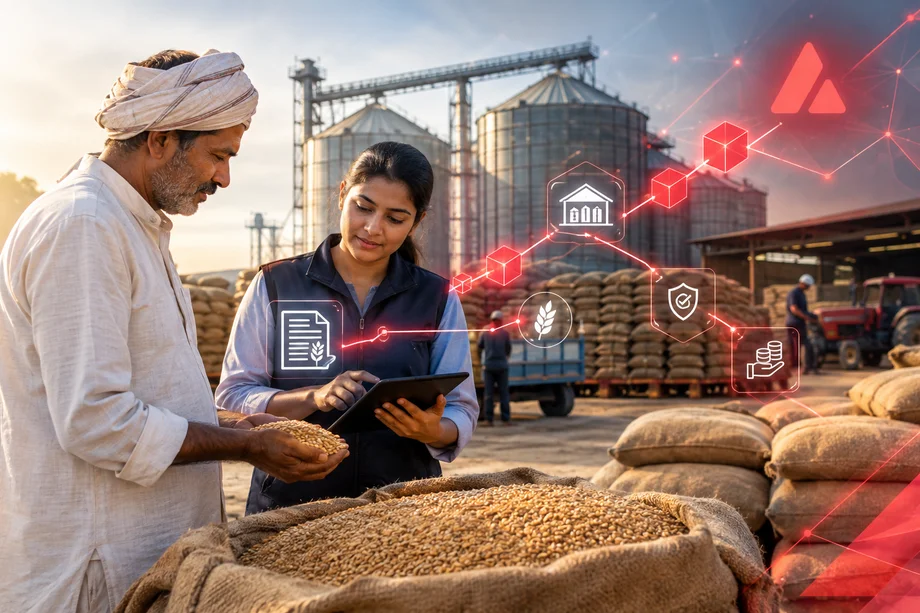
Indian warehousing firm tests tokenized receipts and loan data on a dedicated Avalanche network to aid collateral checks for agricultural lenders
Arya.ag, one of India’s largest agricultural warehousing companies, has begun placing records tied to approximately $2 billion in stored crops onto a dedicated Avalanche layer-1 blockchain. The system records grain deposits, electronic warehouse receipts and loan status so participating lenders can verify collateral more reliably.
Infosys co-founder Nandan Nilekani announced the initiative on September 10 at the Global Fintech Festival in Mumbai. Arya.ag is collaborating with Finternet to link farmer details, commodity data, warehouse information, insurance and financing status into shared digital records.
How the Tokenized System Works
Farmers storing crops in registered warehouses receive electronic negotiable warehouse receipts, known as e-NWRs. These receipts already allow borrowers to secure loans without selling produce immediately after harvest. The new blockchain layer connects the physical deposit data with the receipt and any outstanding financing.
Arya.ag’s samplers collect grain information and enter it into the company portal. Finternet then combines that data with other details into what has been described as a composite token. Banks can consult the shared ledger to confirm the grain exists, check whether it has already been pledged as collateral and see remaining debt levels.
The underlying commodities stay in physical warehouses. The blockchain does not transfer ownership of the grain or create tradable tokens for public markets. India’s existing legal framework for electronic warehouse receipts continues to govern the financing documents.
Testing is underway on the dedicated layer-1 network operated by Arya.ag using Avalanche technology. The network remains separate from Avalanche’s public chains and is configured for banks, warehouses and regulated lending records. No launch date or initial volume of grain or loans has been disclosed.
Scale of Arya.ag’s Existing Operations
Arya.ag currently holds around $2 billion worth of agricultural commodities across its warehouse network. The company facilitates roughly $1.3 billion in agricultural loans each year. Its non-bank finance subsidiary, Arya Dhan, directly issues approximately $230 million of that total. Banks and other institutions supply the balance after reviewing stored crops.
These figures describe the firm’s conventional business and do not indicate the volume of assets or loans already recorded on the blockchain. Earlier reports placed annual grain handling near $3 billion and loan facilitation closer to $1.5 billion, reflecting different measurement periods.
Arya.ag reaches between 850,000 and 900,000 farmers through about 12,000 leased warehouses covering 60 percent of India’s districts. Storage accounts for the majority of revenue, followed by financing and commerce activities.
Bank Participation and Future Expansion
Three major banks are joining the network, according to Ava Labs’ India head Devika Mittal, though their names have not been released. Any bank may join at this stage. Access for additional warehouse operators is planned for a later phase.
Mittal stated that the layer-1 is run by Arya.ag and is expected to support other warehouse companies over time. Public information does not yet detail validator operators, data-access rules, correction processes or technical metrics such as transaction volume.
The Finternet framework draws from a 2024 Bank for International Settlements working paper co-authored by Nilekani and former BIS General Manager Agustín Carstens. The paper outlined interconnected ledgers for tokenized assets and stressed the need for legal and regulatory support.
Context for Warehouse-Backed Lending in India
Electronic warehouse receipts already enable farmers and agribusinesses to borrow against stored commodities. In 2024 the Indian government introduced a credit-guarantee program valued at 10 billion rupees to encourage financing against these receipts, especially for small and marginal farmers.
Arya.ag and its partners present the blockchain records as a common source of verified information that can reduce reliance on fragmented systems. The physical verification of grain quality and quantity remains essential. Potential benefits such as faster approvals or lower costs have been described as outcomes still to be demonstrated once the system is fully deployed.
No comparison data on processing times, operating costs or approval rates has been released. The arrangement focuses on improving the infrastructure for collateral verification rather than altering the legal status of the receipts themselves.

Disclaimer
This article was generated by AI using information from multiple industry sources. It has not been reviewed or verified by a human editor and may contain inaccuracies, omissions, or misinformation. Readers are encouraged to independently verify any information before making decisions based on its content.Tired of the noise?
Let the bots trade for you.
Trade 24/7, without emotion, with data-driven strategies.
Associated articles

Kraken and Maple Launch Onchain Warehouse Facility for Crypto-Backed Institutional Loans

Pineapple Financial Migrates Over $1 Billion in Mortgage Records to Injective

Aave V4 Launches on Avalanche to Support Tokenized Asset Lending

ByteDance Secures $29.6 Billion Loan to Fuel AI Data Center Expansion

UAE Shifts National Digital Identity Platform to Avalanche Blockchain
Latest articles

Revolut Services Disrupted by Google Cloud Power Event in London

Mt. Gox Trustee Extends Creditor Repayment Deadline to October 2027

JPMorgan Forecasts 10% Annual Bitcoin Returns, Surpassing Stocks and Gold Over Next Decade

Bitget Plans Acquisition of Licensed Thai Crypto Exchange to Enter Local Market