Newsroom
$320 Million Liquid Network Breach Exposes Crypto Infrastructure Risks as Most Funds Returned
8 September, 2026 / News / AI / Tags: federation, bitcoin, blockstream, liquid, sideswap

Self-described white-hat actors drained roughly 4,000 Bitcoin from the sidechain’s federation wallet before returning 3,400 BTC and retaining about $47 million
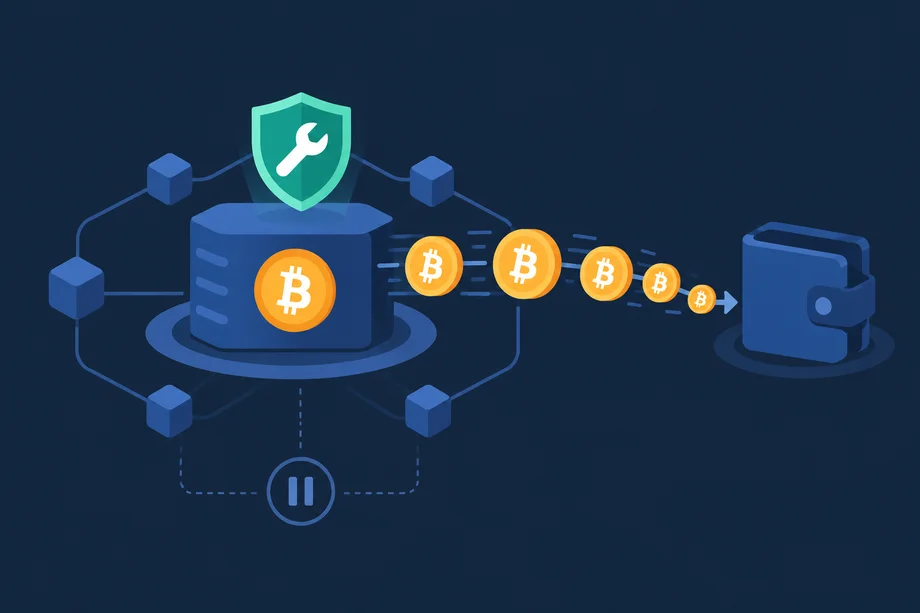
A major security incident on the Liquid Network, a Bitcoin sidechain designed for faster trading and settlement, saw approximately 4,000 Bitcoin valued at around $320 million withdrawn from its federation wallet on September 6. The episode has drawn attention to vulnerabilities in the supporting layers of cryptocurrency systems even when the core blockchain remains intact.
Liquid Network, launched in 2018 by Blockstream and overseen by a federation of more than 80 exchanges, infrastructure providers and asset managers, operates by locking Bitcoin and issuing Liquid Bitcoin, or L-BTC, for quicker transfers. Prior to the incident the federation wallet held roughly 4,200 Bitcoin. The withdrawal left only about 197 to 207 Bitcoin, meaning nearly 95 percent of the reserves backing L-BTC were removed in a short period.
How the Funds Were Moved
The Bitcoin left through SideSwap, a settlement platform authorized to process peg-outs from the network. A customer submitted about 4,000 L-BTC to SideSwap’s peg-out service. The tokens were burned under what appeared to be a valid authorization, after which the federation paid out nearly 3,996 Bitcoin to an external address roughly 23 minutes later. Liquid Network stated that neither SideSwap’s Peg-out Authorization Key nor any other federation keys were compromised.
Investigators traced the issue to a bug in Elements, the open-source software that powers Liquid. The flaw involved range-proof verification and allowed the creation of unbacked L-BTC that the system treated as legitimate. Once redeemed, those tokens converted into real Bitcoin withdrawn from the federation reserves. Other assets on Liquid, including stablecoins and tokenized instruments, were unaffected, and the main Bitcoin blockchain continued operating normally.
On-Chain Negotiations and Partial Return
The parties controlling the withdrawn Bitcoin identified themselves through messages embedded in Bitcoin transactions as white-hat actors. They requested contact on-chain and stated they would return the funds once the vulnerability was fixed and every node patched. Communications continued through OP_RETURN data and PGP-signed messages.
After Blockstream, Liquid’s technical provider, issued a signed confirmation that bridge nodes had been patched and it was safe to return the assets, the actors transferred 3,400 Bitcoin back to the federation wallet. Approximately 598.5 Bitcoin, valued at about $47 million, remained under their control. That retained portion represents roughly 15 percent of the original withdrawal. No public statement from Blockstream or the Liquid Federation has confirmed a formal bounty agreement covering the retained amount.
Blockstream said updated software has been deployed and federation members are preparing a coordinated network restart. As of September 8 the network remained paused, with additional security improvements and resolution of any chain split still underway.
Industry Reaction and Broader Context
The incident forms part of a series of security events affecting decentralized platforms this year. Data show about $1.4 billion taken across roughly 250 attacks in 2026 so far, with more than 10 percent involving bridges and cross-chain infrastructure. Earlier breaches this year included incidents at Kelp DAO and Drift Protocol that together exceeded $500 million, a $6 million drain from a Crypto.com-linked lending platform, and questions raised by a Coldcard wallet compromise.
Security specialists noted that the Liquid event occurred at the operational and infrastructure layers rather than the base consensus mechanism. Nikhil Raghuveera, chief executive of Predicate, said continued exploits signal to institutions that decentralized finance is not yet ready for the standards expected in traditional markets. Ziqing Ang of TRM Labs observed that vulnerabilities sit in the surrounding systems, creating exposure for exchanges, wallets and market makers that rely on them even if their own systems remain unbreached.
Aneirin Flynn, chief executive of FailSafe, pointed out that the same bug could have been exploited by malicious actors with no intention of returning funds, underscoring software vulnerabilities as an ongoing risk. Charles Guillemet, chief technology officer at Ledger, questioned the white-hat designation after the partial return, stating that retaining hundreds of Bitcoin under these circumstances more closely resembled leverage than conventional ethical research.
Precedents exist for actors who return the majority of funds keeping a portion as a bounty. Earlier cases included Team Finance, SafeMoon, Nomad and others where retained shares of 10 to 20 percent were negotiated or publicly offered. In the Liquid case the absence of a disclosed agreement has left the status of the remaining Bitcoin open to interpretation.
Implications for Institutional Use
Liquid was built to address congestion and high fees on the main Bitcoin network by providing faster settlement. The episode illustrates that even when the underlying blockchain functions correctly, the wallets, custody arrangements, authorization systems and software layers built around it can introduce single points of failure.
As traditional finance explores tokenized deposits, securities and other blockchain applications, confidence must extend beyond the base protocol to every component that controls or moves assets. A failure in one shared piece of infrastructure can cascade across multiple participants. The partial recovery of the Liquid reserves restores most of the backing for L-BTC, yet the network remains offline pending further fixes and a controlled restart.
Federation members and Blockstream continue to engage with the remaining holders of the outstanding Bitcoin while preparing to restore normal operations. The incident adds to a growing list of events that test the readiness of crypto infrastructure for wider institutional participation.

Disclaimer
This article was generated by AI using information from multiple industry sources. It has not been reviewed or verified by a human editor and may contain inaccuracies, omissions, or misinformation. Readers are encouraged to independently verify any information before making decisions based on its content.Tired of the noise?
Let the bots trade for you.
Trade 24/7, without emotion, with data-driven strategies.
Associated articles
Purported White Hats Drain $320 Million in Bitcoin From Liquid Network, Pledge Return After Fix

Liquid Network Restarts Block Production After $320 Million Bitcoin Withdrawal

Blockstream Refuses Ransom Demand for Remaining 598.5 Bitcoin from Liquid Exploit

Liquid Network Peg-Outs Remain Frozen 35 Days After Exploit Leaves 598.5 BTC Unreturned

Blockstream Opens Beta for Trustless Bitcoin Swaps Across Mainchain, Lightning and Liquid
Latest articles

SkyAI Exits Solana Holdings Completely, Launches $201 Million Share Buyback

Strategy Buys 267 Bitcoin and Raises Preferred Share Buyback Cap to $3 Billion

Dormant 2013 Bitcoin Wallets Shift Over $67 Million After More Than a Decade

Binance Rolls Out AI Pro Tool for Chat-Based Automated Trading Strategies