Newsroom
1inch Opens Aqua Shared Liquidity Layer Across 13 Chains
28 July, 2026 / News / AI / Tags: inch, aqua, liquidity, swap, providers
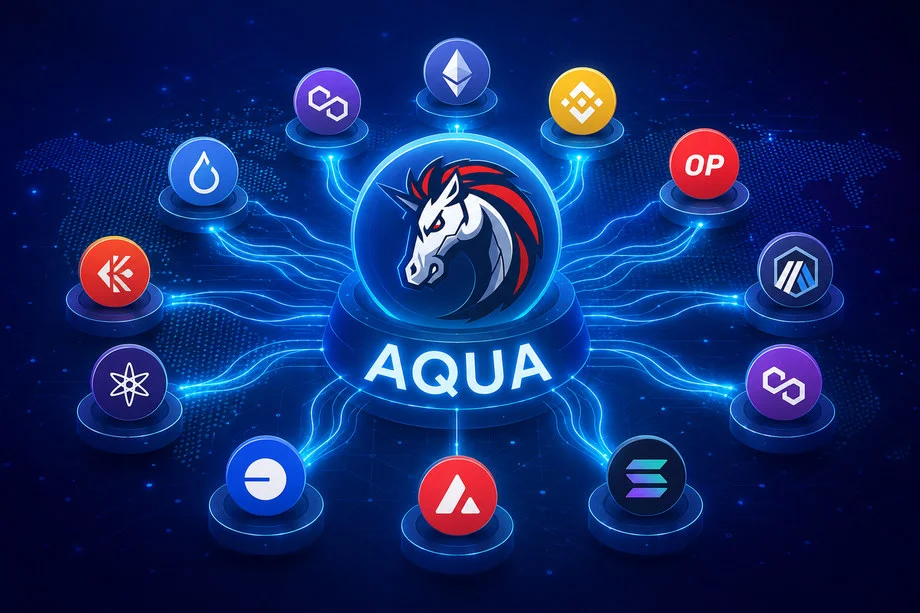
DEX aggregator 1inch has released Aqua publicly, letting providers back multiple positions from one wallet balance without depositing into pools on 13 EVM networks
Decentralized exchange aggregator 1inch has opened its Aqua protocol to the public, introducing a self-custodial shared liquidity layer designed to improve capital efficiency in decentralized finance. The system is live across 13 Ethereum Virtual Machine-compatible chains from day one, including Ethereum, Arbitrum, Base, BNB Chain and Robinhood Chain.
Aqua allows liquidity providers to keep assets in their own wallets and use a single balance to support multiple positions at once. Tokens remain under the provider’s control until a matching swap executes. At that point the protocol pulls the required tokens and returns the received assets plus fees in one atomic transaction. If the wallet balance cannot cover the trade, the swap simply does not occur.
How the Shared Liquidity Model Works
In traditional pool-based systems, capital must be deposited into specific venues and is often split across pairs and price ranges. Aqua functions instead as an on-chain registry. A user connects a wallet, approves a token balance and creates positions that can draw on that inventory. Positions may be full-range, concentrated or pegged, depending on the pair and strategy chosen. Providers can open or close them at any time with no lock-up periods.
A single balance can back several concurrent quotes. For example, a $100,000 wallet balance may support three positions that together quote $300,000 of liquidity. The underlying capital is not multiplied or borrowed; any execution remains limited to the assets actually held. In another illustration, $10,000 of liquidity can be advertised across three protocols for a combined $30,000 of quoted availability, yet only $10,000 of simultaneous trades can settle against those funds.
All quoted positions adjust continuously against the live wallet balance. After a fill, remaining quotes update to what is left. The design is intended to prevent over-extension while making liquidity available across multiple strategies and venues without requiring separate deposits.
Addressing Underutilized Capital in DeFi
1inch points to research it commissioned showing that 85 percent of roughly $1.84 billion in concentrated liquidity tracked across major exchanges went underutilized in the first half of 2026. About $1.6 billion sat idle on average, including approximately $542 million fully outside active trading ranges in a typical week. That idle capital was estimated to have missed around $150 million in annual fees.
The company presents Aqua as a response to this fragmentation. By keeping assets self-custodial and allowing one balance to serve multiple positions, the protocol aims to reduce the need to spread capital thinly across isolated pools while still bounding exposure to the tokens the provider actually holds.
Incentive Program and Additional Features
Alongside the public release, 1inch has introduced a liquidity incentive program delivered through Merkl. The 1inch Foundation has allocated 10 million 1INCH tokens and the 1inch DAO has added 500,000 USDC. Combined, the package is valued at approximately $1.37 million at recent prices and is intended to encourage liquidity growth and swap activity on supported pairs over a three-month period.
The interface includes a liquidity leaderboard, an incentives screen, liquidity map visualizations, batch position creation and provider profiles that display cross-chain positions. Sub-wallets and an AI-assisted provisioning flow via the 1inch Business MCP are listed as forthcoming. Access for certain resolvers requires a 1inch-issued credential, and not every protocol is supported under the system.
Security and Risk Considerations
Aqua has completed eight independent security audits by OpenZeppelin, Bailsec, Hashlock, Hexens, MixBytes, Nethermind, Theori and Decurity. Because the protocol never holds user tokens, a swap can move only assets present in the provider’s wallet at the moment of execution. Revocation of approval stops new fills once confirmed on-chain. The single-owner design of each position also limits certain forms of fee extraction by bots.
Providers continue to face market risks, including price movements and impermanent loss, as well as smart-contract risk. Swap fees are not guaranteed. The system is positioned for experienced users who understand these exposures.
Aqua first appeared in developer form in November 2025 with an associated software development kit, libraries and documentation. The public launch expands that foundation into a multi-chain consumer interface intended to make liquidity more responsive to demand without requiring providers to surrender custody of their assets.

Disclaimer
This article was generated by AI using information from multiple industry sources. It has not been reviewed or verified by a human editor and may contain inaccuracies, omissions, or misinformation. Readers are encouraged to independently verify any information before making decisions based on its content.Tired of the noise?
Let the bots trade for you.
Trade 24/7, without emotion, with data-driven strategies.
Associated articles
Uniswap Governance Votes on V4 Fees and Robinhood Chain Expansion
Uniswap Records $71.1 Billion in 30-Day DEX Volume, Widening Lead Over Rivals

Uniswap Labs Rolls Out StablePair Hook for Dynamic Fees on Stablecoin Pools
Pons Surges to $5.95M Daily Fees on Robinhood Chain as Uniswap Labs Acquires Token Stake
Phantom Wallet to End Sui Network Support on September 24
Latest articles

SpaceX and Tesla Set Up Committees to Explore Merger That Would Combine Holdings of Over 30,000 Bitcoins

UK Banks Face Thousands of Complaints Over Crypto Transfer Restrictions
Ripple Backs SEC Proposed Crypto Asset Rules After $150 Million Legal Battle
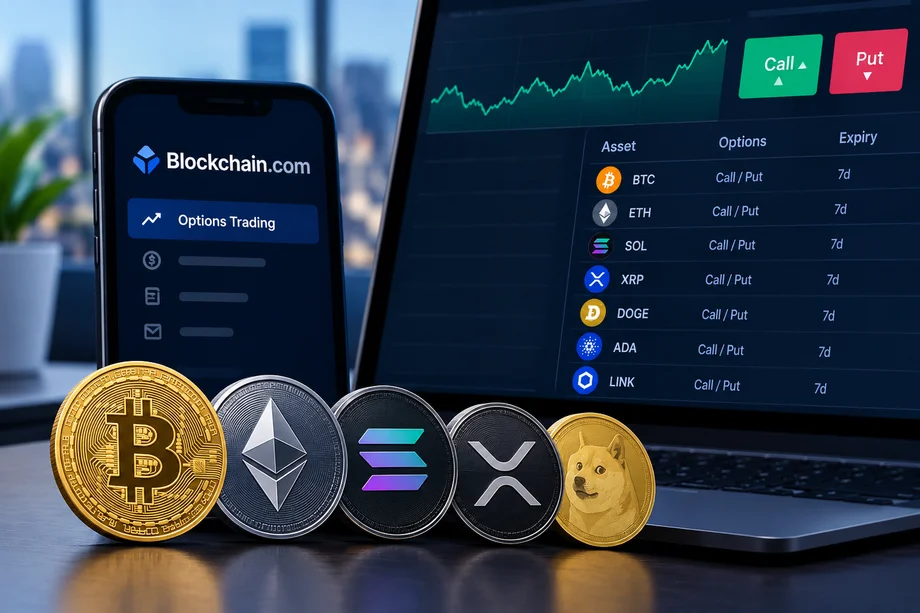
Blockchain.com Introduces Options Trading on Seven Major Crypto Assets