Newsroom
Uniswap Governance Votes on V4 Fees and Robinhood Chain Expansion
18 July, 2026 / News / AI / Tags: uniswap, burn, robinhood, pools, fees
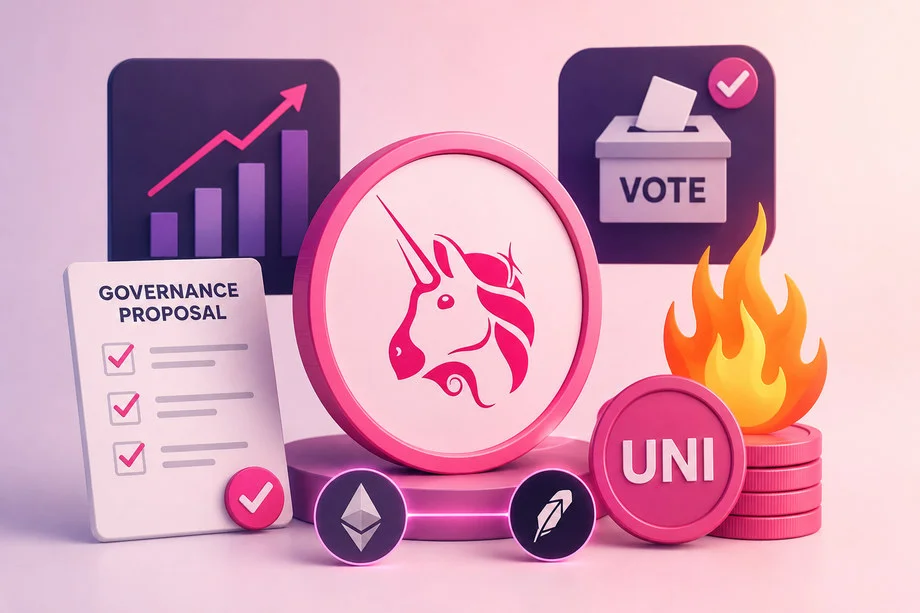
Uniswap's governance process advances with proposals to activate protocol fees on selected v4 pools across multiple chains and extend fee collection on v2 and v3 to Robinhood Chain, directing revenues into the UNI burn mechanism
Proposals Enter Final Onchain Voting Phase
Two key governance proposals from the Uniswap team have moved to onchain voting, scheduled from July 19 to July 26. The first activates protocol fees for specific Uniswap v4 pools on Ethereum, Arbitrum, Base, BNB Chain, Polygon, Optimism, and Robinhood Chain. A follow-up proposal will address additional chains due to technical limits on the number of actions per proposal.
The second proposal focuses on enabling fees for v2 and v3 pools specifically on Robinhood Chain, an Ethereum Layer 2 that launched its mainnet on July 1 with all three Uniswap versions deployed. Cumulative swap volume on the chain surpassed $6 billion shortly after launch, with strong early activity driven by memecoins and rapid growth in trading volume.
- Fees from approved pools will route directly into the UNI burn mechanism established under the UNIfication governance changes from December.
- UNIfication previously activated fees on v2 and v3 pools on Ethereum mainnet and burned 100 million UNI tokens from the treasury.
- The protocol has since expanded fee collection across 11 chains and recorded a single-day burn high of 186,000 UNI last month.
Technical Details of V4 Fee Activation
Unlike earlier versions with fixed fee tiers, Uniswap v4 uses a hook architecture that allows pool fees to adjust dynamically from block to block. The proposal establishes a governance-controlled system to group pools into families and apply standardized fee rules, avoiding the need for individual pool votes.
This infrastructure enables the first activation of protocol fees on v4 pools. Uniswap founder Hayden Adams noted the expected effects, stating that based on current trading volumes, particularly on Robinhood Chain, "we expect the impact on UNI burn to be substantial."
Robinhood Chain's Role in Growth
Robinhood Chain quickly gained traction following its debut, pulling in over $3 billion in DEX volume during its first week. By July 10, Uniswap on the chain had crossed $1 billion in cumulative swap volume, with total value locked nearing $60 million and monthly active users approaching 880,000.
The proposals build fee collection and burn infrastructure tailored to this expansion. They extend v2 and v3 fee mechanisms to the new chain while preparing v4 for broader participation across networks.
UNI Burn Mechanism and Historical Context
The burn process removes UNI tokens from circulation using protocol fee revenues. Since the UNIfication overhaul, the mechanism has operated on multiple chains. Recent data shows the burn rate increased significantly in the past week amid heightened activity on Robinhood Chain.
Overall, the protocol has burned more than 107 million UNI tokens to date. Liquidity providers have earned over $5 billion in cumulative fees since 2018, while protocol revenue remains a smaller portion directed toward token burns.
Governance Process and Community Response
The proposals follow the expedited path introduced under UNIfication, bypassing the request-for-comment stage with a Snapshot vote before onchain decision. Governance discussions on broader fee expansions began earlier in the year.
Some liquidity providers have expressed concerns about the potential effects on their earnings and Uniswap v4's competitiveness against other decentralized exchanges. Despite these views, the proposals aim to balance protocol sustainability with existing user incentives.
UNI has traded in the range of $3 to $3.50 in recent sessions, with market reactions tied to expectations around the vote outcomes and ongoing chain activity.
Broader Implications for Protocol Development
These steps represent continued efforts to connect trading activity across chains to the UNI token's supply dynamics. The v4 fee system introduces more flexible governance tools for future adjustments without repeated community votes on individual pools.
Robinhood Chain's performance provides a test case for multi-chain expansion, with its integration into the broader Uniswap ecosystem supporting increased volume and user engagement. Voting results will determine the next phase of fee rollout and burn activity.

Disclaimer
This article was generated by AI using information from multiple industry sources. It has not been reviewed or verified by a human editor and may contain inaccuracies, omissions, or misinformation. Readers are encouraged to independently verify any information before making decisions based on its content.Tired of the noise?
Let the bots trade for you.
Trade 24/7, without emotion, with data-driven strategies.
Associated articles
Uniswap Trader Activity Explodes to 220K on Robinhood Chain
Robinhood Chain Hits $3B DEX Volume, Driving Record $1.15M UNI Burn
Robinhood Chain DEX Volume Hits Record $560 Million
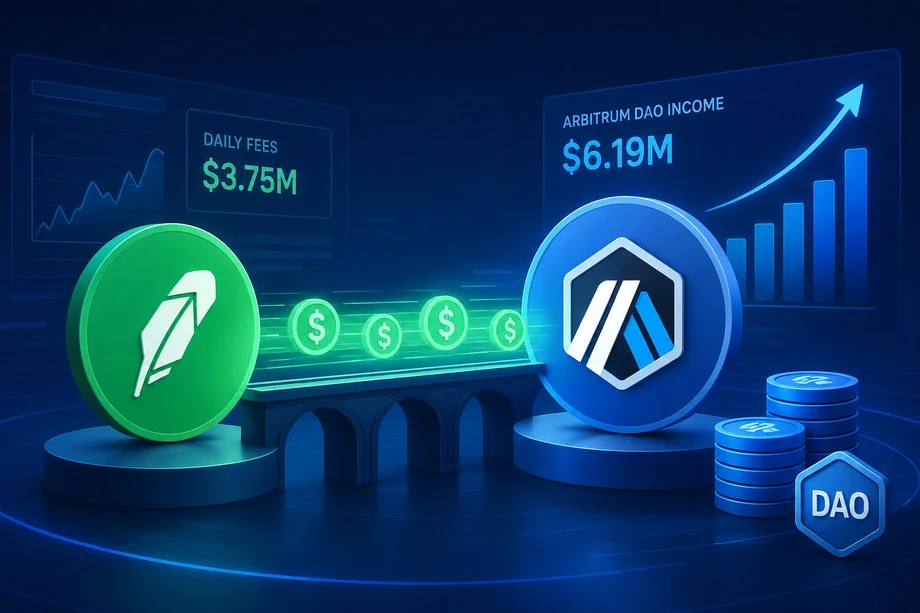
Robinhood Chain Posts Record $3.75 Million Daily Fees as Arbitrum DAO Reports $6.19 Million First-Half Income
Uniswap Records $71.1 Billion in 30-Day DEX Volume, Widening Lead Over Rivals
Latest articles

Samsung and SK Hynix Upgrade China NAND Factories Amid AI Demand and Local Rivalry

China Prosecutors Move to Confiscate $5.1 Billion Bitcoin Haul Seized in UK Fraud Case

Bank of Korea Holds Rate at 3% After Consecutive Hikes, Eyes Data for Next Move

Starknet Community Approves Research Into Independent Post-Quantum Layer 1