Newsroom
Law Enforcement and Catholic Groups Warn CLARITY Act Could Create Oversight Gaps in Crypto Crime Fighting
24 June, 2026 / News / AI / Tags: catholic, enforcement, trafficking, association, clarity

Law enforcement associations and Catholic organizations have raised concerns over provisions in the CLARITY Act, arguing that exemptions for non-custodial developers may weaken tools used to combat illicit finance, human trafficking, and other crimes
Background on the CLARITY Act
The Digital Asset Market Clarity Act, commonly referred to as the CLARITY Act, represents a significant attempt to establish a regulatory framework for digital assets in the United States. The bill has advanced through the House and cleared the Senate Banking Committee, with a House hearing scheduled for July 17. A key element under scrutiny is Section 604, which incorporates the Blockchain Regulatory Certainty Act.
This section aims to clarify the regulatory status of certain participants in the digital asset ecosystem, particularly non-custodial software developers, open-source contributors, self-custody tools, and specific DeFi infrastructure. It seeks to prevent automatic classification of these entities as money transmitters under federal law when they do not control or custody user assets.
Law Enforcement Concerns
Four major law enforcement organizations—the National District Attorneys Association, the National Association of Assistant United States Attorneys, the International Association of Chiefs of Police, and the National Sheriffs’ Association—sent a letter to Acting Attorney General Todd Blanche and White House digital assets adviser Patrick Witt. These groups represent tens of thousands of prosecutors, police chiefs, sheriffs, and investigators.
- Section 604 could create gaps in oversight and accountability for illicit activity.
- Potential weakening of Anti-Money Laundering (AML) and Know-Your-Customer (KYC) requirements compared to traditional finance.
- Challenges in investigating money laundering, fraud, terrorist financing, and other crimes involving digital assets.
- Broad exemptions might shield entities that facilitate the movement of digital assets while obstructing legitimate oversight.
The letter emphasized that regulatory certainty should not come at the expense of accountability, transparency, victim protection, or public safety. The groups clarified their concern was not with individuals writing or publishing software code, but with exemptions that could hinder enforcement efforts.
Catholic Leaders and Anti-Trafficking Advocates Join Opposition
A coalition of nearly 100 Catholic leaders and organizations, including the Alliance to End Human Trafficking founded by U.S. Catholic Sisters, sent a separate letter to Senate Majority Leader John Thune and Senate Democratic Leader Chuck Schumer. They expressed worries that the provisions could complicate efforts to monitor and disrupt financial flows linked to human trafficking, organized crime, child exploitation, and sanctions evasion.
The advocates argued that broad carveouts and regulatory ambiguities in Section 604 might make it more difficult to track illicit activity tied to serious abuses. This perspective frames the issue through the lens of human dignity and victim protection rather than purely technical regulatory design.
Industry and Proponent Responses
Supporters of the provision, including representatives from the Blockchain Association, maintain that Section 604 performs a narrow function. It prevents non-custodial software developers from being misclassified as money transmitters when they do not custody assets or control transactions. They assert that the language does not immunize criminals or limit sanctions enforcement, fraud prosecutions, or money laundering cases.
Senator Cynthia Lummis, a key proponent, has stated that the CLARITY Act addresses regulatory ambiguity that hurts builders and helps criminals, emphasizing that writing code is not money transmission.
Broader Context and Next Steps
The CLARITY Act seeks to divide oversight responsibilities between the SEC and CFTC for different aspects of the digital asset market. While it has support from parts of the crypto industry for providing clarity to innovators, the recent letters highlight ongoing tensions between innovation goals and enforcement needs.
Critics from banking and transparency groups have echoed some of these concerns about potential gaps in illicit finance controls. The bill's path forward in the Senate requires addressing these issues amid a 60-vote threshold for advancement. The upcoming July 17 hearing is expected to examine these balances closely.
- Law enforcement prioritizes maintaining strong investigative tools and compliance obligations.
- Catholic and anti-trafficking groups focus on protecting vulnerable populations from technology-enabled abuse.
- Industry advocates stress the need to avoid over-regulating neutral technology and developers.
Disclaimer
This article was generated by AI using information from multiple industry sources. It has not been reviewed or verified by a human editor and may contain inaccuracies, omissions, or misinformation. Readers are encouraged to independently verify any information before making decisions based on its content.Tired of the noise?
Let the bots trade for you.
Trade 24/7, without emotion, with data-driven strategies.
Associated articles
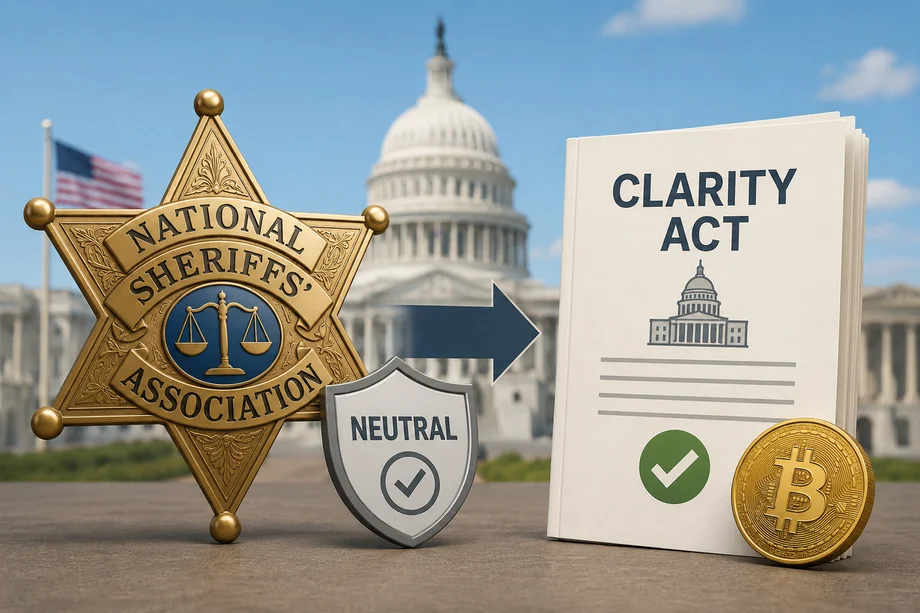
US Sheriffs Group Shifts to Neutral on CLARITY Act Ahead of Senate Vote

Senator Wyden Calls for Developer Protections in Clarity Act Talks

US Sheriffs Shift to Neutral on CLARITY Act After DeFi Concerns Eased

FLEOA Backs CLARITY Act With Calls for Stronger DeFi Rules Ahead of Senate Vote

Police Union Endorses Revised Clarity Act Amid Growing Crypto Bill Support
Latest articles

Toyosa Begins Accepting Bitcoin for Toyota Vehicle Purchases in Bolivia

Binance Wallet Opens Access to PancakeSwap Pre-IPO Token Campaigns

Polymarket Faces $10 Million Stolen-Card Fraud Probe as CEO Favored Growth

Trump Plans AI Force and Czar to Coordinate Sector Without New Rules