Newsroom
Alex Jones Warns of Potential Asset Seizures in Financial Crisis, Drawing Pushback from XRP Community
6 September, 2026 / News / AI / Tags: jones, fdic, bank, xrp, insured
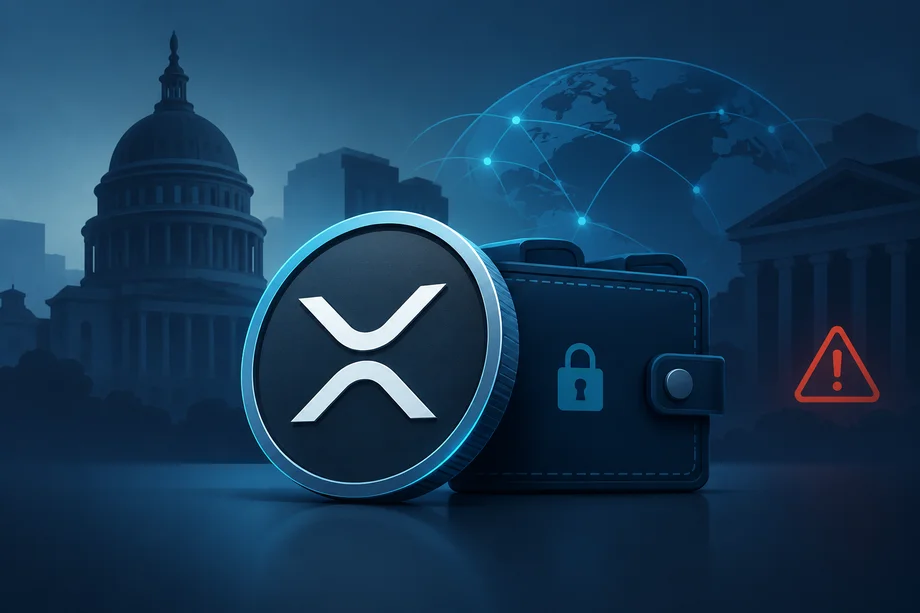
Media personality claims governments could target crypto and other private holdings during systemic stress, while an XRPL validator calls the remarks overstated and notes existing legal limits
American media personality Alex Jones has raised alarms in recent comments about the possibility that governments could move to seize private assets, including cryptocurrencies such as XRP, bank accounts, and real estate, if global financial systems face severe pressure. Jones framed his remarks as a general concern about official responses during a major banking breakdown rather than a specific forecast for any digital asset.
In a video shared on X, Jones stated that authorities might turn to accessible private wealth to stabilize institutions under extreme strain. He described a scenario in which officials would seek control over a range of holdings and referenced past discussions among U.S. and European regulators about bank resolution tools.
Jones repeatedly stressed that he is not a cryptocurrency expert, does not trade XRP, and is not predicting outcomes for the token or Bitcoin. He said he views cryptocurrencies positively and clarified that his comments should not be read as criticism of the assets themselves. His focus, he said, remains on the risk of harsher government measures if the established financial system comes under acute stress.
References to Regulatory Discussions and Broader Claims
Jones pointed to Federal Deposit Insurance Corporation board meeting material in which participants discussed bail-in mechanisms and expressed caution about public disclosure. One speaker in the clips he played reportedly noted that wide knowledge of such plans could unsettle confidence in the banking system. Jones linked these comments to what he described as preparations for consolidating assets onto a national ledger and later using them in derivative structures.
He also claimed that XRP has been selected as a primary settlement currency within a new global financial framework and that the token was designed mainly for institutional rather than individual use. Drawing a parallel to the 1933 U.S. gold confiscation, Jones suggested that future rules could restrict private ownership and recommended that holders consider placing assets in trusts or limited liability companies for added legal separation.
Jones further interpreted recent portfolio adjustments by U.S. President Donald Trump, involving a shift from BlackRock to Berkshire Hathaway, as a signal of expected economic turbulence. He connected these moves to European Commission President Ursula von der Leyen’s announcement of an EU savings and investment initiative expected to unlock up to approximately $546 billion in new investments, presenting the developments as part of coordinated multinational financial planning.
No government agencies or the companies named have issued statements confirming the specific assertions in Jones’s broadcast. The claims remain unverified.
Existing Regulatory Frameworks and Limits on Authority
The discussion has drawn attention to current bank resolution rules in the United States and the European Union. In the U.S., the FDIC holds broad powers when an insured bank fails. It can manage the institution’s assets and liabilities, yet federal deposit insurance does not cover cryptocurrencies. Insured deposits are protected up to $250,000 per depositor and category under standard eligibility rules.
In the European Union, the Bank Recovery and Resolution Directive provides a framework for restructuring distressed banks. It allows certain losses for shareholders and creditors under defined conditions while protecting insured deposits from direct write-downs.
Crypto assets held outside bank accounts, particularly those in personal self-custody wallets, fall outside these deposit-protection regimes. They are not treated as bank deposits subject to FDIC liquidation proceedings when a bank fails.
Response from XRP Ledger Participant
Vet, a validator and contributor in the XRP Ledger ecosystem, challenged the tone of Jones’s remarks. Vet described the comments as sensational and stated that the FDIC has not announced any policy authorizing the direct confiscation of private cryptocurrencies or personal property.
Vet noted that uninsured deposits above the coverage limit can face risk in a bank failure, but digital assets stored in self-custody wallets are not part of those proceedings. XRP held in personal wallets is not classified as a bank deposit and therefore would not be drawn into FDIC actions tied to another institution’s collapse.
The exchange has fueled ongoing conversation within cryptocurrency circles about the legal status of self-custodied digital assets, the boundaries of existing resolution tools, and how authorities might respond if systemic financial pressures intensify. Regulatory details continue to shape investor attention as market participants monitor official statements and legal interpretations.

Disclaimer
This article was generated by AI using information from multiple industry sources. It has not been reviewed or verified by a human editor and may contain inaccuracies, omissions, or misinformation. Readers are encouraged to independently verify any information before making decisions based on its content.Tired of the noise?
Let the bots trade for you.
Trade 24/7, without emotion, with data-driven strategies.
Associated articles

Gemini Enables Native XRP Deposits and Withdrawals on XRPL for Singapore Users

Coreum XRPL Bridge Loses Nearly 200,000 XRP in 97-Minute Exploit

Ripple Ex-CTO Schwartz: XRP Delivered Wealth While Consensus Runs on Trust, Not Staking
Revolut Secures Conditional OCC Approval for U.S. National Bank Charter

Dallas Fed Flags $700 Billion Risk to Bank Lending from Tokenized Deposits
Latest articles

Trump Plans AI Force and Czar to Coordinate Sector Without New Rules

Robinhood Chain Posts $4.5 Million in Daily Fees While Paying Ethereum $398

Anthropic Names Accenture First Embedded Evaluator in AI Development Pace Plan

Monochrome Exchange Launches IEO for Native MCR Token on Multi-Asset Platform