Newsroom
Washington Court Blocks Kalshi Sports Contracts in Escalating Federal-State Regulatory Clash
21 July, 2026 / News / AI / Tags: kalshi, washington, sports, gambling, prediction

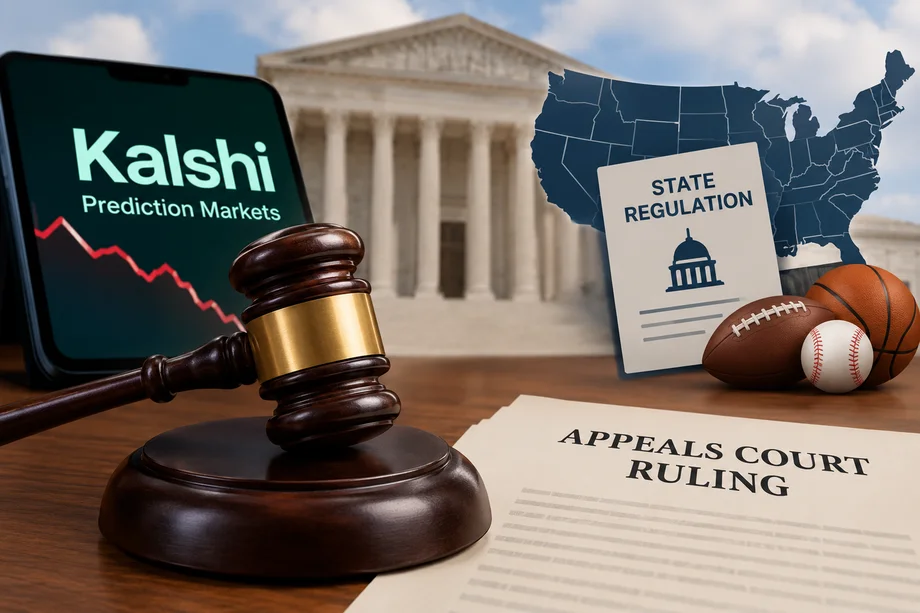
A Washington state judge has granted a preliminary injunction against prediction market operator Kalshi, ruling its sports event contracts likely violate state gambling laws despite federal CFTC oversight. The decision, effective no earlier than August 5, highlights growing tensions between state regulators and federally regulated platforms
Court Ruling Targets Kalshi Operations
Judge John McHale of King County Superior Court sided with Washington state authorities, determining that Kalshi offers illegal gambling activities to consumers in the state. The preliminary injunction stems from a lawsuit filed by Attorney General Nick Brown, who argued the platform's sports-related event contracts function as unlicensed betting.
The court found that potential harm to consumers and public interest outweigh harm to Kalshi from the restrictions. Kalshi has been ordered to preserve records related to Washington users while parties submit additional materials by August 3. A final order on the injunction's scope is expected by August 5.
Judge McHale explicitly rejected Kalshi's core defense that the Commodity Exchange Act preempts state gambling regulations. The ruling allows the state's case to proceed on claims of violations under Washington's Gambling Act and Consumer Protection Act.
Broader Legal Battle Over Prediction Markets
The Washington decision adds to a series of challenges for Kalshi, a CFTC-registered platform offering event contracts on outcomes ranging from sports to elections. Kalshi maintains that its products are federally regulated derivatives, placing them outside state gambling jurisdiction.
A company spokesperson criticized the ruling, stating that states lack authority over prediction markets and citing precedents such as a Third Circuit decision. Kalshi plans to appeal the Washington order.
Similar actions have unfolded elsewhere. Michigan issued a temporary restraining order against Kalshi's sports contracts last month, while New York recently denied the company's bid to block state enforcement. Kalshi already faces restrictions in Nevada.
Judicial Trends Favoring States
Sports and gaming attorney Daniel Wallach noted that states have prevailed in 19 of 23 court decisions on preliminary injunctions or temporary restraining orders in prediction market cases. He suggested the operational landscape for Kalshi's sports products could change significantly in the coming months.
The CFTC has pushed back against state actions, filing lawsuits against several jurisdictions including New York to affirm exclusive federal authority over event contracts on registered exchanges. This federal-state divide remains unresolved and may eventually reach higher courts.
Kalshi's Market Position Amid Legal Pressures
Despite the regulatory hurdles, Kalshi continues to lead the prediction market sector. The platform recorded approximately $33 billion in trading volume for June, surpassing rivals like Polymarket and its U.S. operations combined at around $13.95 billion.
Growth has been driven in part by major events such as the FIFA World Cup, where sports contracts boosted activity. However, mounting state-level restrictions could limit access and force adjustments in how the company serves users across different jurisdictions.
| Platform | June Trading Volume |
|---|---|
| Kalshi | $33 billion |
| Polymarket + others (U.S.) | $13.95 billion |
The Washington case, along with parallel disputes, underscores ongoing uncertainty for the expanding prediction market industry as courts navigate the balance between federal commodities regulation and state authority over gambling-like activities.
Disclaimer
This article was generated by AI using information from multiple industry sources. It has not been reviewed or verified by a human editor and may contain inaccuracies, omissions, or misinformation. Readers are encouraged to independently verify any information before making decisions based on its content.Tired of the noise?
Let the bots trade for you.
Trade 24/7, without emotion, with data-driven strategies.
Associated articles

Federal Judge Blocks Minnesota Prediction Market Ban Ahead of August Deadline

Judge Denies Kalshi Bid to Block New York Gambling Law Enforcement
Sixth Circuit Rules Kalshi Sports Contracts Subject to State Gambling Laws

New York Sues Kalshi Seeking $36 Billion Over Alleged Illegal Gambling

CFTC Orders Kalshi to Keep Trading After New York Seeks $36 Billion Shutdown
Latest articles

SpaceX and Tesla Set Up Committees to Explore Merger That Would Combine Holdings of Over 30,000 Bitcoins

UK Banks Face Thousands of Complaints Over Crypto Transfer Restrictions

Ripple Backs SEC Proposed Crypto Asset Rules After $150 Million Legal Battle

Blockchain.com Introduces Options Trading on Seven Major Crypto Assets