Newsroom
Vitalik Buterin Backs Slower AI Data Center Growth and Urges Crypto Exchanges to Prioritize Survival
8 November, 2026 / News / AI / Tags: buterin, vitalik, survival, computing, center
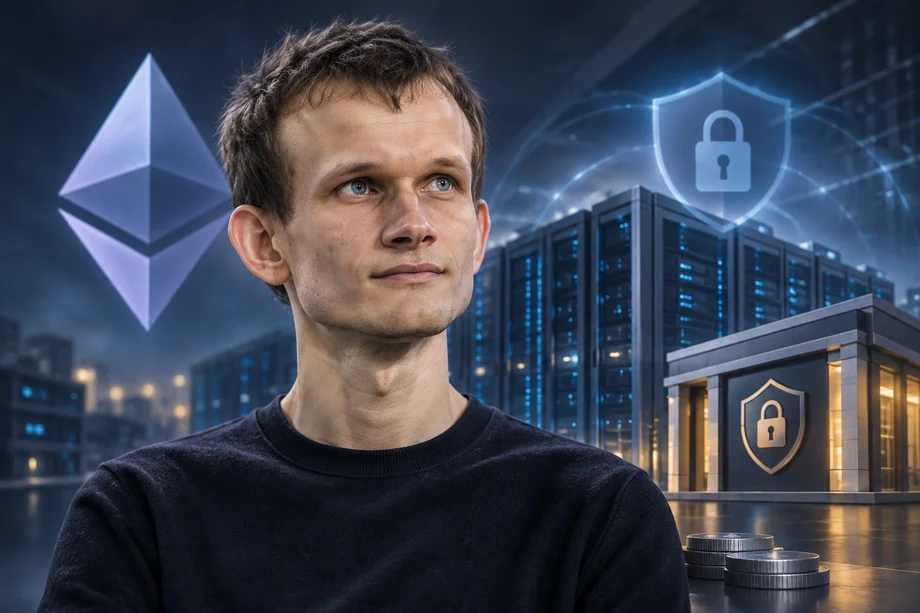
Ethereum co-founder argues algorithmic gains can offset delayed infrastructure while exchanges must focus on security after major breaches rather than market expansion
Ethereum co-founder Vitalik Buterin has voiced support for a more measured pace of AI data center construction, contending that slower growth would give society valuable time to address cybersecurity and biological risks without derailing technological progress. In parallel remarks, he advised cryptocurrency exchanges to treat the next two years as a period focused on survival rather than competition for market share, citing a wave of high-profile security incidents.
Support for Restrained AI Infrastructure Expansion
In a post on November 8, Buterin pushed back against strong criticism of anti-data-center movements. He maintained that advances in AI algorithms mean many capabilities expected from larger facilities within two years could instead be achieved using existing infrastructure within four years. The result, he suggested, would amount to a delay rather than a permanent barrier to progress.
Buterin identified existing cybersecurity challenges and potential biological threats linked to more capable AI systems as key reasons for allowing additional preparation time. He argued that a slowdown in computing expansion would not produce equivalent delays in scientific research, because such work depends on multiple technical and institutional factors beyond raw computing power.
He described a slowdown in compute hyper-scaling as appearing “quite net good,” framing the position around practical considerations of efficiency and risk management rather than catastrophic predictions about AI.
Bitcoin Miners Expand Into AI Hosting Amid Local Pushback
Buterin’s comments come as several Bitcoin mining companies pivot toward high-performance computing and AI infrastructure. Riot Platforms disclosed a 15-year lease for 910 megawatts of capacity at its Corsicana, Texas, facility, representing an estimated $28 billion in contracted revenue. Including other agreements, the company’s total contracted data center capacity reached 1,151 megawatts, or roughly $38 billion in long-term revenue. The firm sold more than 20,000 Bitcoin in the first nine months of 2026, raising about $1.5 billion largely to fund development.
Cipher Digital reported its first high-performance computing lease revenue and extended a key site lease to 20 years, bringing expected contracted revenue from that location to approximately $9.1 billion. The company listed a development pipeline of about 5.9 gigawatts.
These expansions have met resistance in Texas. Governor Greg Abbott previously directed state regulators to pause certain data center permits while reviewing impacts on electricity reliability and water resources. After Gina Hinojosa’s election as governor, she proposed suspending new approvals until stronger community protections addressing energy costs, water use, and public input are in place. Cipher shares dropped nearly 19 percent following the election result as investors weighed potential further restrictions.
Crypto Exchanges Told to Enter “Bunker Mode”
Separately, Buterin advised cryptocurrency exchanges to shift priorities following major security breaches. In an interview published around November 4, he said the industry’s central task for the next two years is survival rather than gaining market share.
He described this stance as “bunker mode,” urging platforms to concentrate on protecting customer funds against sophisticated attacks. The remarks followed an October breach at Binance that resulted in the theft of approximately $6.3 billion across multiple blockchains. Investigators linked the incident to compromised wallet infrastructure, fraudulent job interviews, and malicious software that targeted employee systems and signing processes.
Buterin noted that smart contract exploits have declined sharply over the past 18 months, while attacks on user interfaces and centralized components have risen. He encouraged greater use of on-chain systems, citing Binance Smart Chain as an example of infrastructure that can deliver higher security through smart contracts. Continued losses, particularly those attributed to North Korean actors, could prompt regulators to impose stricter security requirements on exchanges and custodians, he warned.
He also recommended that users adopt multisignature wallets and pay closer attention to how their assets are secured. On Ethereum’s own development, Buterin pointed to AI, zero-knowledge proofs, and formal verification as tools that can accelerate upgrades while strengthening security under the Lean Ethereum roadmap.
Buterin’s dual messages underscore a consistent theme: technological ambition must be tempered by deliberate attention to security risks, whether in the rapid build-out of AI computing capacity or in the operational defenses of cryptocurrency platforms.

Disclaimer
This article was generated by AI using information from multiple industry sources. It has not been reviewed or verified by a human editor and may contain inaccuracies, omissions, or misinformation. Readers are encouraged to independently verify any information before making decisions based on its content.Tired of the noise?
Let the bots trade for you.
Trade 24/7, without emotion, with data-driven strategies.
Associated articles

Riot Platforms Shares Rise After Securing $9.1 Billion AI Compute Agreement

Riot Platforms Sells 20,264 Bitcoin for $1.5 Billion to Fund AI Data Center Expansion

Galaxy Converts Helios Bitcoin Facility Into AI Data Center With 133 MW Delivery

Anthropic Secures $35 Billion Compute Pact with Nvidia-Backed Lambda at Texas Campus
Vitalik Buterin Rejects Prediction of AI-Driven 50% Bitcoin Crash
Latest articles

Nvidia Board Launches Probe Into CEO Jensen Huang Over Foreign Intelligence Reports

Binance Restores HYPE and APT Withdrawals in Phased Post-Breach Recovery

Keplr Suspends Social Logins After Web3Auth Breach Triggers Millions in Cosmos Transfers
Vitalik Buterin Urges Ethereum Community to Value ETH as Store of Value Over Fee Burns