Newsroom
Vitalik Buterin Backs Ethereum EIP-8037 and Urges Open-Source Chip Designs for Stronger Security
28 November, 2026 / News / AI / Tags: buterin, silicon, hardware, eip, vitalik
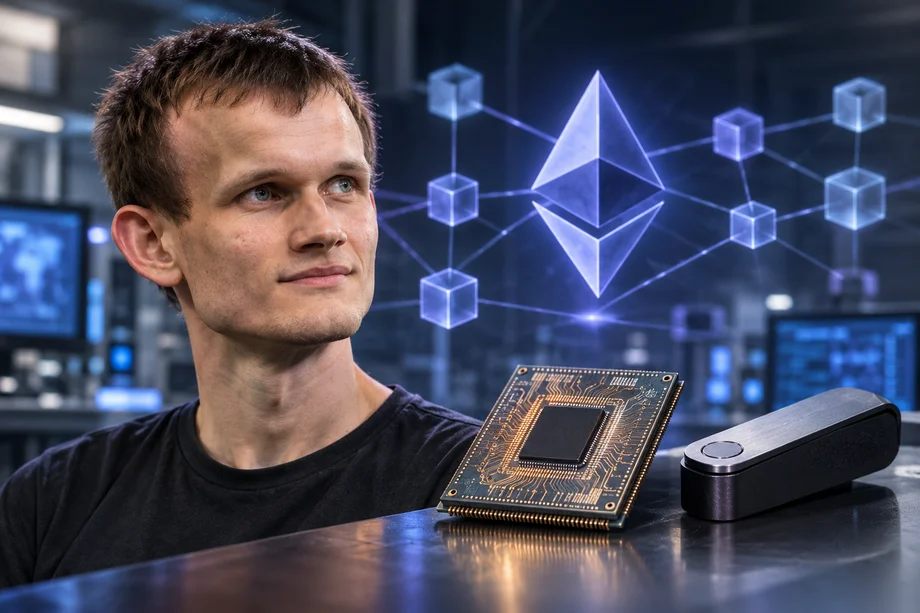
Ethereum co-founder addresses protocol upgrade risks and hardware vulnerabilities in recent statements, stressing long-term stability and verifiable silicon
Ethereum co-founder Vitalik Buterin has defended a proposed network upgrade while separately calling for greater transparency in the hardware that underpins crypto security. In comments on November 28, he stood by EIP-8037 even as developers flagged risks that the change could disrupt existing smart contracts. Days earlier, he published a detailed argument that open-source chip designs are essential to protect private keys from physical-layer attacks.
Defense of EIP-8037 Amid Contract Concerns
Buterin acknowledged that some application developers have legitimate reasons to worry about EIP-8037. The proposal forms part of ongoing work tied to the Glamsterdam process, and critics have warned that it could break certain contracts that relied on assumptions about protocol behavior remaining fixed.
He maintained that the changes remain necessary to strengthen Ethereum’s long-term stability. At the same time, he cautioned against treating contract breakage as a routine or acceptable side effect of protocol development. Core developers, he said, carry a responsibility to assist teams whose projects are affected, particularly when those teams had reasonable grounds to expect continuity.
Buterin also warned against the normalization of centralized upgrade mechanisms built into applications as a hedge against future protocol shifts. Allowing such patterns to become standard, he argued, would introduce new centralization risks across the ecosystem. He credited the Ethereum Foundation, ETH Labs and other groups for already helping application developers manage necessary transitions.
Hardware Security and the Call for Open Silicon
In a blog post published on November 26, Buterin turned to a different layer of risk. He argued that the crypto community has concentrated heavily on software, cryptographic protocols and key management while largely overlooking the chips that execute those systems. Even fully audited open-source wallet software can be undermined if the underlying silicon contains hidden functionality.
He described the opacity of commercial chip design as a persistent frustration. Users and auditors have little ability to confirm what a processor actually does once it leaves the foundry. Attackers could, in principle, insert malicious implants—such as a covert eSIM—or substitute nearly identical chips that contain extra logic capable of extracting seed phrases without triggering software checks.
Meaningful verification, Buterin wrote, requires openness beyond high-level hardware description language. Designs must be available down to the GDS level, which records the precise physical geometry of transistors and interconnects. Process Design Kits that define manufacturing rules also need to be accessible so independent parties can validate production.
He pointed to inspection techniques under development, including optical imaging methods that examine chip structures and more invasive approaches such as focused ion beam scanning electron microscopy for detecting subtle doping changes. Chips could be designed from the start for easier verification—by allowing modular testing of subcomponents, reducing reliance on fragile configurations, and arranging layouts that simplify physical inspection.
Rather than expecting individual users to perform these checks, Buterin envisioned professional auditors, journalists and civil-society groups using specialized equipment to test claims made by manufacturers. He recognized that high-performance domains such as artificial intelligence are unlikely to adopt fully open manufacturing processes. A practical outcome, he suggested, would be a split between performance-oriented hardware and security-oriented hardware that prioritizes transparency and verifiability.
The two interventions arrive close together and illustrate Buterin’s continued focus on both protocol-level evolution and the physical foundations of user security. While EIP-8037 aims to improve Ethereum’s technical resilience, the hardware discussion expands the longstanding principle of self-custody to include the silicon that holds the keys.

Disclaimer
This article was generated by AI using information from multiple industry sources. It has not been reviewed or verified by a human editor and may contain inaccuracies, omissions, or misinformation. Readers are encouraged to independently verify any information before making decisions based on its content.Tired of the noise?
Let the bots trade for you.
Trade 24/7, without emotion, with data-driven strategies.
Associated articles

Vitalik Buterin Backs Higher Gas Costs for Ethereum State Creation to Support Scaling

Nvidia Reportedly Agrees to $12.9 Billion Purchase of Hugging Face

Vitalik Buterin Says AI Will Not Doom Cybersecurity, Backs Formal Verification

Ethereum Node Requirements Drop as AI Hardware Enables Home Validation

Ethereum Sets December 15 for Glamsterdam Hoodi Testnet Activation
Latest articles

Binance Hackers Route Over $600 Million Through THORChain as Laundering Efforts Widen

Binance Auto-Closes WLFI Futures as Open Interest Drops 77% in 90 Minutes

Binance Founder Zhao Weighs Legal Action Over Netflix's Portrayal of Him in FTX Drama

Bybit Withholds Full Postmortem of $1.4 Billion February 2025 Hack