Newsroom
UK House of Lords Votes for Mandatory Digital Asset Strategy in 194-138 Decision
11 September, 2026 / News / AI / Tags: lord, amendment, digital, strategy, labour
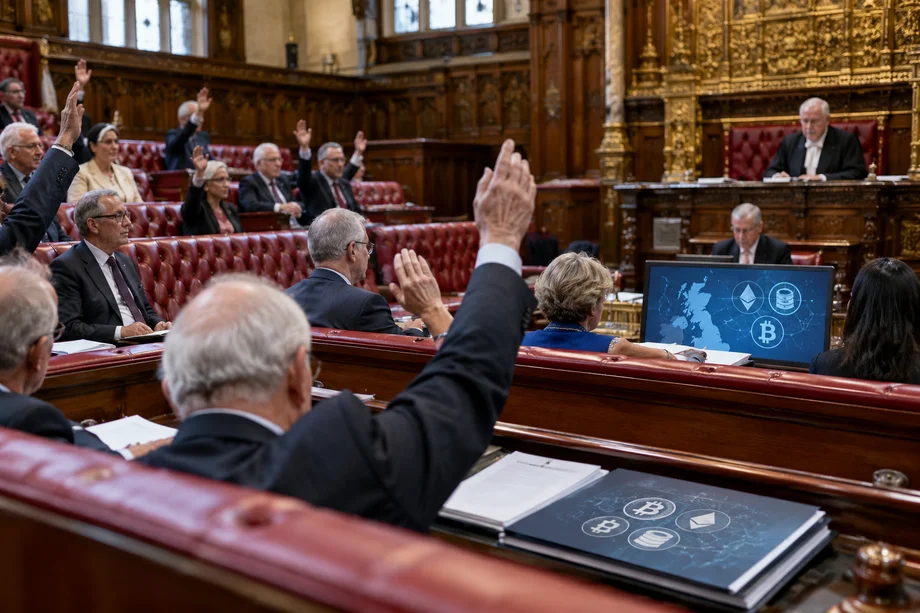
Peers approved an amendment requiring the Treasury to publish and consult on a formal digital asset plan within 12 months of the Financial Services and Markets Bill becoming law, overcoming Labour opposition
The UK House of Lords has approved an amendment that would compel the Treasury to prepare, publish and consult on a national digital asset strategy. The measure passed by a 194-138 margin during the Report Stage of the Financial Services and Markets Bill on Wednesday, despite resistance from the Labour government.
Amendment 88, introduced by Conservative peer Baroness Neville-Rolfe, was added after Clause 46 and now appears as Clause 50 in the amended bill. It sets a clear timeline: the Treasury must complete the strategy and associated consultation within 12 months of the bill receiving Royal Assent.
Scope of the Proposed Strategy
The strategy would cover cryptoassets, qualifying stablecoins, tokenized securities, central bank digital currencies and other digital or tokenized financial products. It would also examine digital financial market infrastructure, including firms’ access to banking, payment and settlement services.
Lawmakers specified that the document should address innovation, consumer protection, market integrity, financial stability and the UK’s international competitiveness. Treasury officials would need to review how current legal and market conditions affect digital asset businesses, including instances where banks or payment providers apply blanket policies that limit service access without individual risk assessments.
Preparation of the strategy would require consultation with the Bank of England, the Prudential Regulation Authority, the Financial Conduct Authority and industry groups. Additional parties could be included where their input is considered necessary. The Treasury would also be expected to consider developments in other jurisdictions, among them the United States, the European Union, Singapore, Switzerland and Hong Kong.
Government Opposition and Parliamentary Debate
Labour peers voted against the amendment. During earlier committee discussion in July, Treasury Minister for Investment Lord Stockwood argued that the government already possessed a digital asset strategy and was putting it into practice. He pointed to the Wholesale Financial Markets Digital Strategy, the appointment of Chris Woolard as Wholesale Digital Markets Champion, the Digital Securities Sandbox and ongoing work by the Bank of England and Financial Conduct Authority on tokenization.
Labour maintained that the amendment did not sufficiently account for the rapid evolution of digital assets or the need for a cohesive regulatory framework. On the issue of banking access, the minister described account and service decisions as commercial matters while stating that licensed firms should not face restrictions solely because of their involvement in the digital asset sector.
Supporters of the amendment, drawn largely from Conservative and Liberal Democrat peers, argued that existing efforts amounted to ambition rather than a coordinated plan. Baroness Neville-Rolfe told peers that more than one in ten UK adults owned a digital asset and that firms required clearer information about regulatory responsibilities.
Lord Chris Holmes framed the choice facing policymakers as whether the UK was simply regulating digital assets or building a digital assets economy. Lord Ranger of Northwood raised practical obstacles, noting that some registered or regulated digital asset firms continued to encounter difficulties securing bank accounts or using payment and settlement services despite having compliance systems in place.
Industry Response and Next Steps
The UK Cryptoasset Business Council, which worked with lawmakers on the amendment, welcomed the result. The group noted the distinction drawn by Lord Holmes between regulation and broader economic development as central to the debate.
The Financial Services and Markets Bill must still return to the House of Commons. Members of Parliament can accept the Lords’ changes, amend them further or reject them. Only if the Commons retains the 12-month publication and consultation requirement will the obligation become law.
Until that stage concludes, the precise content of any eventual strategy—particularly its treatment of stablecoins, tokenized securities and operational access to core financial infrastructure—remains subject to further parliamentary scrutiny.
Disclaimer
This article was generated by AI using information from multiple industry sources. It has not been reviewed or verified by a human editor and may contain inaccuracies, omissions, or misinformation. Readers are encouraged to independently verify any information before making decisions based on its content.Tired of the noise?
Let the bots trade for you.
Trade 24/7, without emotion, with data-driven strategies.
Associated articles

UK Regulator Advances Tokenized Gold Standards with Banks for Wholesale Markets

UK Parliament Launches Inquiry Into Banking Barriers for Crypto Sector

UK Government Plans Secondary Bank of England Mandate for Stablecoin and Digital Payments Innovation

Strategy Challenges MSCI Proposal to Exclude Digital Asset Firms From Global Indexes

Mirae Asset Targets 150 Trillion Won Digital Asset Business by 2027 via Digital X
Latest articles

Lighter Token Climbs More Than 20% on Planned CFTC Filing and Research Note

Samsung and SK Hynix Upgrade China NAND Factories Amid AI Demand and Local Rivalry

China Prosecutors Move to Confiscate $5.1 Billion Bitcoin Haul Seized in UK Fraud Case

Bank of Korea Holds Rate at 3% After Consecutive Hikes, Eyes Data for Next Move