Newsroom
Tether Leads Pre-Seed Round in Bolivian Fintech Peso to Scale USDT Payments Across Latin America
22 October, 2026 / News / AI / Tags: peso, bolivia, usdt, merchant, tether
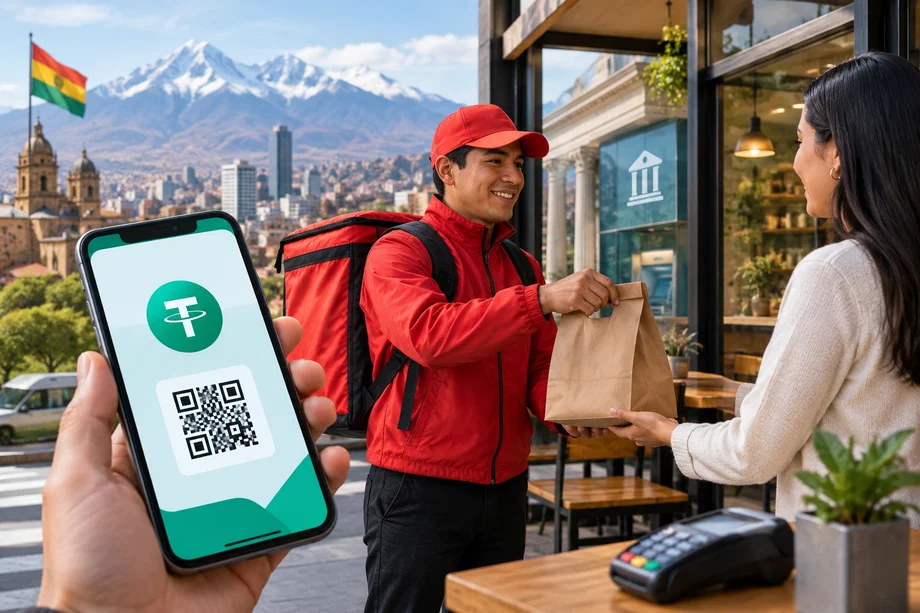
Stablecoin issuer backs expansion of payment rails linking USDT to banking systems, merchant tools and food delivery in four countries amid Bolivia’s dollar constraints
Tether has led a pre-seed funding round in Bolivian fintech company Peso to expand infrastructure that enables everyday use of its USDT stablecoin across Latin America. The investment, announced this week, will support development of local currency conversion channels, merchant payment tools and virtual accounts in Bolivia, Brazil, Colombia and Argentina. The size of the round was not disclosed.
Peso operates an application that centers user accounts on USDT balances, offering functions for saving, spending, investing and cross-border transfers. In Bolivia the company has already connected the stablecoin to real-world commerce by integrating payment options into the Yango food delivery platform, allowing customers to settle orders directly in USDT.
Payment Infrastructure and Local Banking Links
Beyond consumer apps, Peso provides QR-code payments, point-of-sale services for merchants and virtual accounts opened under customers’ own names. These accounts connect to Bolivia’s banking system through automated clearing house transfers, creating pathways for users to move value between USDT and the local currency. The company plans to broaden similar deposit, withdrawal and merchant-collection capabilities across its four target markets.
Additional payment methods under development include Pix in Brazil and Bre-B in Colombia. The funding is intended to strengthen these on- and off-ramps so that businesses can accept stablecoin payments without relying solely on specialized cryptocurrency platforms.
Tether chief executive Paolo Ardoino described the investment as support for infrastructure that moves USDT beyond a pure savings instrument into routine payment channels.
Bolivia’s Dollar Shortage and Policy Backdrop
The initiative arrives as Bolivia has seen rising demand for dollar-denominated alternatives since 2025. A prolonged shortage of U.S. dollars combined with high inflation has led some businesses to accept USDT for purchases. In November 2025 the government outlined plans to incorporate cryptocurrencies and stablecoins into the formal financial system, including provisions that would allow banks to offer digital-asset custody and related products.
By July 2026 authorities were examining a regulatory framework that would recognize USDT for payments, savings and trade alongside the boliviano and the U.S. dollar. That discussion followed the country’s decision to abandon a longstanding currency peg, which intensified pressure on foreign-exchange access.
Broader Fintech Activity in the Region
Peso’s expansion sits alongside other stablecoin-linked services in Bolivia. Lending platform Tala recently partnered with digital wallet provider El Dorado to offer embedded credit that can be disbursed and repaid in USDT on the Tempo blockchain. The service is initially aimed at Bolivian users, with plans for wider Latin American rollout.
Tether has previously supported other regional payment and infrastructure providers, including an investment in EFY Finance focused on institutional stablecoin services such as cross-border payments, accounts and custody. The latest commitment to Peso continues that pattern of financing practical rails that link USDT to existing banking and merchant ecosystems.
Neither Tether nor Peso released figures on transaction volumes, merchant participation or the value of payments already processed through the Yango integration. The companies indicated that the capital will be directed toward scaling the payment, transfer and merchant services already in place while extending them into additional national markets.
Disclaimer
This article was generated by AI using information from multiple industry sources. It has not been reviewed or verified by a human editor and may contain inaccuracies, omissions, or misinformation. Readers are encouraged to independently verify any information before making decisions based on its content.Tired of the noise?
Let the bots trade for you.
Trade 24/7, without emotion, with data-driven strategies.
Associated articles

Tether Leads $7 Million Investment in Pact Labs for USA₮ Payroll Push

Mastercard Completes $1.8 Billion BVNK Acquisition to Link Crypto and Traditional Payments

Ripple Invests in Flutterwave Series E at $3.2 Billion Valuation

Citi and Coinbase Form Partnership to Let Corporate Clients Accept Stablecoin Payments

Stablecoin Remittances Slash Cross-Border Transfer Costs by 84 Percent
Latest articles

Malaysia Central Bank Unveils Tokenized Bond Platform Enabling Round-the-Clock Settlement

Securitize Partners with Anchorage Digital Bank for Direct Stablecoin Minting

Kalshi Partners With BitGo on Crypto-Backed Loans for Perpetual Futures Margin
Shinhan Card and SBI Units to Test Yen Stablecoin Payments for Japan-Korea Travel