Newsroom
Tether CEO Confirms USDT Return to Bitcoin as Infrastructure Partners Advance Plans
25 September, 2026 / News / AI / Tags: utexo, rgb, lightning, tether, ardoino

Paolo Ardoino said the stablecoin is “coming home” to Bitcoin, where it first launched, amid talks involving Utexo and interest from Morgan Stanley on broader adoption
Tether Chief Executive Paolo Ardoino confirmed that the firm’s USDT stablecoin will return to the Bitcoin network. In a post on September 24, Ardoino wrote that USDT on Bitcoin is “coming home,” referring to the blockchain where the token originally launched more than a decade earlier.
USDT first operated through the Omni Layer protocol built on Bitcoin. Support for that version ended in 2023 as most of the supply shifted to other networks such as Ethereum and Tron. The current effort relies on newer technology designed for asset issuance and faster payments.
Infrastructure Built on RGB and Lightning
The revival centers on the RGB protocol combined with the Lightning Network. RGB allows assets to be issued on Bitcoin while keeping much of the transaction data off-chain through client-side validation. Lightning provides the speed needed for payments.
Utexo, a company focused on these payment rails, develops the infrastructure that lets wallets, exchanges, and custodians move USDT over Bitcoin and Lightning. Tether led Utexo’s $7.5 million seed funding round, which also included Big Brain Holdings, Portal Ventures, and Franklin Templeton. In August, Utexo integrated its RGB Lightning module into Tether’s Wallet Development Kit, a set of tools for building self-custody wallets.
Tether first outlined RGB plans in August 2025. Ardoino described the goal as delivering a stablecoin that feels native to Bitcoin—lightweight, private, and scalable. The RGB protocol has since reached Bitcoin mainnet. Separate earlier work also explored Lightning Labs’ Taproot Assets protocol for on-chain and Lightning transfers.
Discussions with Morgan Stanley
Utexo Chief Executive Viktor Ihnatiuk reported meeting Morgan Stanley representatives in Washington to discuss USDT on Bitcoin. The conversations covered potential collaboration on adoption in Europe and globally. Ardoino reshared Ihnatiuk’s account and added his own confirmation that the stablecoin is returning to Bitcoin.
Morgan Stanley has expanded its crypto activities this year, launching a spot Bitcoin exchange-traded fund in April and opening crypto trading on E*Trade in May. The bank has not issued a formal statement confirming any partnership with Utexo or Tether. Discussions remain at an exploratory stage.
Path to Users and Remaining Hurdles
The product is not yet available to most users. Utexo named UniSat, a wallet known for Bitcoin Ordinals and tokens with more than one million weekly active users, as its next launch partner. No public release date has been set.
USDT’s circulating supply stands near $183 billion, making it one of the largest cryptocurrencies by market value. Adding Bitcoin-based rails could open new settlement options for exchanges, payment providers, and institutional users. Rollout speed will depend on technical readiness and regulatory conditions.
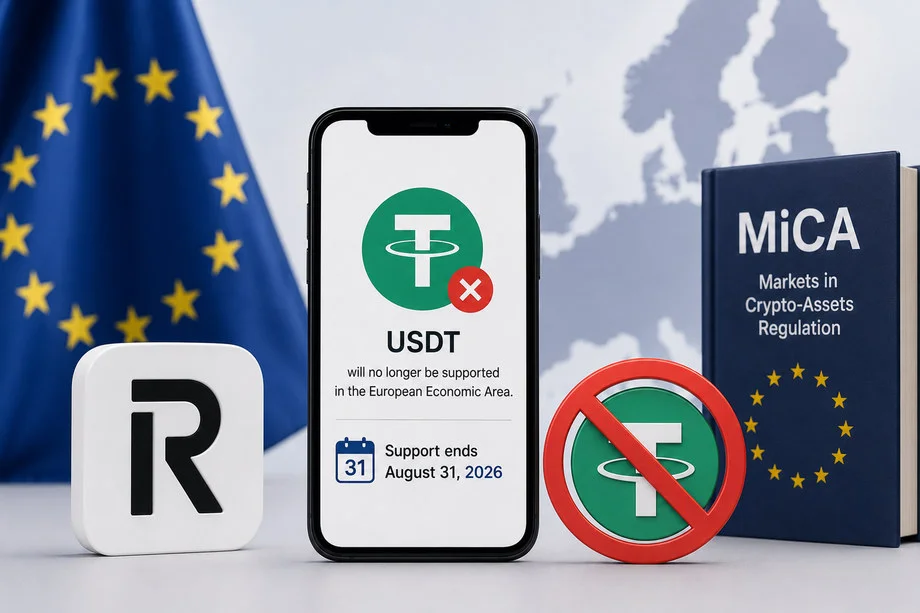
In Europe, Tether has faced constraints under the Markets in Crypto-Assets framework. The firm declined to seek a MiCA license, citing the requirement that large stablecoin issuers hold 60 percent of reserves as bank deposits. Those deposits fall outside full protection beyond the European Union’s €100,000 insurance limit, raising risk concerns for issuers. The European Banking Authority has called for a review of certain stablecoin rules, while the European System of Central Banks has urged the European Commission to re-examine the reserve requirements. Tether has indicated it may reconsider its position if the framework becomes safer for both consumers and issuers.
Ardoino has previously ruled out creating a proprietary Tether blockchain, preferring to build on existing networks. The latest statements reinforce a multi-track Bitcoin strategy rather than a single immediate product launch. The next concrete steps will be formal product announcements or supported wallet releases from partners such as UniSat.

Disclaimer
This article was generated by AI using information from multiple industry sources. It has not been reviewed or verified by a human editor and may contain inaccuracies, omissions, or misinformation. Readers are encouraged to independently verify any information before making decisions based on its content.Tired of the noise?
Let the bots trade for you.
Trade 24/7, without emotion, with data-driven strategies.
Associated articles

Tether’s USDT Returns to Bitcoin This Month via Utexo RGB Infrastructure

USDT Returns to Bitcoin via RGB Protocol for Native Settlements
Revolut Delists USDT for European Users Under MiCA Rules

ECB and EU Central Banks Urge Removal of MiCA Bank Deposit Rules for Stablecoins
Tether’s USAT Stablecoin Goes Live on Celo in First Move Beyond Ethereum
Latest articles
Babylon Labs Advances Proposal for Native Bitcoin Lending on Aave V4

TSMC Posts Record Q3 Profit Surge on AI Chip Demand, Lifts Full-Year Outlook

ASIC Opens Consultation on Capital and Custody Rules for Digital Asset Platforms

GTA 6 Leaker Cyberleek Drops Full Build Plan After Memecoin Collapse, Activates Dead Man’s Switch Threat