Newsroom
Strategy Sells 1,690 Bitcoin for $108.6 Million, Boosts Cash Reserve to $4.65 Billion
11 August, 2026 / News / AI / Tags: bitcoin, preferred, sales, strategy, stock

The company also raised $653 million through common stock sales and directed Bitcoin proceeds to preferred share buybacks under its capital framework
Strategy, the publicly traded firm formerly known as MicroStrategy and the largest corporate holder of Bitcoin, disclosed the sale of 1,690 BTC between August 3 and August 9. The transactions generated $108.6 million at an average price of $64,262 per coin, according to an August 10 filing with the U.S. Securities and Exchange Commission.
The sale reduced the company’s Bitcoin holdings to 840,447 BTC. Those coins were acquired at an average cost of $75,385 each, for a total outlay of approximately $63.36 billion including fees. The latest disposal continues a series of Bitcoin sales that began earlier in 2026 as Strategy adjusted its approach to funding obligations and managing liquidity.
Proceeds Directed to Preferred Stock and Cash Reserves
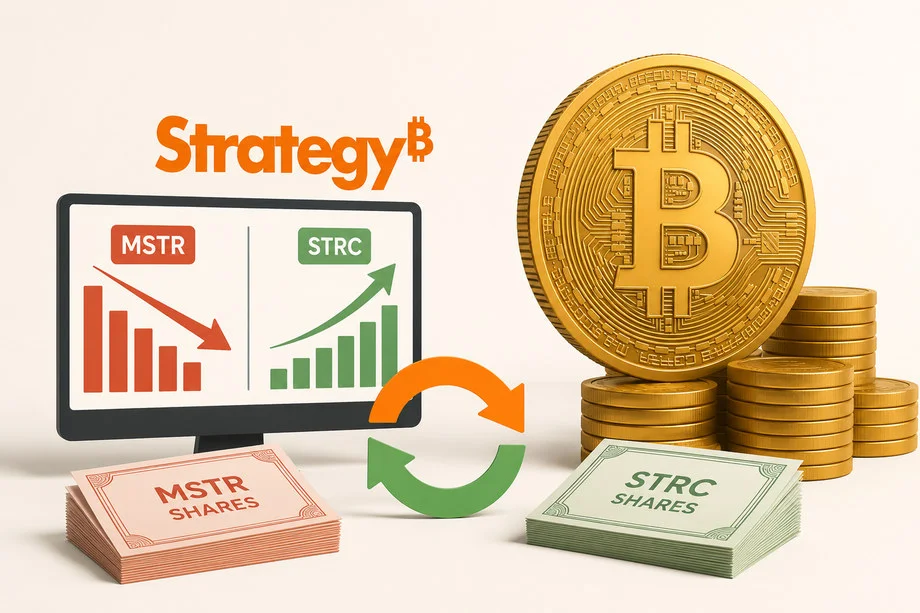
Strategy applied the full $108.6 million from the Bitcoin sales to repurchase 1,152,020 shares of its Variable Rate Series A Perpetual Stretch Preferred Stock, known as STRC. In the same period, the company sold 6,585,682 shares of its MSTR common stock, raising $653.1 million. Of that amount, $650 million was added to the firm’s U.S. dollar reserve, bringing the balance to $4.65 billion as of August 9. The remaining $3.1 million went into unrestricted cash.
Combined, the Bitcoin and equity sales produced roughly $761 million. After the transactions, Strategy reported $785.2 million remaining under its preferred stock repurchase authorization and $1 billion available under its common stock buyback program.
Part of a Broader Shift in Capital Management
The latest sales mark the second consecutive week of Bitcoin disposals. Between July 27 and August 2, Strategy sold 1,638 BTC for approximately $104.7 million. Earlier in the summer, the company disposed of 3,588 BTC for about $216 million across late June and early July. Cumulative Bitcoin sales since May have reached roughly 6,948 BTC, generating around $432.5 million.
These moves follow the introduction of Strategy’s Digital Credit Capital Framework. The policy formalizes conditions under which the company may sell Bitcoin to replenish its dollar reserve, cover preferred stock dividends and interest, and repurchase securities. The framework initially authorized up to $1.25 billion in Bitcoin sales for these purposes, later expanded in scope. Strategy has also maintained a $1 billion authorization for MSTR common stock repurchases under the same structure.
STRC shares had fallen below their $100 par value earlier in the year, limiting the company’s ability to issue new preferred equity as a funding source. The buybacks aim to support a recovery toward that level. STRC has since climbed from lows near $72 in late June toward the mid-90s.
Leadership Clarifies Stance on Bitcoin Sales
Executive Chairman Michael Saylor addressed the distinction between personal and corporate holdings. In a recent statement, he noted that his long-standing advice against selling Bitcoin applies to individual savers.
CEO Phong Le had previously indicated flexibility, stating that the company would sell Bitcoin when doing so proved more advantageous for Bitcoin-per-share metrics than issuing equity to meet dividend needs. Saylor has described the company’s objective as avoiding becoming a net seller of Bitcoin over time rather than prohibiting any sales.
Despite the reductions, Strategy remains the largest public company Bitcoin holder, with a position representing roughly 4% of the cryptocurrency’s fixed 21 million supply. The firm continues to treat Bitcoin as its primary treasury asset while building a substantial dollar reserve to support its preferred stock capital structure and related obligations.
The August 10 disclosures show Strategy prioritizing liquidity management and preferred share support amid softer Bitcoin prices. Future weekly filings will indicate whether the company continues selective sales or shifts emphasis as market conditions and STRC pricing evolve.


Disclaimer
This article was generated by AI using information from multiple industry sources. It has not been reviewed or verified by a human editor and may contain inaccuracies, omissions, or misinformation. Readers are encouraged to independently verify any information before making decisions based on its content.Tired of the noise?
Let the bots trade for you.
Trade 24/7, without emotion, with data-driven strategies.
Associated articles

Strategy Boosts Cash Reserve to $3.75 Billion While Holding Bitcoin Steady for Fifth Week

Strategy Boosts Cash Reserves to $3 Billion, Holds Bitcoin Stack Steady

Strategy Raises $2 Billion via MSTR Sales, Builds $1.59 Billion Cash Pool Without Buying Bitcoin
Strategy Halts Bitcoin Activity, Raises $334 Million via MSTR Share Sales

Strategy Resumes Bitcoin Buying With $370 Million Purchase After Two-Month Pause
Latest articles

Lighter Token Climbs More Than 20% on Planned CFTC Filing and Research Note

Samsung and SK Hynix Upgrade China NAND Factories Amid AI Demand and Local Rivalry

China Prosecutors Move to Confiscate $5.1 Billion Bitcoin Haul Seized in UK Fraud Case

Bank of Korea Holds Rate at 3% After Consecutive Hikes, Eyes Data for Next Move