Newsroom
SEC and CFTC Sue Goliath Ventures Over Alleged Crypto Ponzi Scheme
12 August, 2026 / News / AI / Tags: delgado, goliath, cftc, civil, fraud
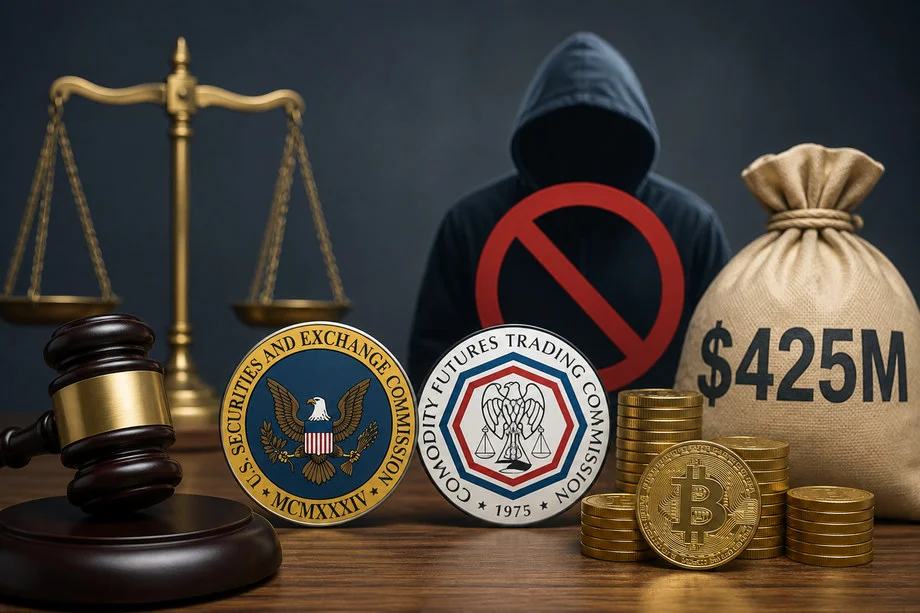
US regulators filed separate civil actions against the firm and founder Christopher Delgado, alleging a multi-year fraud that took hundreds of millions from investors through false promises of crypto returns
Federal regulators have taken coordinated civil action against Goliath Ventures Inc. and its founder and chief executive, Christopher Delgado, over what they describe as a large-scale cryptocurrency Ponzi scheme. The Securities and Exchange Commission and the Commodity Futures Trading Commission each filed complaints in the US District Court for the Middle District of Florida, accusing the company and Delgado of raising hundreds of millions of dollars from investors while misusing the funds and issuing false statements about profits.
The SEC alleged that Goliath Ventures raised at least $425 million from more than 1,300 investors between January 2023 and January 2026. The agency said the firm conducted an unregistered securities offering linked to purported cryptocurrency liquidity pools. Investors were told they would receive monthly returns ranging from 3 percent to 10 percent along with the return of their principal. According to the SEC, none of the investor funds or crypto assets were placed into the promised pools. Instead, the complaint states that at least $51 million was diverted by Delgado for personal expenses that included homes, luxury vehicles, a yacht and travel.
CFTC Details Parallel Allegations of Trading Fraud
In its separate complaint, the CFTC estimated that roughly 1,600 customers contributed at least $397 million. The agency said Goliath solicited funds for crypto trading involving Bitcoin and Ethereum. Regulators alleged that customer money was used to pay fictitious profits to earlier participants, that principal or profits were guaranteed, and that false account statements showing nonexistent gains were issued. The CFTC is seeking restitution, disgorgement, civil monetary penalties, trading and registration bans, and a permanent injunction under the Commodity Exchange Act.
The differing dollar figures stem from the agencies’ distinct jurisdictional approaches, yet both center on the core claim that investor assets were not deployed as represented and that returns were fabricated.
Prior Guilty Plea and Ongoing Criminal Proceedings
The civil filings follow Delgado’s guilty plea in June 2026 to conspiracy to commit wire fraud, wire fraud and money laundering. Federal prosecutors stated that at least $400 million was paid to Goliath and that Delgado admitted causing at least $250 million in investor losses. Sentencing is scheduled for October 21, 2026, and the criminal investigation remains open.
Authorities are also pursuing assets allegedly acquired with investor funds. A Department of Justice forfeiture action targets seven properties and 11 vehicles. Prosecutors alleged that about $17 million went toward homes and office space and more than $2.5 million toward vehicles. Delgado has agreed to forfeit additional luxury assets, bank accounts and crypto accounts.
Settlement Terms and Enforcement Requests
Delgado has agreed to a bifurcated settlement with the SEC, subject to court approval. The arrangement would permanently restrict him from violating the securities laws cited in the complaint, participating in most securities transactions, and acting as or associating with a broker or dealer. Determinations on disgorgement, prejudgment interest and a civil penalty are deferred.
CFTC Chairman Michael Selig addressed the agency’s broader approach to the sector.
Goliath Ventures and Delgado had not filed responses to the CFTC complaint at the time of the announcements. The cases form part of continued regulatory scrutiny of alleged fraud in digital-asset markets, even as the industry’s user base expands.


Disclaimer
This article was generated by AI using information from multiple industry sources. It has not been reviewed or verified by a human editor and may contain inaccuracies, omissions, or misinformation. Readers are encouraged to independently verify any information before making decisions based on its content.Tired of the noise?
Let the bots trade for you.
Trade 24/7, without emotion, with data-driven strategies.
Associated articles

SEC Sues Florida Man and Mining Automatic Over Alleged $22 Million Crypto Mining Fraud

Las Vegas Businessman Convicted in $24 Million Crypto Ponzi Scheme, Faces 280 Years

CFTC Files Suit Against Cash FX Over Alleged $950 Million Forex Ponzi Scheme

SEC Prepares Crypto Offering Rules and Innovation Framework as Senate Delays Clarity Act

U.S. Authorities Seek Forfeiture of $25 Million in Crypto from Romance and Investment Scams
Latest articles

SpaceX and Tesla Set Up Committees to Explore Merger That Would Combine Holdings of Over 30,000 Bitcoins

UK Banks Face Thousands of Complaints Over Crypto Transfer Restrictions

Ripple Backs SEC Proposed Crypto Asset Rules After $150 Million Legal Battle

Blockchain.com Introduces Options Trading on Seven Major Crypto Assets