Newsroom
Robinhood Chain Sees 14-Minute Data Posting Delay Amid Heavy Traffic
4 September, 2026 / News / AI / Tags: robinhood, chain, batch, production, experienced
Ethereum layer-2 network faced temporary batch submission gaps to the base layer on September 4 while continuing local block production under record usage
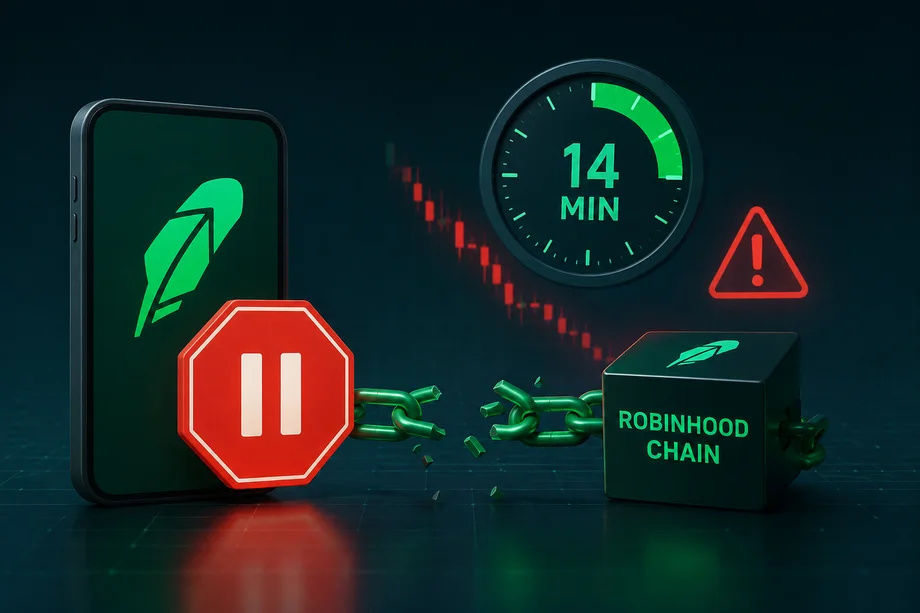
Robinhood Chain, the Ethereum layer-2 network operated by Robinhood Markets, experienced a disruption on September 4 that initially appeared as a halt in block production lasting about 14 minutes. Explorer data showed no new blocks advancing for a period beginning near 12:57 p.m. UTC, leaving transactions pending and unable to confirm transfers or smart contract interactions.
Later clarification established that the chain continued producing blocks at its normal cadence of roughly 100 to 101 milliseconds throughout the period. The interruption involved delays in posting transaction batches, or blobs, to Ethereum rather than a full stop in local sequencing.
Initial Reports and Explorer Data
Blockchain explorers indicated the network tip remained static while new transactions entered the mempool but could not settle. At the chain’s usual pace, a 14-minute window without progress would equate to approximately 8,400 missed blocks. Reports from that afternoon described intermittent recovery after the pause, with the latest observed block timestamps resuming around 21:06 in one regional update.
Robinhood’s public status page carried no incident notice for the chain on that date. No balances were reported lost, and the disruption was confined to the layer-2 environment rather than the firm’s traditional brokerage platform for U.S. equities, exchange-traded funds or options.
Clarification From Arbitrum
Arbitrum, whose Orbit technology underpins the network, stated that Robinhood Chain experienced no downtime. The organization attributed the issue to batch posting delays linked to Ethereum layer-1 blob market conditions. Direct user transactions faced no delays, though some infrastructure providers relying on the chain’s data stream saw brief performance effects from elevated subscriber numbers.
Independent examination of on-chain records showed continuous block production. Between 12:00 and 15:00 UTC the network generated more than 106,000 blocks at an average interval near 101 milliseconds. Sampled blocks inside the reported window contained active transactions.
The gaps occurred on the Ethereum side. The chain’s batch poster submitted blobs at a median interval of about 12 seconds under normal conditions. It paused for 8 minutes and 36 seconds, then for another 5 minutes and 24 seconds, totaling exactly 14 minutes. These intervals matched the duration that circulated in early reports of a production halt.
Rapid Growth in Network Activity
The episode arrived during a period of sharply elevated usage. Daily transaction counts had risen from roughly 22,000 in the first weeks after the July 1 mainnet launch to several million by mid-July, and later readings showed approximately 14 million transactions in a 24-hour span preceding the disruption. Average fees in one recent window stood near $0.48.
Decentralized exchange volume on the chain had previously reached hundreds of millions of dollars in a single day, with cumulative figures climbing into the tens of billions since launch. Tokenized stock and related activity contributed to the load, alongside other trading. The network posts a substantial share of Ethereum’s overall blob data, making any interruption in its submissions noticeable in the base-layer market.
Robinhood Chain relies on a single sequencer to order transactions. Users can submit transactions while the sequencer is active, yet confirmation and settlement require ongoing block production and eventual data availability on Ethereum. The architecture supports Ethereum-compatible wallets, applications and smart contracts, with ETH used for fees.
Market Reaction and Broader Context
Shares of Robinhood Markets declined as much as 5.1 percent from the prior close during the U.S. trading session, touching an intraday low near $118.30 before recovering a portion of the loss. The stock had advanced more than 16 percent the previous day. Available data did not establish a direct causal link between the chain event and the share-price movement.
Tokenized stock products offered on the chain remain unavailable to U.S. residents and function as derivative contracts providing economic exposure rather than direct ownership or voting rights. The network launched with support for dozens of tokenized equities and has since expanded activity across additional categories.
As of the latest available reports, Robinhood had not released a detailed technical post-mortem explaining the precise sequence of events or any internal factors beyond the Arbitrum description of layer-1 market conditions. Block production and batch submissions returned to regular operation after the gaps closed.

Disclaimer
This article was generated by AI using information from multiple industry sources. It has not been reviewed or verified by a human editor and may contain inaccuracies, omissions, or misinformation. Readers are encouraged to independently verify any information before making decisions based on its content.Tired of the noise?
Let the bots trade for you.
Trade 24/7, without emotion, with data-driven strategies.
Associated articles

Robinhood Chain Hits $3B DEX Volume, Driving Record $1.15M UNI Burn

Robinhood Chain Posts $4.5 Million in Daily Fees While Paying Ethereum $398

Base Blockchain Recovers After Two-Hour Outage Disrupting Block Production
Robinhood Chain Posts $2.66 Million in Daily App Revenue, Surpassing Ethereum and Hyperliquid
Robinhood Chain Surpasses Ethereum in Daily DEX Volume
Latest articles

Blockchain Association Urges Clarity on DeFi and Stablecoin Rules Under GENIUS Act

XRP Launches Official X Account, Jointly Managed by Ripple and XRPL Foundation

ESMA Expands MiCA Register to 375 Providers as BingX, YouHodler and Openbank Join

France Narrowly Approves Crypto-to-Stablecoin Tax from 2027