Newsroom
Republican Senator Demands Probe of Trump Jr. and Hunter Biden Over Crypto Ties
23 September, 2026 / News / AI / Tags: curtis, biden, hunter, trump, presidency
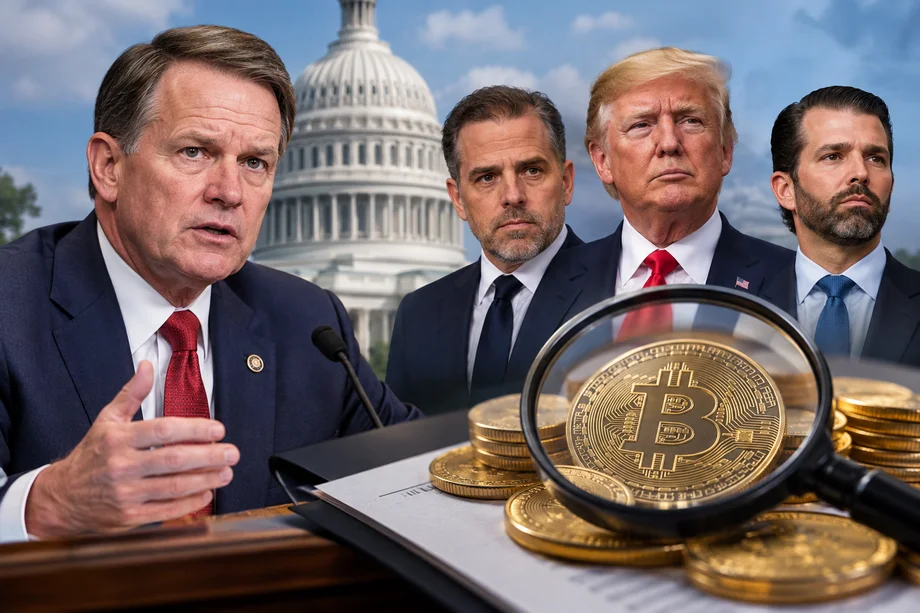
Utah’s John Curtis asks Senate Judiciary leaders for subpoenas targeting presidential sons’ business activities and potential use of family influence for private gain
Senator John Curtis, a first-term Republican from Utah, has formally requested that the Senate Judiciary Committee investigate Donald Trump Jr. and Hunter Biden, citing concerns that both men may have used their relationships to the presidency for private financial benefit. In a letter sent Monday to Committee Chair Chuck Grassley and Ranking Member Dick Durbin, Curtis called for subpoenas requiring the two sons of current and former U.S. presidents to appear before the panel.
Curtis framed the inquiry around “the use of presidential family relationships for private financial benefit, preferential treatment, or access by domestic and foreign interest.” He said the purpose should be to establish the facts, determine whether existing ethics, disclosure or anti-corruption laws apply, and identify any reforms needed to prevent the presidency from serving as a vehicle for private enrichment by those closest to it.
Focus on Trump Jr.’s Crypto Ventures and Foreign Gift
Curtis specifically pointed to Donald Trump Jr.’s activities in the cryptocurrency sector. He cited the younger Trump’s active promotion of family-backed cryptocurrency ventures and his advisory roles with prediction-market platforms that fall under the regulatory authority of the Commodity Futures Trading Commission. The senator also raised questions about whether such roles could create opportunities for foreign access to the family of a sitting president.
A separate element of the request concerns a wedding-related gift. Curtis noted that Donald Trump Jr. accepted what was described as a generous wedding gift from Russian businessman Umar Kremlev, reported to include a private-island celebration in the Bahamas. President Donald Trump stated last week that his son had repaid Kremlev. Curtis publicly contrasted ordinary wedding presents with the scale of the reported arrangement, arguing that Republicans who previously pursued extensive scrutiny of foreign ties should maintain consistent standards.
Parallel Scrutiny of Hunter Biden’s Foreign Business
The letter also seeks a parallel examination of Hunter Biden. Curtis cited the former president’s son’s substantial business dealings with foreign entities and situations in which his relationship to the presidency may have been understood to provide value. He referenced President Joe Biden’s December 2024 pardon of his son for offenses committed or potentially committed over the preceding decade, while noting Hunter Biden’s earlier statements that he did not involve his father in business matters.
Ranking Member Dick Durbin indicated support for the request. He stated that corruption at the highest levels of government should never be tolerated and observed that Hunter Biden has already testified under oath before Congress while Donald Trump Jr. has not. Durbin warned that declining to act could amount to the committee participating in a cover-up.
Backdrop of Stalled Crypto Market Legislation
Curtis’s letter arrives roughly one week after Senate Republicans failed to secure enough Democratic votes to advance the Digital Asset Market Clarity Act, legislation intended to establish market-structure rules for the cryptocurrency industry. Some Democrats opposed the bill on grounds that the president was using crypto to turn the presidency into a profit-generating enterprise. President Trump has disclosed earnings of $1.4 billion from digital-asset-related ventures in 2025.
Republican lawmakers maintained that stronger ethics provisions affecting the president’s crypto investments had been incorporated before the vote. Democrats countered that the measures remained insufficient. Earlier in the current Congress, Democratic members of both chambers had already called for examinations of Trump family crypto activities, including a memecoin, the World Liberty Financial business, and a $500 million deal linked to Abu Dhabi’s royal family.
Curtis is serving his first Senate term and does not face reelection until 2030. Whether the Judiciary Committee will issue the requested subpoenas remains to be determined as lawmakers continue to debate both specific conflict-of-interest questions and broader digital-asset regulation.
Disclaimer
This article was generated by AI using information from multiple industry sources. It has not been reviewed or verified by a human editor and may contain inaccuracies, omissions, or misinformation. Readers are encouraged to independently verify any information before making decisions based on its content.Tired of the noise?
Let the bots trade for you.
Trade 24/7, without emotion, with data-driven strategies.
Associated articles

Democratic Senators Demand Hearings on Trump Crypto Holdings and Security Concerns

Senate Democrats Demand Hearings on Trump Family Crypto Ties to UAE

Senate Democrats Intensify Fight Against CLARITY Act Over Trump Crypto Earnings

Clarity Act Faces Senate Roadblock Over Ethics and Consumer Safeguards

Majority of Americans View Trump Family Crypto Earnings as Inappropriate, Poll Shows
Latest articles

Metaplanet to Raise $329 Million via Zero-Coupon Convertible Bonds for Debt Repayment and Buybacks

Tom Lee Flags Short-Term Ethereum Pressure After Sharp South Korean Equity Sell-Off

IMF Chief Says AI Investment Props Up 3% Global Growth While Threatening Entry-Level Jobs

UK High Court Applies Chinese Law to $1.7 Billion Bitcoin Seizure in Major Fraud Case