Newsroom
Ondo Finance Presses SEC and CFTC to Greenlight Onshore Stock Perpetual Futures
3 September, 2026 / News / AI / Tags: futures, perpetual, ondo, cftc, security
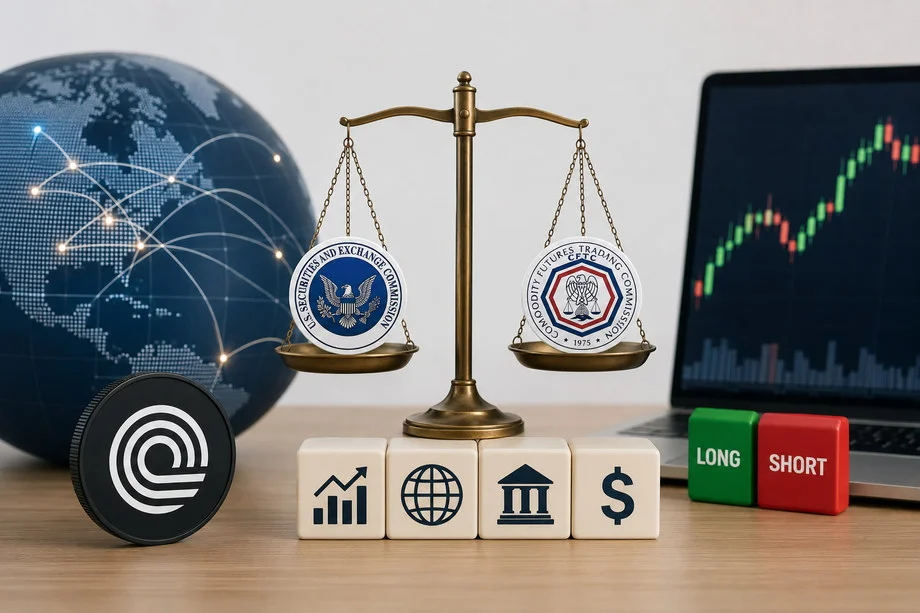
Tokenization firm argues existing security futures rules already cover perpetual contracts on US equities, citing $8 billion in offshore volume as proof of demand
Ondo Finance has formally asked US regulators to permit perpetual futures contracts linked to individual American stocks under current law. In three comment letters dated August 24 to the Securities and Exchange Commission and the Commodity Futures Trading Commission, the company contended that the products fit within the established security futures framework and do not require fresh rulemaking.
The firm maintains that a fixed expiration date is not a statutory requirement for classification as a security futures product. Instead, scheduled funding payments can maintain price alignment with the underlying equity in the same economic manner that settlement dates operate in conventional futures contracts. The letters also address modern margining practices and the incorporation of onchain market data into regulatory oversight.
Ondo pointed to trading activity already underway outside US jurisdiction. A Panama-based affiliate operates a platform offering stablecoin-settled perpetual futures on individual US-listed stocks exclusively to non-US participants. That venue recorded $8 billion in cumulative trading volume by August 14, approximately six weeks after launch. The company noted that many of the referenced equities trade primarily on American exchanges and argued that regulators should actively seek to relocate such activity within domestic oversight.
Regulatory Backdrop and Parallel Efforts
The request arrives amid closer coordination between the two agencies. In March they signed a memorandum of understanding aimed at harmonizing supervision in areas of overlapping authority, including products that combine features of securities and derivatives. Security futures already operate under joint SEC-CFTC oversight, with pathways for designated contract markets and national securities exchanges to list them after appropriate registration.
A similar filing from the Hyperliquid Policy Center on the same date proposed treating equity perpetuals that exhibit futures-like characteristics as security futures. That group cited more than $480 billion in cumulative notional volume on Hyperliquid’s related markets over their first ten months. Political commentary has also focused on expanding US access to onchain perpetual venues. In August, President Donald Trump stated that CFTC Chair Michael Selig was working to bring Hyperliquid into the United States in a fully compliant manner, though neither the agency nor the platform has publicly detailed implementation steps.
Separately, the SEC recently proposed updates to its transfer-agent rules to accommodate blockchain-based recordkeeping and tokenized securities, signaling broader attention to infrastructure designed for older market structures.
Ondo’s Position in Tokenized Assets
Ondo ranks among the larger managers of tokenized real-world assets. Data from RWA.xyz place it fourth by distributed value, at approximately $2.6 billion. The firm also operates a tokenized equities platform that lists more than 440 stocks and exchange-traded funds across multiple blockchains, with each token backed by the corresponding security or cash held at US-registered broker-dealers. Those products differ from the perpetual futures under discussion: the former convey economic exposure to price movements and dividends without direct ownership rights, while the latter are pure derivatives designed to track share prices.
Even if regulators accept the classification argument, exchanges, brokers, and clearing organizations would still need to satisfy existing registration, listing, margin, surveillance, and customer-protection standards that apply to security futures. Classification alone would not automatically authorize trading.
Outstanding Questions on Classification
Not all market participants agree that perpetual contracts qualify as futures. CME Group has challenged the CFTC’s treatment of certain perpetuals, asserting they should be classified as swaps rather than futures. Resolution of that dispute could influence how single-stock perpetuals are handled. Former SEC counsel Ashley Ebersole has estimated that a full formal pathway involving rulemaking and public comment could require ten to twelve months, though reliance on existing authority might shorten the timeline.
The CFTC has already approved at least one perpetual product. In May it cleared Kalshi’s Bitcoin perpetual futures contract, which began trading shortly afterward, and indicated that additional perpetual derivatives would be reviewed case by case. Kalshi has since pursued filings for other perpetual instruments, including those linked to equity indexes and commodities.
Ondo’s letters frame the core issue as one of interpretation rather than legislative change. The company argues that cash-settled perpetual contracts tied to single stocks can already operate under the dual SEC-CFTC regime created by the Commodity Futures Modernization Act of 2000. Whether the agencies will adopt that reading, and what specific operational conditions they might impose, remains to be determined through the comment process and any subsequent guidance or product reviews.

Disclaimer
This article was generated by AI using information from multiple industry sources. It has not been reviewed or verified by a human editor and may contain inaccuracies, omissions, or misinformation. Readers are encouraged to independently verify any information before making decisions based on its content.Tired of the noise?
Let the bots trade for you.
Trade 24/7, without emotion, with data-driven strategies.
Associated articles

Hyperliquid Policy Center Calls for Unified U.S. Rules on Perpetual Contracts

Crypto.com Sister Exchange OG.com Gains SEC Clearance for US Single-Stock Futures

Kalshi Seeks Approval for Perpetual Futures on Individual US Stocks
RWA Perpetual Futures Approach Bitcoin Trading Volumes on Major Platforms

Kalshi Seeks CFTC Nod for Perpetual Futures on US Stock Index and Copper
Latest articles

SkyAI Exits Solana Holdings Completely, Launches $201 Million Share Buyback

Strategy Buys 267 Bitcoin and Raises Preferred Share Buyback Cap to $3 Billion

Dormant 2013 Bitcoin Wallets Shift Over $67 Million After More Than a Decade

Binance Rolls Out AI Pro Tool for Chat-Based Automated Trading Strategies