Newsroom
Meta Expands AI Agent with Frontier Coding Models and Major Spending Forecast
12 October, 2026 / News / AI / Tags: muse, meta, wonder, glasses, enterprise

Meta Platforms is broadening its personal AI assistant Muse to handle shopping, business software and developer tasks while forecasting heavy capital spending to support its artificial intelligence efforts
New Models Highlight Frontier Performance
Meta on Oct. 12 introduced Muse Wonder and Muse Wonder Full, advanced artificial intelligence models designed for coding, memory retention and extended agentic workflows. The releases position the systems at the level of leading offerings from OpenAI and Anthropic, with Muse Wonder earning strong marks on benchmarks focused on personal superintelligence tasks.
Meta says the models incorporate active memory and active focus features that allow AI agents to track projects over longer periods and maintain optimal results. Wonder is now accessible via the company’s Model API and through Muse Code subscriptions, while Wonder Full is limited to Muse Code subscribers. The company has not announced a timeline for making the models available to all Muse users or plans to release their weights.
These launches follow the April debut of Muse Spark, Meta’s initial model from its superintelligence labs, which the firm had positioned as a foundation for more capable agentic work.
Agent Capabilities Expand Across Daily Tasks
Muse, the personal AI agent, was first made available in the United States and Canada on Sept. 8. The service lets users send emails, book travel, complete forms and approve purchases through Meta’s Muse app, WhatsApp and web interface. It runs inside a dedicated Muse Secure VM and can continue operations even when the app is closed, pausing only for user approval on sensitive actions.
Meta has now added connectors for retailers including Shopify, Walmart, Best Buy, American Eagle Outfitters, DICK’S Sporting Goods, Fanatics, Gap, Michael Kors, Sephora, Ulta and Wayfair, along with services such as Expedia and Instacart. Enterprise software connectors cover Notion, GitHub and Box. Some integrations are still in development rather than fully operational.
Meta launched its Enterprise Platform on Sept. 28, which bundles Muse with the Business Agent, API access and Muse Code to help companies and developers integrate AI tools into their operations. The platform targets organizations seeking to deploy Meta’s artificial intelligence stack internally.
“Meta Enterprise Platform will focus on turning its AI stack into products and services that companies can deploy for their own businesses,” said Chirantan “CJ” Desai, Meta’s chief enterprise platform officer.
Plans for AI Glasses and Enterprise Rollout
Meta plans to bring Muse to its line of AI glasses later this year. By the end of 2026, more than 100 options across Ray-Ban, Oakley and Meta Glasses are expected to support the agent.
The company has kept subscription details for Muse undisclosed while noting that the service remains free for most uses, with paid tiers available for extra features. It has also not released any figures on Muse-specific revenue, subscriber counts or profitability.
Infrastructure Investments Projected to Reach $145 Billion
Meta reported second-quarter revenue of $60.80 billion and net income of $15.85 billion. The company’s family of apps reached 3.60 billion daily active users in June, a 3 percent increase from the previous year.
Capital expenditures for the quarter ended June 30 totaled $31.08 billion, including finance-lease principal payments. For the full year ending Dec. 31, 2026, Meta forecast spending between $130 billion and $145 billion. The company has not directly linked the forecast to Muse.
Mark Zuckerberg, Meta founder and CEO, stated that AI is accelerating the company’s core business and opening new enterprise opportunities. The firm described Muse’s development as part of a broader effort to move beyond conversational tools toward agents that complete real-world digital tasks. Fewer than 200 people worked on the model and product development for Muse.
Meta has emphasized safety measures, including robustness to adversarial instructions and careful handling of private information, while continuing to advance its AI capabilities without pausing development.

Disclaimer
This article was generated by AI using information from multiple industry sources. It has not been reviewed or verified by a human editor and may contain inaccuracies, omissions, or misinformation. Readers are encouraged to independently verify any information before making decisions based on its content.Tired of the noise?
Let the bots trade for you.
Trade 24/7, without emotion, with data-driven strategies.
Associated articles
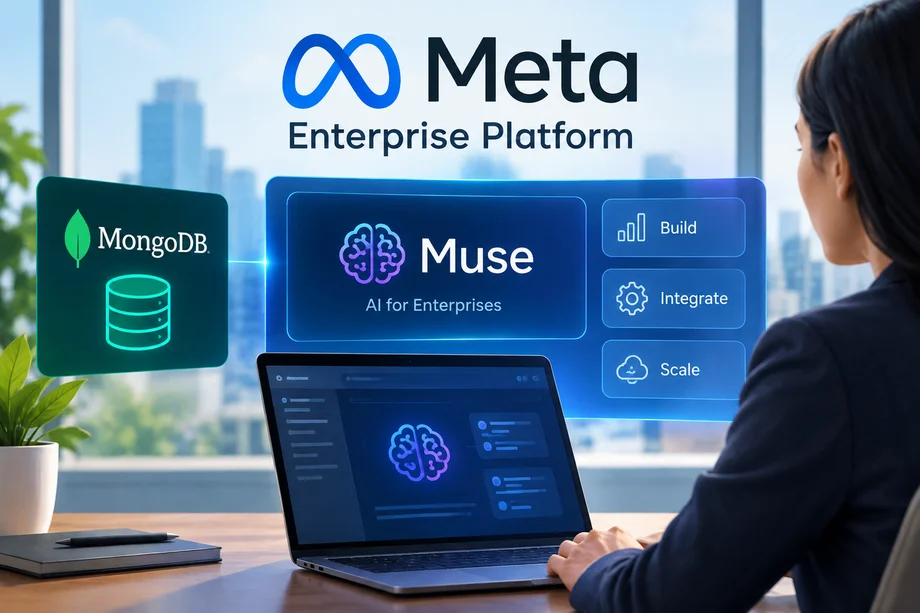
Meta Launches Enterprise Platform to Bring Muse AI to Businesses

Meta Launches Muse Code AI Agent, Trails Anthropic on Key Coding Benchmarks

Anthropic Releases Cheapest Claude Haiku 5.5 Model Ahead of IPO

Payward Joins Anthropic Project Glasswing, Deploys Claude Mythos 5 for Crypto Security

OpenAI Ends Cursor Access After SpaceX Deal as Anthropic Doubles Down on Claude
Latest articles

Bitcoin Miners Face Uneven AI Financing Costs as Lenders Tighten Terms

A7 to Launch USDT-Based Cross-Border Payment Service on October 13

Australia Proposes Extending CFD Rules to Crypto-Settled Derivatives

FSB Flags Untested Stablecoin Risks and Calls for Cross-Border Crisis Planning Ahead of G20