Newsroom
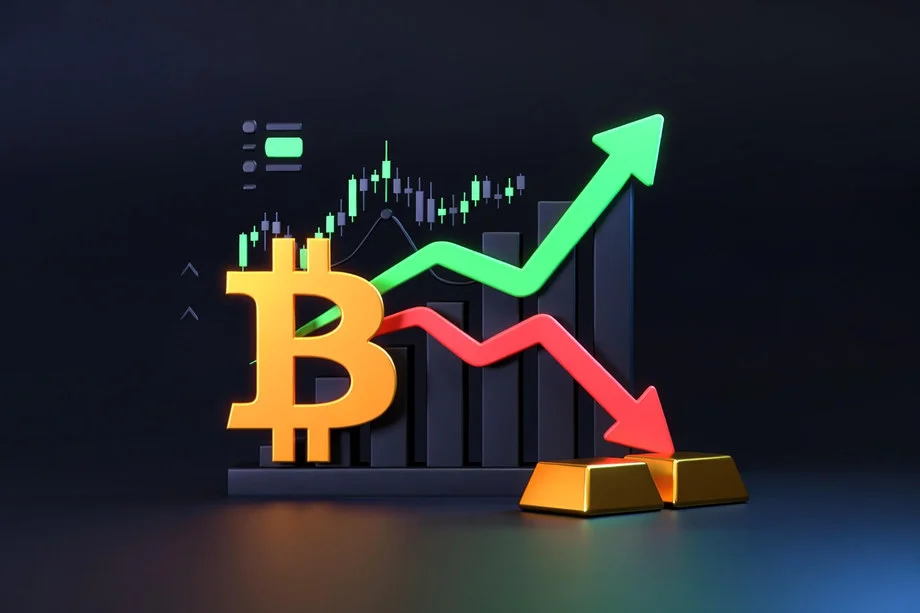
JPMorgan Sees Bitcoin Gaining Edge Over Gold if ETF Hedging Unwinds
18 September, 2026 / News / AI / Tags: gold, bitcoin, jpmorgan, etfs, etf

Bank analysts say elevated short positions and protective options in Bitcoin funds could fuel stronger support than gold once defensive demand eases, even as recovery in crypto ETF flows lags
JPMorgan analysts led by Nikolaos Panigirtzoglou have concluded that Bitcoin stands to receive greater relative support than gold if investors begin reducing the unusually high levels of downside protection surrounding cryptocurrency exchange-traded funds. The assessment centers on positioning data rather than recent flow totals, highlighting a structural difference in how institutional participants treat the two assets.
Divergent Recovery in ETF Flows
Both Bitcoin and gold ETFs attracted renewed inflows after the Federal Reserve’s late-July meeting, as investors pursued protection against currency debasement. Gold funds have since reversed all of their earlier 2026 outflows. Bitcoin ETFs, by contrast, have recovered only about half of the withdrawals recorded earlier in the year. JPMorgan framed the incomplete recovery in Bitcoin funds as leaving additional room for demand to rebuild should sentiment improve.
Futures positioning remains elevated for both assets, indicating that large institutional exposure has not disappeared. The clearer divergence appears in short interest and options activity. Short interest in BlackRock’s iShares Bitcoin Trust remains close to its highest level of 2026, while short interest in the SPDR Gold Shares ETF sits below historical averages. The put-to-call open interest ratio for the Bitcoin fund also exceeds that of its gold counterpart, pointing to heavier demand for downside protection on Bitcoin.
Regulatory and Macro Pressures
The recent cooling in the debasement trade followed a rise in inflation-adjusted bond yields and a Federal Reserve rate increase of 25 basis points. On September 15 the U.S. Senate failed to advance the CLARITY Act in a 49-50 cloture vote, adding regulatory uncertainty. That day U.S. spot Bitcoin ETFs recorded $450.4 million in net outflows, with Fidelity’s fund and BlackRock’s product among those seeing redemptions.
Earlier in 2026 JPMorgan had described a constructive outlook for digital assets, placing Bitcoin’s estimated production cost near $77,000 and reiterating a long-term volatility-adjusted valuation of $266,000 relative to gold. The bank later noted that Bitcoin had traded below that production-cost estimate for five consecutive months, while flagging the narrowing legislative window for clearer digital-asset rules.
Longer-Term Comparisons
Gold’s market capitalization is estimated at $30 trillion. With Bitcoin’s circulating supply near 20 million coins, an equivalent valuation would imply a price of approximately $1.5 million per Bitcoin. Bloomberg ETF analyst Eric Balchunas has separately projected that Bitcoin ETFs could eventually hold three times the assets of gold ETFs, citing generational wealth shifts and growing institutional comfort with regulated vehicles. He added that institutions currently still favor gold because of Bitcoin’s higher volatility and correlation with technology equities.
Bitcoin reached a recent peak near $81,000 in late August and early September before retreating toward the mid-$70,000 range after the legislative setback and rate move. Separate research from Bernstein anticipates a return to $100,000 by the end of 2026. JPMorgan’s latest note stops short of price targets, focusing instead on the potential support that could emerge from any reduction in the current elevated hedging around Bitcoin ETFs relative to gold.

Disclaimer
This article was generated by AI using information from multiple industry sources. It has not been reviewed or verified by a human editor and may contain inaccuracies, omissions, or misinformation. Readers are encouraged to independently verify any information before making decisions based on its content.Tired of the noise?
Let the bots trade for you.
Trade 24/7, without emotion, with data-driven strategies.
Associated articles
Bitcoin ETFs Post Record April Inflows Before $277M Outflow as BTC Hovers Near $80K

Bitcoin ETFs Break Losing Streak as BlackRock Drives Strong Inflows

Bitcoin ETFs Record $4.4 Billion Outflows in Historic 13-Day Streak

Bitcoin and Ethereum ETFs Attract Nearly $1 Billion in Fresh Capital Amid Renewed Institutional Demand

US Bitcoin and Ether ETFs Record $1.1 Billion Inflows in Strongest Week Since April
Latest articles

YieldMax Option Income ETFs Declare Weekly Distributions for October 9

Stablecoins Expand as Core Tools for SaaS and Ecommerce Operations

Crypto Experts Warn of AI Threat to Blockchain Encryption, Urge 'Bunker Mode'

Polkadot Launches DAO-Governed dotUSD Stablecoin as DOT Tests $1 Support