Newsroom
Irish Central Bank Fines Coinbase Ireland $3.6 Million Over Customer Fund Safeguarding Lapses
22 October, 2026 / News / AI / Tags: ireland, irish, safeguarding, coinbase, bank
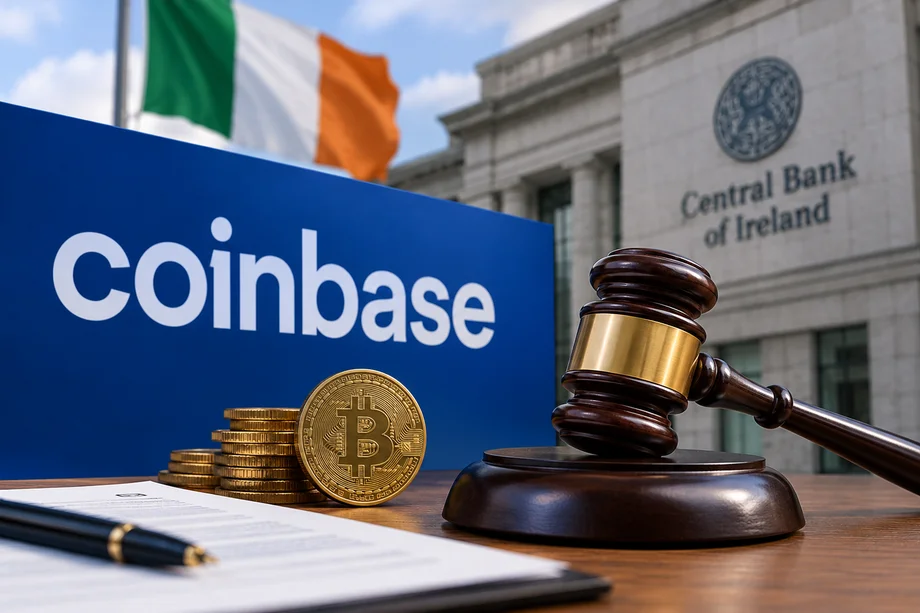
The regulator imposed a $3.6 million penalty on Coinbase’s Irish e-money unit after finding prolonged shortfalls in segregated customer accounts and excessive dependence on its U.S. parent company
The Central Bank of Ireland has imposed a fine of €3,252,618, equivalent to approximately $3.6 million, on Coinbase Ireland Limited for breaches of customer fund safeguarding and outsourcing rules. The penalty, announced on October 22, 2026, follows a settlement reached the previous day and covers violations spanning from November 1, 2020, to August 19, 2025, under Ireland’s Electronic Money Regulations 2011.
Coinbase Ireland, an electronic money institution within the global Coinbase Group, issues and redeems e-money that European customers use to purchase cryptocurrency on the broader Coinbase platform. Irish rules require these customer balances to be held in dedicated safeguarding accounts, fully segregated from the firm’s own funds and from those of other group entities.
Details of the Regulatory Findings
The Central Bank identified three primary failures. First, Coinbase Ireland placed excessive reliance on its U.S.-based parent company to design and operate the safeguarding processes and controls needed to meet Irish and European requirements. The Irish entity lacked sufficient local skill and expertise to properly oversee this core function at all times.
Second, inadequate system design and insufficient control testing caused the designated safeguarding account to remain underfunded for extended periods. Daily shortfalls persisted for at least 18 months. The largest daily gap reached €3.4 million in 2023 and climbed to €5.2 million in 2024. Average safeguarding obligations stood at roughly €323 million in 2023 and €470 million in 2024.
Third, the firm lacked adequate internal controls, escalation procedures, and governance processes to identify and promptly report material changes in its safeguarding arrangements to the regulator. When Coinbase Ireland sought authorization in 2019, it had assured the Central Bank of robust and automated safeguards. Practices later diverged from those commitments without timely notification.
The Central Bank set a base monetary penalty of €4,646,597 before applying a 30 percent settlement discount, reducing the amount to €3,252,618. Coinbase Ireland admitted the prescribed contraventions and accepted both the fine and a formal reprimand. The sanctions remain subject to confirmation by Ireland’s High Court before taking effect.
Coinbase’s Account of the Issues and Remediation
Coinbase stated that it self-reported many of the matters described in the settlement in January 2024 and resolved most of the underlying control weaknesses that same year. The company stressed that no customers suffered financial loss or lost access to their funds.
According to Coinbase, several operational pressures contributed to the problems. During the March 2023 U.S. banking crisis, as Silvergate Bank approached collapse, the firm redirected 30 institutional customers to deposit dollars into a Coinbase Inc. account at another U.S. bank. Those funds remained mixed with other Coinbase entities’ money for approximately 19 months. A daily treasury rebalancing process later moved money into the correct Irish safeguarding account, but it did not prevent the initial mixing.
After Brexit, some European customers continued depositing into legacy United Kingdom accounts despite receiving new Irish details. In addition, certain euro withdrawals for U.S. and U.K. customers of other Coinbase units were at times paid from the Irish safeguarding account for liquidity reasons. Coding errors in an internal dashboard also left the account underfunded by an average of about 0.54 percent of its total obligation through 2023 and the first half of 2024.
Coinbase said these issues largely arose while the company was taking steps to protect customers during periods of significant disruption. Remediation measures include a redesigned safeguarding calculation process, two third-party validations with no open findings, a €25 million guaranty bond, and the appointment of a dedicated head of safeguarding. The company states the historical problems are now fully resolved.
Context of Prior Enforcement Action
The latest penalty is the second major Irish regulatory action against Coinbase entities in less than a year. In November 2025, the Central Bank fined Coinbase Europe €21.5 million for failures in anti-money laundering and counter-terrorist financing transaction monitoring. That case involved more than 30 million transactions totaling over €176 billion that were not properly screened over a 12-month period.
Coinbase Europe’s Irish registration subsequently lapsed at the end of 2025 as the group shifted its European crypto-asset services to Luxembourg under a Markets in Crypto-Assets Regulation license. E-money services remain with Coinbase Ireland, while crypto-asset services are handled by the Luxembourg entity.
This enforcement outcome marks the Central Bank’s 164th to date and brings the cumulative total of fines it has imposed above €432 million. The regulator has underscored that firms authorized in Ireland must maintain appropriate local culture, expertise, and operational substance to protect customer interests and the integrity of the financial system.

Disclaimer
This article was generated by AI using information from multiple industry sources. It has not been reviewed or verified by a human editor and may contain inaccuracies, omissions, or misinformation. Readers are encouraged to independently verify any information before making decisions based on its content.Tired of the noise?
Let the bots trade for you.
Trade 24/7, without emotion, with data-driven strategies.
Associated articles

HashKey Exchange Secures JPMorgan Approval for Segregated Client Funds Account

Brazil Central Bank Mandates 24-Hour Hold on Large Crypto Transfers Starting 2027

Coinbase Trading Halted for Hours After AWS Thermal Event in Virginia

Dutch Crypto Broker Knaken Declared Bankrupt With €7 Million Missing

Robinhood Brings AI Agents to Crypto Trading for US Customers
Latest articles

Aave V4 Debuts Externally Curated Lending Markets Managed by Sentora on Ethereum

HSBC Begins Phased Rollout of HKD-Backed RedCoin Stablecoin to 3.3 Million PayMe Users

Solana Meme Coin Kimchi Plunges 98% After Pump.fun Co-Founder Removes Promotion

Ethereum Delays Glamsterdam Hoodi Testnet Activation Over Gas Security Risks