Newsroom
Injective Launches Onchain SICI Futures Market for Nvidia GPU Rental Costs
27 October, 2026 / News / AI / Tags: injective, sici, rental, compute, gpu
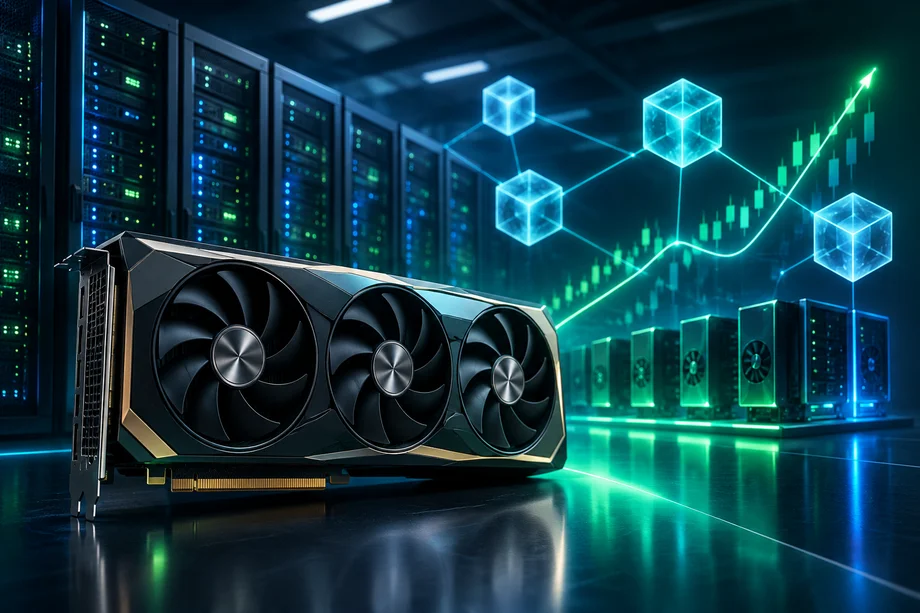
Injective has introduced perpetual futures on its Super Intelligence Compute Index, which tracks rental prices for five Nvidia GPU models. Traders can speculate on AI infrastructure expenses with up to 10 times leverage, while developers and providers gain tools to manage compute cost volatility
Injective Brings AI Compute Pricing Onchain
Injective has launched a perpetual futures market tied to its Super Intelligence Compute Index, or SICI. The index aggregates rental rates for five Nvidia GPU models—H100, B200, H200, A100, and RTX 4090—into a single benchmark updated hourly from compute marketplace data. Positions settle in USDC with margin requirements and support leverage of up to 10 times.
The product expands on Injective’s earlier August 2025 market focused solely on Nvidia H100 rentals. The new multi-chip index aims to provide broader exposure to AI infrastructure economics. It gives traders directional bets on whether rental costs will rise or fall and offers hedgers a way to protect against sudden shifts in compute expenses.
Injective’s announcement positions SICI as a primitive for the onchain AI economy. Rental rates function as a variable input cost for model training, inference, and fine-tuning. When demand surges, prices can spike and disrupt budgets; when supply eases, they decline and reshape investment decisions.
How the SICI Index Is Calculated
London-based market data firm LO:TECH supplies the underlying rental-price observations from on-demand and spot listings across compute marketplaces. Each GPU model receives its fixed weight within the index: 40 percent for the H100, 25 percent for the B200, 15 percent for the H200, and 10 percent each for the A100 and RTX 4090.
The benchmark rebases each component to a 100-point base on July 22, 2026, before combining the weighted levels. An hourly trailing seven-day average smooths short-term fluctuations, and the calculation uses the 19:00 UTC reading as the daily fixing. Methodology changes create separate versions while preserving the historical series for the live index.
| GPU Model | Weight |
|---|---|
| H100 | 40% |
| B200 | 25% |
| H200 | 15% |
| A100 | 10% |
| RTX 4090 | 10% |
Context Driving Demand for Compute-Cost Derivatives
AI infrastructure operators face mounting pressure to demonstrate sustainable returns on GPU investments. Gartner research indicates more than 80 percent of specialist AI cloud providers, or neoclouds, could cease independent operations by 2030 without adequate revenue to cover capital expenditures. Elon Musk has noted that more than 200 such providers may consolidate or fail if lenders tighten financing.
Major technology companies are responding with cost measures. Microsoft is conducting voluntary buyouts for approximately 60,000 employees while forecasting about 175 billion dollars in capital spending for 2026. Meta reported an 8,000-person workforce reduction in May as part of efforts to control AI-related spending.
Applications for Hedgers and Traders
AI developers renting capacity from providers such as CoreWeave or Nebius treat GPU hours as operating expenses. A futures market linked to SICI allows them to offset sudden cost increases or benefit from price drops. Infrastructure providers, meanwhile, can use the same instrument to safeguard against revenue shortfalls when rental demand contracts.
Traders gain leveraged exposure to AI infrastructure trends without holding physical hardware. The USDC margin structure aligns the product with crypto-native funding practices, while the non-expiring perpetual format supports ongoing hedging strategies.
Injective plans to roll out additional financial products tied to the SICI benchmark in the coming days, further embedding onchain access to real-world compute pricing signals. The launch underscores a shift toward treating AI infrastructure economics as a core financial variable rather than a purely operational one.


Disclaimer
This article was generated by AI using information from multiple industry sources. It has not been reviewed or verified by a human editor and may contain inaccuracies, omissions, or misinformation. Readers are encouraged to independently verify any information before making decisions based on its content.Tired of the noise?
Let the bots trade for you.
Trade 24/7, without emotion, with data-driven strategies.
Associated articles

Chinese AI Lab Z.ai Launches GLM-5.3 as Leading Open-Weight Coding Model
Kalshi Expands U.S. Crypto Perpetual Futures With BNB, Cardano, Aave and AI Tokens
Polymarket Rolls Out Perpetual Futures With 20x Leverage for Crypto, Equities and Commodities

Hyperliquid HYPE Token Joins Bitwise 10 Crypto Index ETF
Binance Introduces Perpetual Futures for PONS and HAJIMI Tokens
Latest articles

Zcash Co-Founder Proposes Redirecting 8% of Block Subsidies to Network Reserve

Bitcoin Monte Carlo Simulations Point to Median Value of $1.03 Million in 2033

S&P Global Completes Acquisition of OpenZeppelin Smart Contract Security Firm

Franklin Templeton Files Two ETFs to Convert US Stock Dividends into Bitcoin