Newsroom
Hyperliquid Perpetuals Data Now Available on Bloomberg Terminal
5 October, 2026 / News / AI / Tags: hyperliquid, terminal, bloomberg, contracts, professional
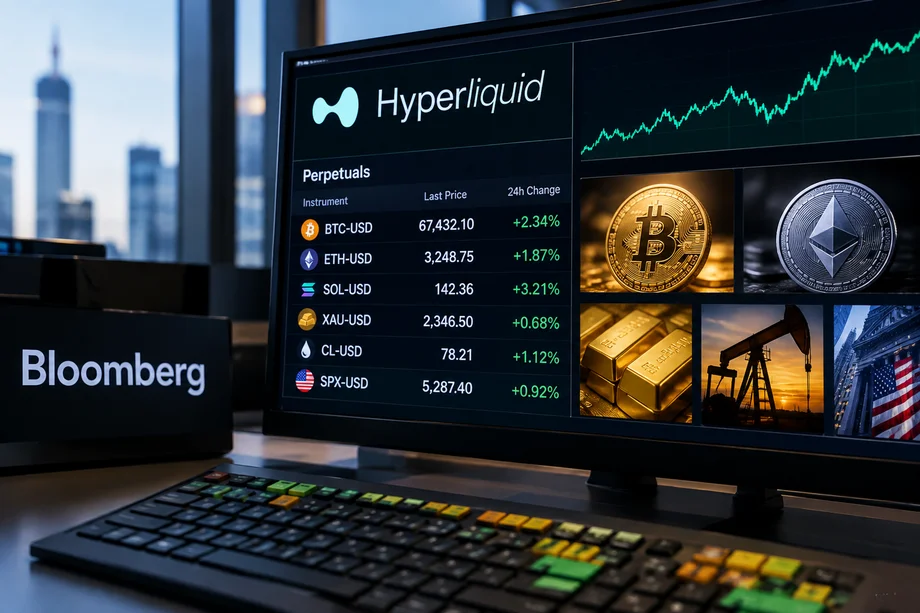
Professional traders can monitor select Hyperliquid perpetual contracts around the clock across commodities, equities and crypto via the Bloomberg Terminal
Hyperliquid perpetual contract data has been added to the Bloomberg Terminal, allowing professional market participants to track prices from the decentralized derivatives platform within a widely used institutional workflow. The integration went live on October 5, 2026, and covers 24-hour streaming prices for selected contracts linked to oil, gold, the S&P 500, major chipmakers, cryptocurrencies, foreign exchange and indexes.
Terminal users can access the data by entering WSL HYPE followed by the GO command. This places Hyperliquid pricing alongside conventional market references that desks already monitor, enabling direct comparisons without switching platforms. Bloomberg’s Michael McDonough confirmed the function supports continuous monitoring of the selected markets.
Scope of the Available Contracts
Hyperliquid operates on its own layer-1 blockchain and supports more than 100 assets through its HyperCore system. Its perpetual contracts have no expiry date. Funding payments occur hourly to keep prices aligned with the underlying spot markets. Most contracts use USDC as collateral for USDT-denominated linear positions, with limited exceptions denominated in USDC.
Beyond core cryptocurrency markets, the platform has expanded through its HIP-3 framework. Independent deployers can create perpetual markets tied to equities, commodities, indexes and even private companies. Contracts linked to crude oil, gold, the S&P 500 and semiconductor firms now form a noticeable part of activity. These markets continue trading during weekends, overnight sessions and periods when traditional cash markets are closed.
Open interest on Hyperliquid surpassed $18 billion in September 2026, setting a new record. Bitcoin, Ether and the platform’s native HYPE token accounted for a substantial share of that total, while HIP-3 markets contributed additional volume across non-crypto assets.
Institutional Context and Parallel Developments
The Bloomberg data feed arrives as interest in regulated access to Hyperliquid products continues to grow in the United States. President Donald Trump stated in August that Commodity Futures Trading Commission Chair Michael Selig was working to bring the platform into the country in a fully compliant manner. Separate initiatives are also advancing. DoubleZero launched professional-grade Hyperliquid data feeds in September aimed at trading firms and market makers. Payward, the parent of Kraken, has outlined plans for regulated perpetual products built on Hyperliquid infrastructure for eligible U.S. clients, subject to regulatory approval.
Market-data visibility on the Terminal does not equate to institutional trading infrastructure. Professional participants still require separate arrangements for key management, execution, custody and clearing. The current Bloomberg function serves primarily as a monitoring and comparison tool rather than a gateway for direct participation.
Continuous Price Discovery Outside Traditional Hours
One practical distinction of the Hyperliquid contracts is their ability to generate price signals when conventional venues are shut. During periods of geopolitical tension that closed traditional commodity markets, Hyperliquid oil, gold and related contracts continued to trade. This continuous availability positions the platform as a parallel reference layer for assets that normally follow fixed exchange schedules.
Whether the Terminal listing translates into sustained professional attention, additional partnerships or measurable shifts in on-platform activity remains to be observed. For now, the integration expands the set of screens on which Hyperliquid prices appear without altering the underlying requirements for trading or regulatory status.

Disclaimer
This article was generated by AI using information from multiple industry sources. It has not been reviewed or verified by a human editor and may contain inaccuracies, omissions, or misinformation. Readers are encouraged to independently verify any information before making decisions based on its content.Tired of the noise?
Let the bots trade for you.
Trade 24/7, without emotion, with data-driven strategies.
Associated articles
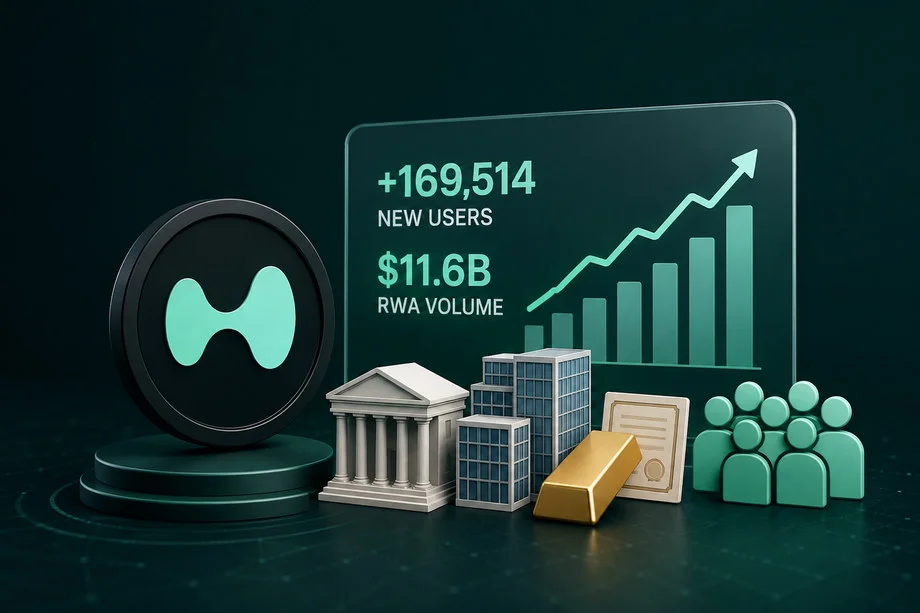
Hyperliquid Draws 169,000 RWA Users in H1 2026 as Trading Hits $111.6 Billion

DoubleZero Introduces Dedicated Fiber Feeds for Hyperliquid Order Books
Hyperliquid Ecosystem Expands as HYPE Token Faces Pressure From Risk-Off Markets
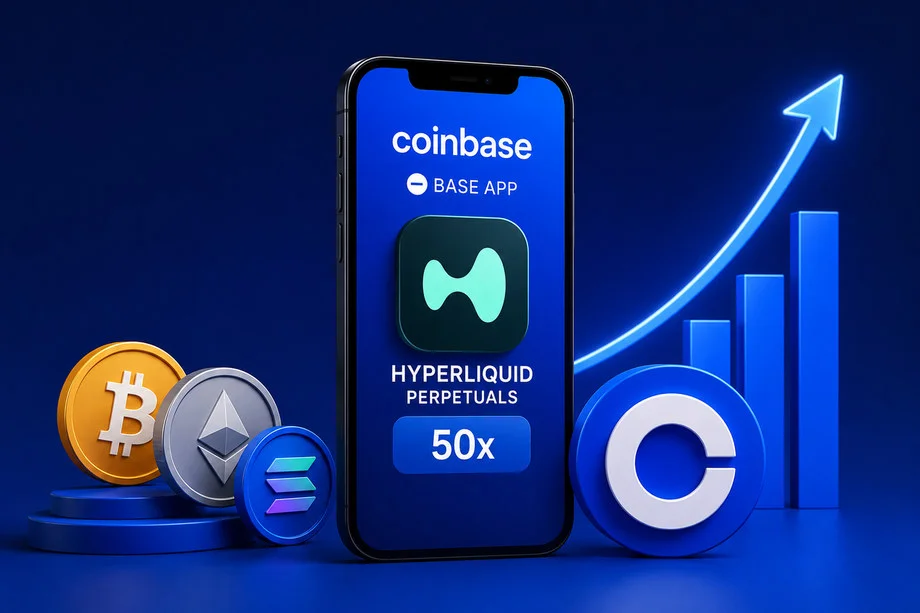
Coinbase Integrates Hyperliquid Perpetuals Into Base App With Up to 50x Leverage

HYPE Token Climbs Sharply After Trump Signals CFTC Push for Hyperliquid US Access
Latest articles

Mysterious Poems Repeatedly Appear on Bitcoin Blockchain Over 12 Days

Arthur Hayes Closes Maelstrom Positions With $22.28 Million Token Sales

Global X Canada Sets Monthly Distributions Across Four ETFs

IRS Plans Lower Penalties and Faster Resolutions for Voluntary Tax Disclosures, Including Crypto