Newsroom
Futurebit Apollo III Bitcoin Miners Reach Micro Center Retail Shelves
13 November, 2026 / News / AI / Tags: futurebit, apollo, solo, iii, node
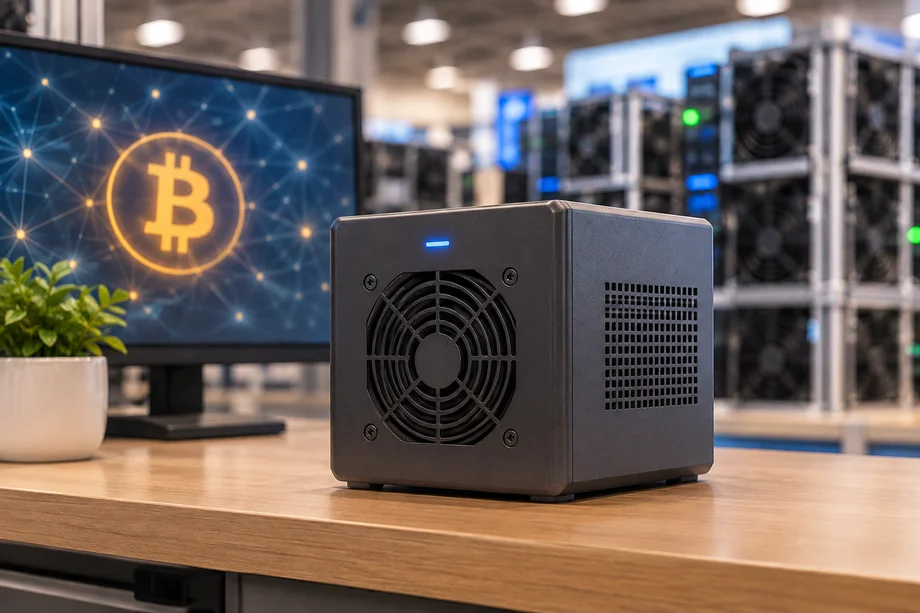
Brooklyn company places home mining devices with full node support in four U.S. electronics stores starting November 13, expanding access beyond online sales
Futurebit has begun selling its Apollo III Full Node Bitcoin mining machines at select Micro Center locations, marking the company's first move into physical retail stores. The compact devices went on sale Friday, November 13, at outlets in Brooklyn, New York; Miami, Florida; Tustin, California; and Austin, Texas. The Austin placement aligns with the grand opening of that store, Micro Center's 31st U.S. site and its third in Texas. Shoppers can also reserve units online for later in-store pickup.
The partnership lets customers examine the hardware in person, ask questions about Bitcoin mining, and take a unit home the same day. Until now, North American buyers ordered directly from Futurebit's website, where stock was available for shipment within two to three days.
Hardware Specifications and Pricing
The Apollo III is a desktop-sized cube measuring roughly 6.5 by 6.5 by 6 inches and weighing 6.5 pounds. It is assembled in the United States and carries a one-year limited warranty. The unit relies on American-engineered 3-nanometer ASIC chips and includes an eight-core ARM processor along with 8 GB of RAM.
In Turbo mode the machine reaches up to 18 terahashes per second at approximately 325 watts. Eco mode is rated near 12 TH/s and 150 watts, while Super Eco mode delivers about 8 TH/s at 80 watts. Power draw can be adjusted between 50 and 400 watts. Noise stays under 35 decibels in Eco settings but rises to around 55 decibels in Turbo. Board-level power readings may vary by up to 10 percent.
The Full Node version integrates a complete Bitcoin node and built-in solo mining capability. Users can also direct the device to a conventional mining pool. An SSD is required for the full-node and solo-mining functions. Futurebit lists the Full Node at $1,099.99 without storage, $1,299.99 with a 1 TB SSD, and $1,399.99 with 2 TB of storage. A Standard miner-only model begins at $899.99 and omits the node features. Micro Center has not published its own pricing.
Solo Mining Context and Network Role
The retail rollout arrives as independent miners continue to claim occasional block rewards against long odds. A Futurebit Apollo unit located block 973262 in late October and collected the full 3.154 bitcoin reward. Separate reports noted a solo miner using CKPool who found block 975427 and received a reward valued near $230,000, one of 38 documented solo successes recorded in 2026. Smaller devices, including units running near 1 TH/s, have also produced wins earlier in the year.
Bitcoin's overall network hashrate stands near 1,000 exahashes per second. At that scale, a single Apollo III at peak output represents only a minute fraction of total computing power. Expected times between solo discoveries for home-scale equipment stretch into decades or centuries under current difficulty.
Futurebit has positioned the Apollo III less as a profit-focused tool and more as a means for individuals to operate both mining hardware and a validating node from home. The company, based in Brooklyn and active in consumer mining equipment since 2015, introduced the Apollo III in February. It has not indicated whether the Micro Center placement will expand beyond the initial four stores.

Disclaimer
This article was generated by AI using information from multiple industry sources. It has not been reviewed or verified by a human editor and may contain inaccuracies, omissions, or misinformation. Readers are encouraged to independently verify any information before making decisions based on its content.Tired of the noise?
Let the bots trade for you.
Trade 24/7, without emotion, with data-driven strategies.
Associated articles

Solo Bitcoin Miners Claim 36 Blocks in 2026, Including Two Jackpots Hours Apart
Ledger Halts European Hardware Wallet Sales After Implant Claims

Bitcoin Miners Invest Billions in AI Infrastructure as Returns Trail Spending

Hyperscale Data Halts Michigan Bitcoin Mining for AI Data Center Shift

Schwartz Criticizes BIP-110 Backers Over Bitcoin Chain Framing as BLAKE2b Fork Nears
Latest articles

Upbit Suspends OSMO Deposits and Withdrawals After Osmosis Network Halts Block Production

DOJ and CFTC Sue Arkansas to Halt Enforcement Against Kalshi Prediction Markets

Two 2010 Bitcoin Mining Wallets Move 100 BTC Worth $6.9 Million After 16 Years
Nvidia Board Contacts Arm CEO Rene Haas in Search for Permanent Leader