Newsroom
Four Firms Test AI Agents for Secure Crypto Payments Aimed at Japanese Tourists in South Korea
13 October, 2026 / News / AI / Tags: everspin, sbi, japanese, kookmin, south

KB Kookmin Card has joined forces with Japanese and South Korean partners to examine how AI agents could verify identities and enable stablecoin spending by travelers crossing the border
Partnership Targets Smarter, Borderless Digital Payments
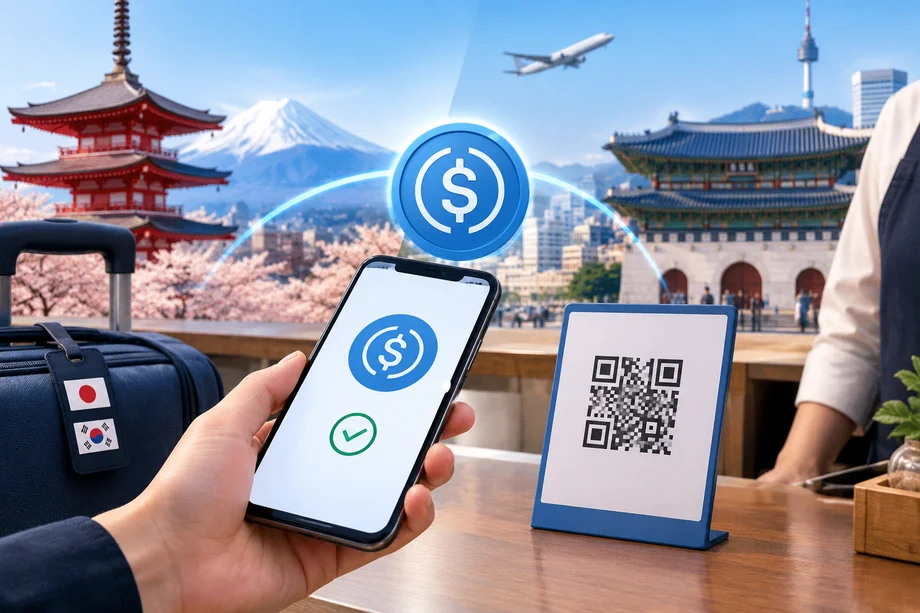
KB Kookmin Card announced on October 13 a memorandum of understanding with Japan’s SBI Holdings, South Korea’s Everspin and their joint venture SBI Everspin. The four parties plan to test AI-agent identity verification and explore how Japanese visitors might use stablecoins at participating merchants in South Korea.
The initiative builds on existing payment infrastructure while introducing automated systems that could act on behalf of users once permission is granted. Discussions will cover secure access, transaction limits and seamless integration into familiar financial flows.
AI Verification Platform Centers on KYA Trust Gateway
At the core of the tests sits KYA Trust Gateway, a system developed by SBI Everspin and Everspin to confirm that an AI agent is legitimate and operates only within user-approved parameters. The platform verifies identity, permitted services and spending boundaries before any automated transaction proceeds.
Initial work will examine how Japanese AI agents authenticate when accessing South Korean platforms. Subsequent phases will review delegated authority, including spending caps and access controls. KB Kookmin Card will assess whether these checks can link to its KB Pay app, ensuring users retain oversight without manual intervention for every step.
Stablecoin Exploration Focuses on Tourist-Friendly Transactions
Separately, the partners intend to study whether stablecoins could replace traditional currency for Japanese travelers at South Korean merchants. Tests will address payment instructions, fund movement between users and shops, settlement processes, cancellations, refunds and fraud prevention.
No specific stablecoin or blockchain network has been named, and the companies have not set a commercial rollout date. Results from these reviews will determine whether the service can meet regulatory requirements and operational standards before any wider availability.
Parallel QR-Code Project Advances with NICE Network
A related October 1 agreement involving SBI DigiTrust, NICE Information & Telecommunication and DSRV continues testing a QR-code payment method for the same Japan-Korea corridor. NICE operates payment infrastructure serving approximately 1.2 million merchants across South Korea, providing hands-on experience with merchant operations and existing systems.
DSRV contributes blockchain infrastructure expertise, while SBI DigiTrust handles Japanese regulatory and financial considerations. The joint feasibility study covers how stablecoin funds could flow from Japanese users to Korean merchants while connecting with legacy payment networks. Completion is targeted for the end of December 2026, after which the partners will assess commercial viability.
| Company | Role |
|---|---|
| SBI DigiTrust | Japanese regulations, payments and digital assets |
| NICE Information & Telecommunication | Merchant network and payment system integration |
| DSRV | Blockchain infrastructure and system links |
Broader Context Includes Prior Hybrid Card Projects
KB Kookmin Card has previously explored a hybrid credit-card arrangement with Avalanche and OpenAsset, allowing users to fund transactions with stablecoins before drawing on conventional credit lines. The new agreement expands on that foundation by incorporating AI-assisted verification.
SBI Holdings has pursued multiple stablecoin initiatives in 2026, including the launch of JPYSC, a yen-pegged stablecoin issued through SBI Shinsei Trust Bank, as well as settlement trials for tokenized securities. The Korean project represents an extension of these efforts toward practical cross-border use.
Security Experience Underpins the Collaboration
Everspin brings decades of financial-sector protection work, reporting roughly 25 billion cumulative cybersecurity threat detections across more than 150 institutions in South Korea and overseas. The company plans to apply this expertise to monitor AI-agent activities and transaction permissions in real time.
Both partners emphasize that the tests remain preliminary. Any future commercial service will depend on technical outcomes, regulatory alignment and commercial assessment. The four companies stated they intend to evaluate opportunities for additional financial and non-financial services once the trials conclude.
Disclaimer
This article was generated by AI using information from multiple industry sources. It has not been reviewed or verified by a human editor and may contain inaccuracies, omissions, or misinformation. Readers are encouraged to independently verify any information before making decisions based on its content.Tired of the noise?
Let the bots trade for you.
Trade 24/7, without emotion, with data-driven strategies.
Associated articles
SBI DigiTrust Partners with Korean Firms on Japan-South Korea Stablecoin QR Payments

South Korea’s NHN KCP Launches Stablecoin Payment Pilot on Avalanche

Kakao Pay and KakaoBank Partner With Fireblocks on Stablecoin Infrastructure Tests

Shinhan Financial Partners With Visa to Build Stablecoin Payment Infrastructure

JCB Teams with Circle on USDC Pilot for Cross-Border and Merchant Payments
Latest articles

Strive Expands Bitcoin Treasury with 3,311 Coin Purchase
Hidden Chip in CryptoBilis Sold Ledger Signers Captures Recovery Phrases and Sends Them Over LTE

ENS Founder Files Proposal to Activate ENSv2 Upgrade on Ethereum Mainnet

Metaplanet to Raise $329 Million via Zero-Coupon Convertible Bonds for Debt Repayment and Buybacks